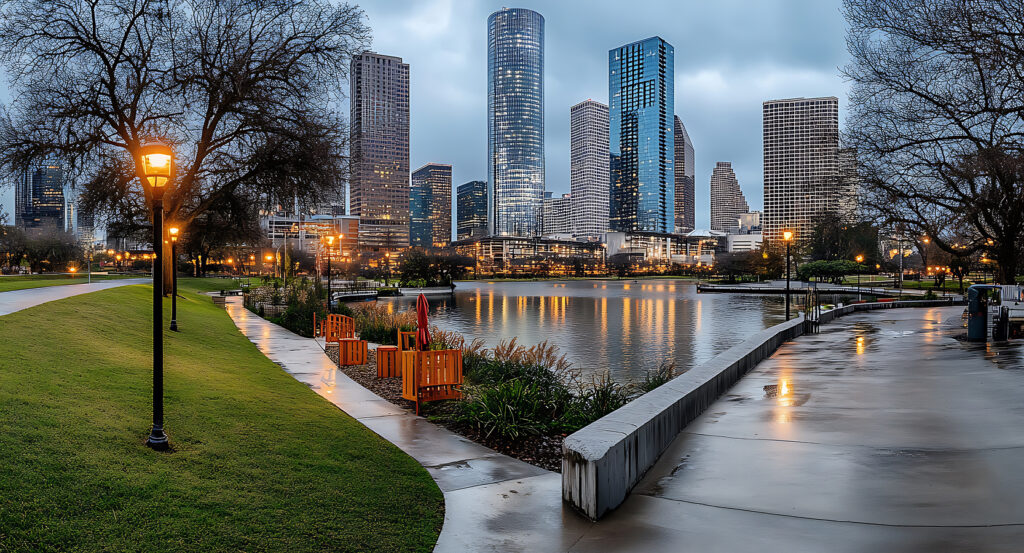
Why St. Emanuel Street matters.
St. Emanuel Street is a storied corridor where EaDo's railroad heritage, immigrant traditions, industrial legacy, and cultural reinvention continue shaping one of Houston's most distinctive urban landscapes.
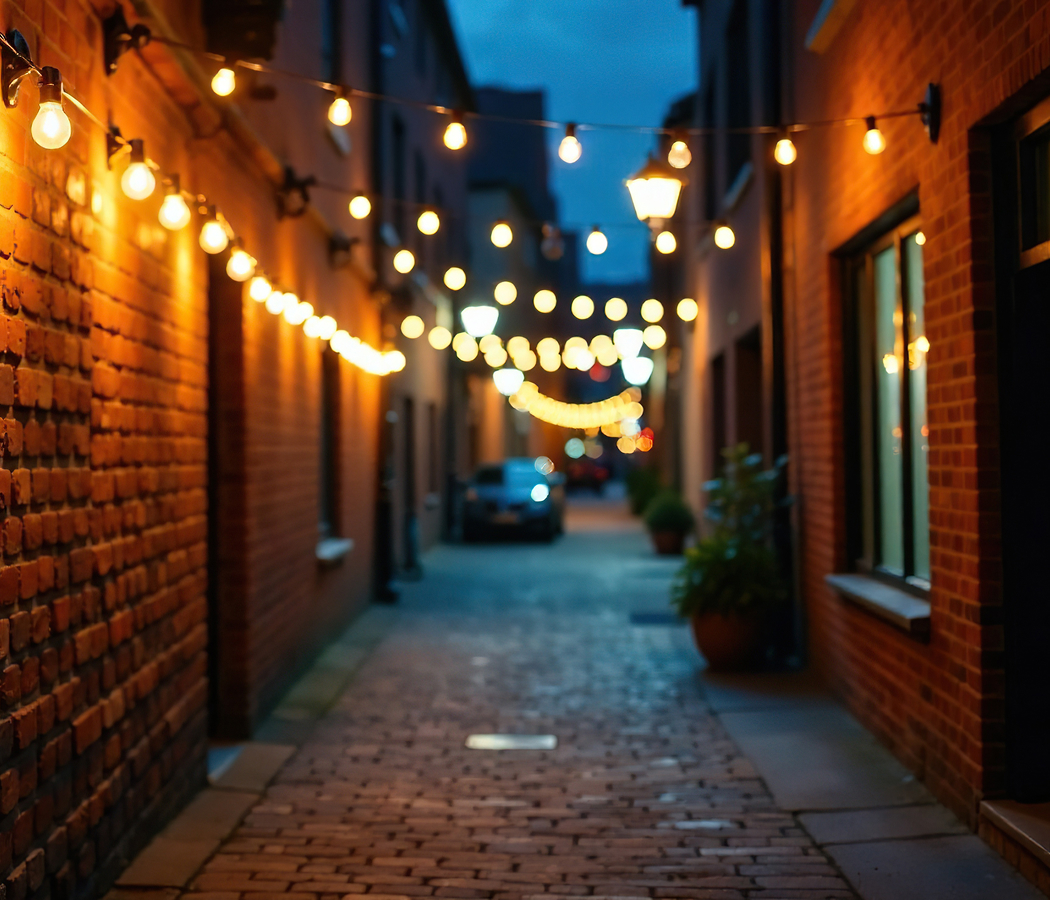
Running through EaDo between Downtown and Second Ward, the corridor connects historic warehouse blocks, longstanding religious institutions, entertainment venues, and commercial streets that collectively demonstrate Houston's evolution from a Gulf Coast railroad city into a global metropolitan center. Brick industrial buildings, preserved churches, converted warehouses, and contemporary public gathering spaces create a streetscape where successive generations have left visible architectural and cultural layers. Continued reinvestment has expanded the corridor's creative character without erasing the commercial structure established during Houston's principal era of railroad growth. The result is an experience defined by historical depth, architectural continuity, and one of EaDo's most compelling corridors.
What defines St. Emanuel Street.
St. Emanuel Street is best known for traversing EaDo, a district whose character emerged through the expansion of Houston's nineteenth-century railroad network, where the Houston and Texas Central Railway, Galveston, Harrisburg and San Antonio Railway, and associated freight facilities established the area among the city's foremost industrial and distribution centers. Commercial growth accelerated during the late nineteenth and early twentieth centuries as warehouses, manufacturing plants, wholesale businesses, cotton merchants, and immigrant-owned enterprises transformed the surrounding blocks into a major employment district serving the expanding Port of Houston economy. Nearby streets preserve notable examples of Romanesque Revival, Commercial Style, Art Deco, and Mid-Century Modern industrial architecture that document successive phases of Houston's commercial development. EaDo later evolved into a center for arts organizations, adaptive cultural venues, and neighborhood investment while retaining the industrial street pattern and architectural character established during its railroad era. Collectively, the corridor's railroad heritage, architectural diversity, commercial evolution, neighborhood continuity, and cultural significance establish St. Emanuel Street as one of Houston's defining historic corridors.
Along the corridor, Annunciation Catholic Church, completed in 1873, became one of Houston's earliest Catholic parishes, serving successive Irish, German, Mexican, and Vietnamese congregations while establishing St. Emanuel Street as a longstanding center of religious and community life. That institutional foundation expanded with nearby Our Lady of Guadalupe Catholic Church, dedicated in 1912, whose ministry became deeply intertwined with Houston's Mexican American community through worship, charitable outreach, and cultural traditions that further strengthened the corridor's identity. The surrounding East End Historic District preserves an exceptional concentration of nineteenth- and early twentieth-century warehouses, commercial buildings, and industrial structures whose brick masonry, heavy timber framing, ornamental cornices, and surviving loading bays continue illustrating the built environment that defined St. Emanuel Street during Houston's principal era of economic expansion. Together, these historic churches, preserved commercial buildings, and enduring architectural resources demonstrate how St. Emanuel Street developed within a corridor whose industrial heritage is reinforced by equally significant religious, immigrant, and architectural traditions.
How St. Emanuel Street fits.
St. Emanuel Street works as an exploration of Houston's artistic expression, contemporary civic energy, and railroad heritage.
Begin at The Orange Show Monument, where Jeff McKissack's visionary folk-art environment introduces the creative imagination that has become inseparable from Houston's cultural character through immersive sculpture and handcrafted architectural forms. Continue to Shell Energy Stadium, where the home of Houston Dynamo FC and Houston Dash reflects EaDo's modern reinvention as one of the city's foremost destinations for sports, entertainment, and public gathering. Conclude at Daikin Park, where the preserved Union Station façade and integrated railroad heritage provide the historical payoff by connecting Houston's industrial origins with one of its most recognizable contemporary civic venues. The progression moves naturally from artistic creativity to present-day urban vitality before culminating in the railroad legacy that continues defining St. Emanuel Street's historical identity.
Where your story begins.
Foresyte Travel reveals places that feel extraordinary long before you arrive.
Enjoy editorial crafted for luxury travelers.
Foresyte may earn a commission when you book.