
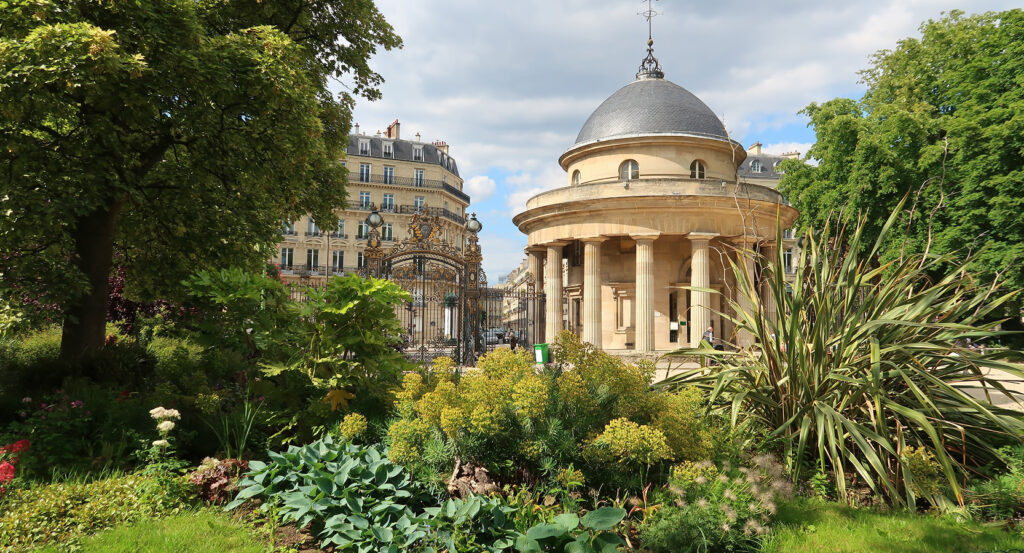
Why you should experience Statue de Frédéric Chopin in Paris, France.
Visiting the Statue of Chopin in Parc Monceau is like stepping into a whisper of music cast in bronze, a monument that seems to breathe with melody even in silence.
Set amid the park's poetic calm, the statue captures Frédéric Chopin in a moment of introspective grace, his gaze lowered as if listening to the wind rustling through the trees, a sound he might have once translated into a nocturne. The location is fitting: this corner of Paris has always belonged to the dreamers, the lovers, the ones who find poetry in solitude. Sculpted by Jacques Froment-Meurice in the early 20th century, the statue isn't grand in the way of Paris's other monuments, it's intimate, almost secretive, inviting you to come closer, to feel. The polished bronze glints beneath the shifting light, creating a living discussion between art and nature. Around it, the symphony of footsteps on gravel, distant laughter, and birdsong gives the illusion that Chopin's music has dissolved into the air.
What you should know about Statue de Frédéric Chopin.
What you might not know is that the statue is more than a tribute to a composer, it's a monument to a shared melancholy between France and Poland.
Chopin, who made Paris his adopted home, spent the last years of his life here, surrounded by artists, aristocrats, and the ever-changing resonant weather of the city he adored. Froment-Meurice designed the sculpture not as a static effigy but as a portrait of longing, with every curve and fold meant to express the fragility behind the genius. The original maquette was nearly lost during the German occupation, and its survival adds a layer of resilience to its beauty. The setting, too, holds meaning: Parc Monceau was once a garden for philosophers and revolutionaries, people who, like Chopin, straddled the line between intellect and emotion. Look closely, and you'll notice that the pedestal isn't ornamental; it's simple, almost austere, allowing the artist's likeness to dominate. It's this quiet confidence, this restraint, that makes the monument so haunting.
How to fold Statue de Frédéric Chopin into your trip.
To fold the Statue of Chopin into your journey, seek it not as a tourist but as a confidant of the city.
Visit at golden hour, when the sun catches the sculpture's patina and turns it into molten amber. Sit on a nearby bench with a book, or simply close your eyes and let the breeze move through the leaves like a faint melody from a forgotten piano. If you're lucky, you might catch a busker playing Chopin's Prelude in E minor or a waltz echoing faintly through the park's pathways, an unplanned duet between bronze and air. From here, stroll deeper into Parc Monceau, tracing the park's architectural follies and romantic ruins; they share the same spirit of longing that animates Chopin's music. The experience isn't one of sightseeing but communion, with beauty, memory, and the fleetingness of feeling itself.
Where your story begins.
Foresyte Travel reveals places that feel extraordinary long before you arrive.
Experience premium editorial crafted for luxury travelers.














































































































