
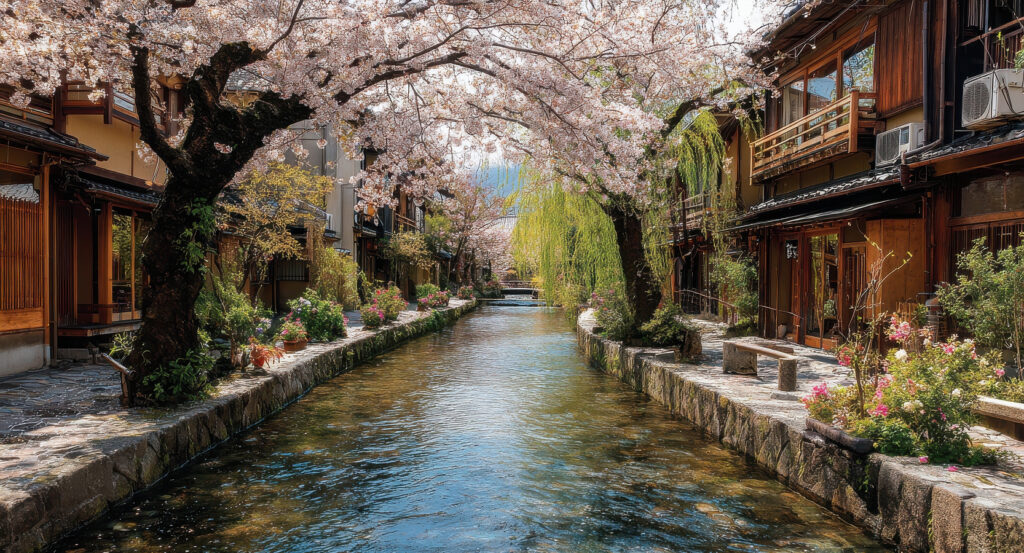
Why you should experience Suiran, a Luxury Collection Hotel in Kyoto, Japan.
Suiran, a Luxury Collection Hotel is Kyoto lived at river rhythm, a place that does not just sit beside Japan's most celebrated city, but layers itself within its cadence, offering sanctuary, spatial intelligence, and cultural depth.
Located in the scenic Arashiyama district along the peaceful banks of the Ōi River (sometimes referred to as the Katsura River), Suiran occupies one of Kyoto's most poetic settings, where water, mountains, and urban life converge. Arrival here feels like a composed transition rather than a threshold, you leave the city's historic corridors and enter a quieter world shaped by wood, water, and measured light. The exterior presence is refined rather than monumental, signaling intention without performance. Inside, public spaces are generous yet unassertive. Timber, stone, glass, and fabric unite in a material style that feels distinctly Japanese, warm under touch, quiet under use, and fluent with light and season. Circulation through the hotel feels rhythmic rather than abrupt, with sightlines calibrated to river views, garden compositions, and subtle transitions between interior and exterior. There is no rush to impress; instead, the space settles your presence. Guest rooms and suites embody the hotel's character with remarkable coherence. They are carved out with restraint rather than excess, arranged to support rest, reflection, work, and pause without visual noise or thematic statement. Beds are deeply comfortable, positioned to invite rest after days spent exploring temple trails, riverside paths, and forested hills. Floor-to-ceiling windows frame the river, private garden views, or the forested edges of Arashiyama, turning the landscape into a living backdrop. Furniture is understated but purposeful: desks that support real use, seating that invites lingering without posturing, and storage that allows you to unpack and settle fully rather than hover in transit. Lighting is among the hotel's defining strengths. Layers of natural and artificial light are calibrated to diminish physical friction, soft morning glow, warm afternoon shift, and evening luminosity that eases. Bathrooms are composed as private retreats. Deep soaking tubs, rain showers, and finishes chosen for tactile ease turn daily routine into moments of calm. Dining at Suiran is rooted in Kyoto's culinary culture. Rather than turning meals into visual showpieces, the hotel's restaurants and lounges emphasize balance, local sourcing, and seasonality, presenting each course with precision and place, an approach that feels aligned with Kyoto's broader gastronomic sensibility. Service throughout the hotel is attentive, situationally aware, and quietly present. Interactions feel informed rather than ceremonial, guided by an understanding that many guests arrive seeking context rather than checkpoint. Staff anticipate needs with subtlety, offering guidance rooted in local nuance, best river paths, temple sequences that avoid crowds, schedules tuned to seasonal bloom. Suiran attracts travelers who value positioned calm: cultural explorers, long-stay visitors, couples seeking reflection over performance, and anyone who wants Kyoto to feel addressed.
What you should know about Suiran Kyoto.
Suiran is not a standalone modern resort grafted onto Kyoto; its character is inseparable from the architecture, landscape, and history of Arashiyama itself, a district that has been a seasonal escape for Japanese from Kyoto's political center since the Heian era (9th-12th centuries).
Rather than inserting a contemporary luxury language that competes with place, the hotel's design responds to three foundational conditions: water, wood, and transition. Ōi River is not a river only in view; it is a spatial condition that shapes movement, sound, light, and psychological tempo. Landscape architects and designers treated it as a spatial anchor, organizing circulation, sightlines, and composition around it. Materials were chosen not for dramatic contrast, but for how they age, absorb, and echo, cedar, sugi timber, stone, and glass that register change across seasons with quiet fidelity. Interiors were planned through observation of human patterns rather than hospitality tropes: how people wake with light, how they unpack and settle when traveling for multiple nights, where they pause between activities, and how rest feels after deep days of walking or cycling. This behavioral grounding results in spaces that feel intuitive. Lighting systems were integrated early rather than retrofitted, shaping environments that support circadian rhythm and reduce visual fatigue. Bathrooms were conceived as ritual spaces rather than functional zones, emphasizing tactile finishes, water presence, and enclosure. Dining venues were designed as social infrastructure, calibrated for meals that unfold organically rather than in discrete courses of performance. This approach aligns with Kyoto's culinary character, where balance and presence matter more than theatrical presentation. Operational culture is equally intentional. Staff training emphasizes local familiarity, situational awareness, and adaptive presence. Interactions feel like guidance from someone who lives there. Over time, this has cultivated loyalty among travelers who return not for trend or novelty, but because the experience remains coherent and grounding under repeated use. In a hospitality landscape where many properties chase design statement or thematic branding, Suiran's distinction lies in attentive restraint, architecture, service, and environment all calibrated to support presence.
How to fold Suiran Kyoto into your trip.
Suiran works best when you treat it as a quiet nucleus of rhythm, return, and reflection rather than merely a staging point between temples and landmarks.
Begin mornings with the river. Step out before crowds gather and walk along the Ōi River's tree-lined banks, letting the subdued light and flowing water shape your pace. Use early hours to visit nearby Tenryū-ji Temple and its gardens before they fill, allowing Kyoto's layered history to register. Because the hotel sits within a quieter district, returning midday feels restorative. Come back to relax by the water, rest, or spend quiet time in the spa, using the pause to recalibrate. Afternoons are ideally spent in neighboring districts that reward slow movement: bamboo groves, café-lined lanes, small galleries, and hidden shrines reveal themselves when you move. Ride green shaded paths on foot or bicycle, letting transitions shape your experience. Evenings at Suiran unfold with composure. Dine thoughtfully using local seasonal rhythms, attend performances or tranquil night walks, or simply sit by the river as light softens and the landscape settles. Returning late never feels jarring because the hotel's atmosphere absorbs energy. Suiran pairs especially well with extended stays, cultural immersion, and itineraries that prize presence over pace, where the journey is felt as much in return as in departure. By the time you leave, Kyoto will feel less like a series of destinations and more like a state of being, and Suiran will feel like the place that made that feeling possible, not softened, not sanitized, but deeply present. In a city defined by balance, ritual, and seasonal nuance, Suiran stands not as a destination but as a view through which Kyoto becomes intelligible, grounded, and resonant.
Where your story begins.
Foresyte Travel reveals places that feel extraordinary long before you arrive.
Experience premium editorial crafted for luxury travelers.

















































































































