
Why JC Contemporary matters.
JC Contemporary is the beating heart of modern creativity inside Hong Kong's most historic walls, a luminous bridge between the city's colonial past and its daring artistic present.
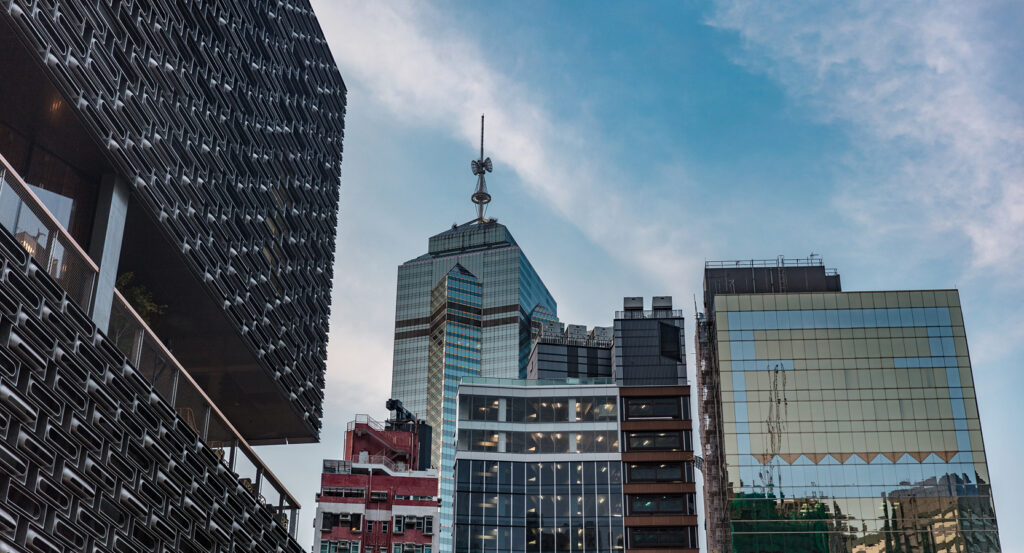
Tucked within the restored Central Police Station compound at Tai Kwun, this striking glass-and-concrete structure feels like a breath of freedom bursting through stone. From the outside, its minimalist geometry contrasts beautifully with the red-brick heritage buildings that surround it; from the inside, it's pure revelation. Light pours through open stairwells, casting shifting patterns across whitewashed walls as you move through immersive exhibitions that span sculpture, installation, film, and sound. Each space feels alive, raw, intentional, and constantly changing. The museum doesn't just display art; it stages a discussion between heritage and experiment, silence and expression, the tangible and the transcendent. In a city known for its vertical speed, JC Contemporary slows you down, invites you to pause, to look, to feel the world rebuilding itself through vision.
What defines JC Contemporary.
JC Contemporary was designed by the renowned Swiss architectural firm Herzog & de Meuron, the same visionaries behind London's Tate Modern and Beijing's Bird's Nest Stadium.
Their goal wasn't to erase the compound's past but to carve light into its shadows. Every angle of the museum's concrete façade was crafted to echo the restrained order of the original police station, yet reinterpreted through the language of transparency and openness. The “JC” in its name stands for the Hong Kong Jockey Club, which funded the expansive revitalization of Tai Kwun, turning a decommissioned complex of control into a living stage for art. Inside, the museum spans three floors, with galleries designed for large-scale contemporary works that challenge, provoke, and redefine. Rotating exhibitions feature boundary-pushing artists from Asia and beyond, often exploring the tension between authority and individuality, a recurring theme in the context of Tai Kwun's rebirth. Even the staircases are part of the experience: raw concrete meets light in sculptural tension, mirroring the city's own contradictions between grit and grace. For artists and visitors alike, JC Contemporary has become a sanctuary, a space where courage and curiosity are not only allowed, but expected.
How JC Contemporary fits.
Set aside an unhurried hour, two, to wander its halls with openness and quiet wonder.
Begin in the lower courtyard of Tai Kwun, where the museum rises like a monolith of light against the surrounding brick. As you ascend, let each floor guide you into a different rhythm: conceptual installations on one level, immersive projections on another, culminating in works that engage directly with the architecture itself. Pause at the upper-level windows to look out over the heritage compound, the contrast between past and present is part of the art. After exploring, step outside to the museum's terrace, where the city skyline shimmers beyond the compound's historic walls, a living backdrop to all you've just seen. End your visit with a drink at one of Tai Kwun's courtyard cafés or rooftop bars, where you can reflect on how seamlessly this museum weaves history and modernity into a single breath. JC Contemporary in Hong Kong isn't just a gallery, it's an act of transformation, an invitation to see the future emerging, right in the heart of the past.
Where your story begins.
Foresyte Travel reveals places that feel extraordinary long before you arrive.
Enjoy editorial crafted for luxury travelers.
Foresyte may earn a commission when you book.

















































































































