
Why Temple Street Night Market matters.
Temple Street Night Market is Hong Kong in its purest form: electric, chaotic, and endlessly captivating.
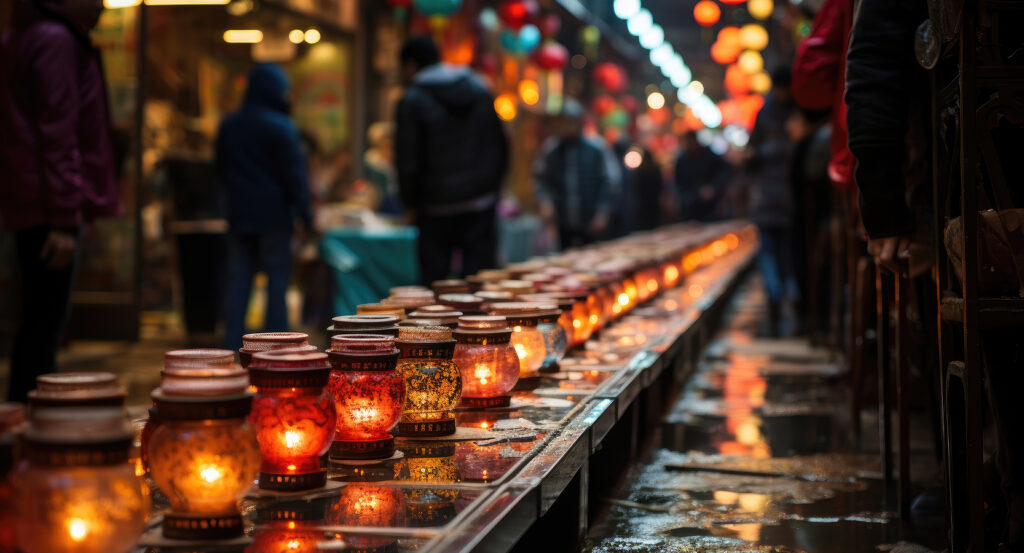
As the sun sets and neon lights flicker to life, this stretch through Jordan and Yau Ma Tei transforms into a mirror of sound, scent, and color. The air hums with chatter, bargaining, and the sizzling aroma of street food, grilled squid, clay pot rice, and steaming bowls of noodles served under glowing red lanterns. Fortune tellers line the sidewalks, their tables illuminated by single bulbs as they read palms and tarot cards with poetic certainty. Vendors call out their prices for everything from jade trinkets and silk robes to electronics and antiques that seem to have stories of their own. It's physical overload in the best possible way, a living stage where old Hong Kong and modern energy collide. Beneath the chaos lies harmony: locals and travelers mingling, cultures overlapping, and the spirit of the city alive in every shout, laugh, and heartbeat. Temple Street isn't just a market, it's Hong Kong's soul, performing nightly for anyone willing to join the show.
What defines Temple Street Night Market.
Behind the flashing lights and smoky stalls lies a story of tradition and resilience, shaped by the people who built this neighborhood from the ground up.
Named after the Tin Hau Temple that still stands proudly at its center, Temple Street began in the 1920s as a gathering place for traders, opera performers, and residents of Kowloon's working-class districts. As Hong Kong industrialized, the market grew with the city, a microcosm of its evolution from colonial port to global powerhouse. During the postwar years, Temple Street became a refuge for immigrants and small business owners who carved out livelihoods amid limited means, their stalls becoming extensions of their homes. The street's reputation as “Men's Street” emerged from its early focus on practical goods, tools, watches, electronics, but its heartbeat was always cultural. Cantonese opera performers once sang under makeshift canopies here, their melodies drifting through the night air, and you can still feel echoes of that theatrical spirit in the rhythm of today's market. In a city reinventing itself, Temple Street endures, not as nostalgia, but as proof that Hong Kong's character thrives most vividly at street level.
How Temple Street Night Market fits.
To experience Temple Street right, come hungry, and come late.
Arrive just after dusk, when the market awakens and the crowds begin to flow. Start near the Tin Hau Temple, where incense coils burn in quiet contrast to the noise outside, and follow the lights as they spill into the night. Wander the stalls with no agenda, let curiosity guide you toward jade pendants, vintage film posters, and hand-painted fans. Stop at one of the dai pai dongs (open-air food stalls) for stir-fried noodles, oyster pancakes, or sweet tofu pudding, sharing a table with locals who will recommend their favorite dishes before you finish eating. Between bites, pause to watch a street musician play a traditional erhu or a fortune teller trace fate in your palm. When you've had your fill, step back and take in the view, neon reflecting off rain-slicked pavement, steam rising from woks, laughter echoing through the narrow lanes. Temple Street in Hong Kong isn't just a place to shop, it's a living pulse of the city, where every night feels like an encore performance written by the streets themselves.
Where your story begins.
Foresyte Travel reveals places that feel extraordinary long before you arrive.
Enjoy editorial crafted for luxury travelers.
Foresyte may earn a commission when you book.

















































































































