
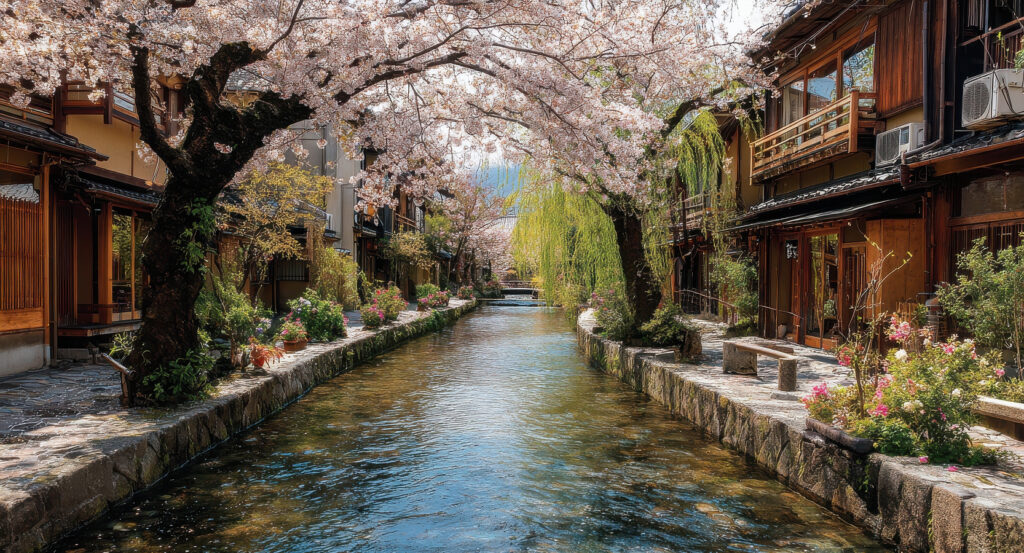
Why you should experience The Hotel Seiryu Kyoto Kiyomizu in Kyoto, Japan.
The Hotel Seiryu Kyoto Kiyomizu is Kyoto observed from inside its most sacred gravity well, a hotel that exists in discussion with pilgrimage, daily life, and elevation.
Positioned at the base of the Kiyomizu slopes, this property occupies one of the most emotionally charged pieces of ground in the city. Every approach to the hotel carries weight: stone paths worn smooth by centuries of footsteps, shopfronts that transition from commerce to quiet, the steady incline that subtly slows your breathing before you ever arrive. Entry into the hotel feels like a release. You move from motion into order, from sound into control. The building does not announce itself loudly. Instead, it steadies you. Architecture here is about containment, not expression. Volumes are generous but disciplined, light is abundant but softened, and materials are chosen to anchor rather than distract. The atmosphere immediately signals that this is a place meant to absorb the intensity of its surroundings, not compete with them. Public spaces feel calm, intelligible, and quietly authoritative. Circulation paths are clear and deliberate, guiding movement. There is a sense that the building understands the resonant fatigue of being near one of Kyoto's most visited spiritual sites and responds by offering composure. Guest rooms continue this philosophy with a precision that feels intentional rather than luxurious for its own sake. Rooms are notably spacious for this part of the city, laid out to support real inhabitation. Beds are substantial and deeply comfortable, designed for recovery after days of uphill walking and dense exploration. Windows frame rooftops, treetops, and sloping streets rather than postcard vistas, keeping you grounded in the living fabric of Higashiyama. Furniture placement is exacting. Desks are positioned where light is useful, seating feels natural rather than decorative, and storage is ample enough to fully unpack and settle. The rooms feel finished, resolved, and calm, free of unnecessary ornamentation. Lighting is among the hotel's strongest assets. It is layered, adjustable, and emotionally intelligent, supporting early mornings, midday returns, and quiet evenings. Bathrooms are generous and functional, designed around comfort and routine. Deep tubs, strong showers, and thoughtful counter space turn daily rituals into moments of physical reset. Dining at The Hotel Seiryu Kyoto Kiyomizu is measured and contextually aware. Meals feel attuned to the surrounding district, emphasizing balance, seasonality, and clarity over theatrical presentation. Eating here feels like a pause rather than an event, an opportunity to recalibrate rather than be impressed. Shared spaces throughout the hotel serve a similar purpose. Lounges, corridors, and transitional areas are not decorative fillers; they are psychological buffers that allow you to decompress between the city and rest. Service throughout the property is polished but grounded. Interactions are calm, precise, and situationally aware, guided by an understanding that guests here often arrive overstimulated by crowds, slopes, and physical density.
What you should know about The Hotel Seiryu Kyoto Kiyomizu.
The Hotel Seiryu Kyoto Kiyomizu was designed with the understanding that location alone is not enough when the resonant weight of place is this concentrated.
Rather than leaning into historic mimicry or temple-adjacent theatrics, the hotel's design team focused on creating an interior language capable of stabilizing guests after exposure to one of Japan's most visited sacred sites. This required restraint, clarity, and spatial confidence. Architectural decisions emphasize horizontality and enclosure to counterbalance the vertical exertion of the surrounding hills. Materials were selected for their grounding qualities: stone that carries visual weight, wood that absorbs sound, and surfaces that soften light. Public spaces were planned as sequences of decompression, allowing guests to gradually shed the external environment. Guest room layouts were developed through observation of how travelers actually behave in this district: frequent mid-day returns, physical fatigue, physical overload, and the need for quiet recalibration. As a result, rooms prioritize circulation clarity, storage capacity, and flexible lighting over decorative statement. Bathrooms were treated as recovery zones rather than amenities, with water pressure, temperature stability, and spatial comfort given priority over visual drama. Dining spaces were conceived as restorative environments, not culinary showcases, aligning with the idea that nourishment here should support equilibrium. Operational culture mirrors these design principles. Staff training emphasizes calm communication, pacing, and resonant awareness. This results in service that feels steady and reassuring, particularly valuable in a location where guests often arrive overwhelmed by crowds and heat. Over time, the hotel has earned loyalty from travelers who appreciate its ability to remain consistent under pressure, maintaining composure even during peak seasons. In a city where many properties near iconic sites lean heavily into performance, The Hotel Seiryu Kyoto Kiyomizu stands apart by offering something more difficult: resonant containment.
How to fold The Hotel Seiryu Kyoto Kiyomizu into your trip.
The Hotel Seiryu Kyoto Kiyomizu works best when you allow it to function as a pressure-release chamber.
Begin mornings early, stepping uphill toward Kiyomizu-dera before crowds gather, allowing the experience to feel contemplative. Use the hotel's proximity to explore Higashiyama in layers rather than blocks: small shrines, side streets, and residential pockets reveal themselves when you move slowly and return often. Because the hotel sits just outside the most compressed foot traffic zones, returning midday feels like retreat. Come back to rest, bathe, or simply sit in silence before heading out again. Afternoons are well suited for exploration that values proximity over ambition: local craft shops, quiet cafés, and lesser-known temples reward unhurried attention. The hotel's calm allows you to pace yourself without feeling disconnected from the city's energy. Evenings unfold. Walk lantern-lit streets as crowds thin, dine nearby without rushing, or attend a performance knowing you will return to a space that absorbs the day rather than echoes it. Late returns feel grounding because the hotel's atmosphere mirrors the city's nighttime descent into quiet. The Hotel Seiryu Kyoto Kiyomizu pairs especially well with trips that involve physical movement, spiritual sites, or resonant intensity, where having a stabilizing environment matters as much as location. By the time you leave, Higashiyama will feel less overwhelming and more legible, and the hotel will feel like the reason you were able to experience it fully. In a city where proximity often comes at the cost of peace, The Hotel Seiryu Kyoto Kiyomizu offers a rare equilibrium: closeness without chaos, immersion without exhaustion, and hospitality designed not to impress, but to steady.
Where your story begins.
Foresyte Travel reveals places that feel extraordinary long before you arrive.
Experience premium editorial crafted for luxury travelers.

















































































































