
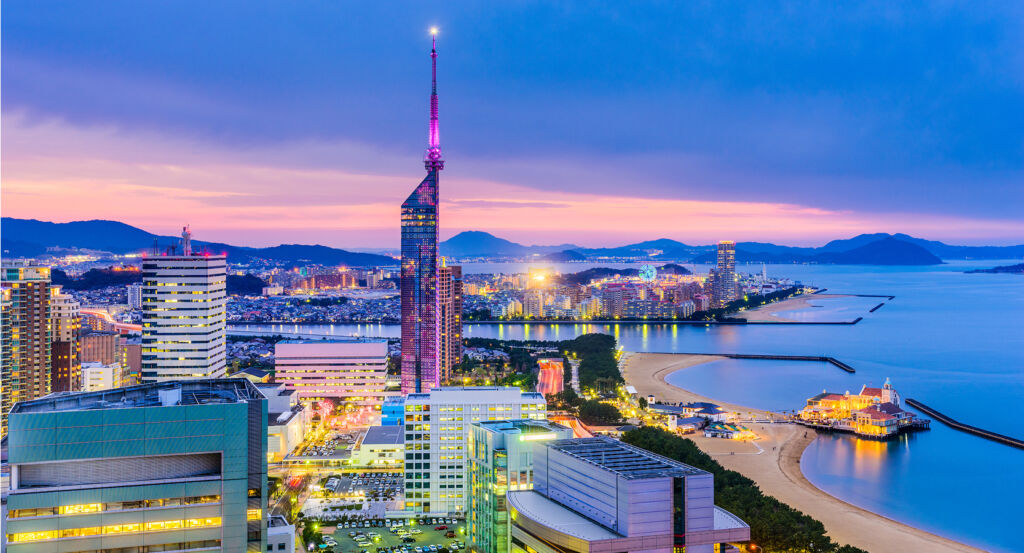
Why you should experience The Ritz-Carlton in Fukuoka, Japan.
The Ritz-Carlton is a study in elevated restraint, a hotel that interprets luxury not as performance but as control, control of pace, of sound, of light, of resonant temperature, allowing Fukuoka to be experienced from a position of calm authority. This is a property that does not attempt to dazzle; it steadies you, then quietly expands your awareness of the city around you.
Situated in the heart of Tenjin yet physically lifted above it, the hotel occupies a rare position where centrality and separation coexist. Arrival feels deliberate and composed. The transition from city to hotel is not abrupt, but gradual, street energy gives way to vertical ascent, and by the time you step into the public spaces, the city has softened into background presence. The interiors are architectural. Lines are clean, proportions are confident, and materials speak through texture. Stone, wood, and fabric are deployed with discipline, creating an atmosphere that feels grounded and quietly powerful. Public areas are intentionally uncluttered, designed to support orientation and stillness. Seating invites pause without performance, lighting is warm but controlled, and the sense of space feels measured rather than vast. Guest rooms extend this philosophy with precision. Layouts are generous yet restrained, allowing space to breathe. Beds are substantial and deeply comfortable, engineered for uninterrupted rest. The design language is refined and contemporary, with muted palettes and layered materials that recede so the view, skyline, water, or distant hills, can take precedence. Windows act as frames rather than features, grounding you in Fukuoka's geography without pulling you into its noise. Bathrooms are expansive and quietly luxurious, designed as places of recovery. Across the property, the experience feels intentional, grounded, and emotionally stabilizing. The Ritz-Carlton is ideal for travelers who want Fukuoka to feel composed, intelligible, and quietly profound, a city encountered through clarity.
What you should know about The Ritz-Carlton.
The Ritz-Carlton is best known for vertical serenity and cultural calibration, the understanding that luxury in a dense urban environment comes from removing friction rather than adding layers, and this principle quietly governs how the hotel operates.
Unlike luxury hotels that announce themselves through visual drama or narrative excess, this property is best known for subtraction. Spaces are not filled; they are edited. Circulation is intuitive and calm, allowing movement to feel effortless. Public areas are proportioned to prevent crowding even at peak occupancy, creating a sense of personal space that is rare in central city hotels. Materials throughout the hotel are selected for depth and longevity. Surfaces absorb sound, finishes resist glare, and textures invite touch. Acoustic behavior is a defining strength. Despite the hotel's central location, sound is carefully moderated, city noise fades into distant hum, interior movement never feels intrusive, and silence feels natural. Lighting strategy reinforces this composure. Daylight is treated as a primary design element, entering spaces with clarity and intention, while artificial lighting remains warm, even, and restrained. There are no dramatic shifts, no theatrical contrasts, just a steady visual rhythm that aligns with human circadian patterns. Service culture at The Ritz-Carlton reflects a distinctly Japanese interpretation of precision hospitality. Interactions are graceful, anticipatory, and deeply respectful. Assistance arrives exactly when needed, then recedes. Preferences are noted. Presence is attentive but never intrusive. There is an underlying assumption of mutual respect between guest and staff, a shared understanding that ease is the ultimate form of care. Another understated strength of the hotel is how it reframes Tenjin itself. Being located in the city's commercial and cultural heart does not feel overwhelming here; it feels curated. The hotel acts as a pressure valve, allowing you to step fully into the city's intensity, then return to an environment that restores equilibrium. Over multiple nights, this becomes transformative. Fukuoka begins to feel legible rather than busy, rich rather than dense. The hotel does not lean heavily on Japanese tradition or regional symbolism in overt ways. Instead, it channels a deeper cultural principle: mastery through restraint.
How to fold The Ritz-Carlton into your trip.
The Ritz-Carlton works best when you allow it to function as a calibrating base, a place that continuously resets your relationship with the city so exploration remains intentional.
Begin your mornings above the city. Wake to softened light and expansive views that immediately establish perspective. Let this vantage set your internal pace before descending into Tenjin's streets. From here, Fukuoka's shopping districts, dining corridors, galleries, and transit hubs are immediately accessible, yet the act of leaving the hotel always feels like a choice. Use this dynamic intentionally. Immerse yourself fully in the city, markets, cafés, waterfront walks, cultural venues, knowing that recovery is built into your return. Midday pauses are particularly powerful here. A short return to your room, a moment of stillness, or time spent simply looking outward recalibrates energy. Afternoons can unfold with depth rather than breadth: a single neighborhood explored fully, a long lunch, a quiet museum visit. Evenings at The Ritz-Carlton feel composed and deliberate. Whether dining in the hotel or returning after a night out, the transition from city to calm feels seamless. Night settles gently rather than abruptly, supporting rest that feels complete rather than collapsed. For longer stays, the benefits compound. Fukuoka reveals itself gradually, through rhythm, repetition, and nuance. Business travelers benefit from the hotel's ability to preserve focus and authority between engagements. Leisure travelers gain something rarer: sustained curiosity. Anchoring your stay at The Ritz-Carlton allows the city to be encountered as a balanced urban ecosystem. The hotel does not compete with boutique intimacy, waterfront openness, or heritage storytelling. It offers something more enduring: control. In doing so, it delivers a stay that feels poised, restorative, and deeply intentional, where luxury is not something you notice, but something that quietly holds you together as the city unfolds around you.
Where your story begins.
Foresyte Travel reveals places that feel extraordinary long before you arrive.
Experience premium editorial crafted for luxury travelers.

















































































































