Why The Ritz-Carlton Orlando matters.
The Ritz-Carlton Orlando, Grande Lakes is an expansive resort where Orlando's theme-park economy meets Central Florida's native wetlands, golf culture and the traditions of a grand hotel designed around a protected natural landscape.
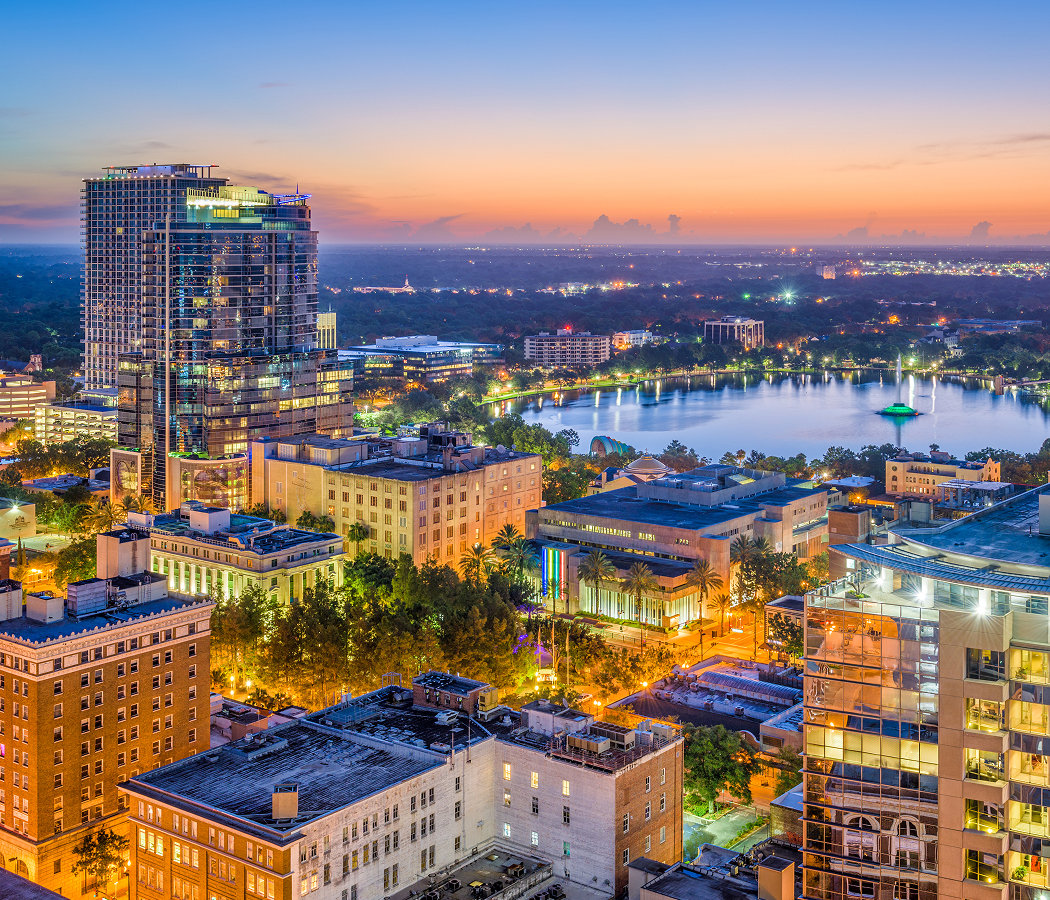
Occupying a secluded position on Central Florida Parkway beside Shingle Creek, The Ritz-Carlton Orlando, Grande Lakes sits between Orlando International Airport, the theme-park corridor and the wetlands of the Everglades headwaters, with Interstate 4 carrying traffic north toward downtown and south toward the parks. Its substantial Mediterranean-inspired architecture rises from a broad landscaped property organized around courtyards, water, gardens and golf fairways. The resort's scale creates an environment distinct from the dense commercial development of International Drive, replacing continuous retail frontage with lawns, palms, cypress trees and open views. Shingle Creek passes through the property, linking the resort to the drainage systems and wetland landscapes that define much of Central Florida. A large lake forms a visual center for the surrounding Grande Lakes development, reflecting the hotel, the adjacent JW Marriott and the rolling fairways of the golf course. Guest rooms and suites overlook gardens, water, pools and the surrounding conservation landscape, while the upper floors provide distant views across Orlando's low and heavily vegetated horizon. The architecture uses arcades, pale stucco, tiled roofs and formal landscaping to create a resort environment with a distinct Mediterranean character. The result is a large-scale Orlando resort whose built environment remains closely connected to the wetlands, waterways and open terrain of Central Florida.
What defines The Ritz-Carlton Orlando, Grande Lakes.
The Ritz-Carlton Orlando, Grande Lakes is best known for establishing one of Central Florida's most ambitious luxury resort developments, transforming an expansive landscape near the headwaters of the Everglades into a destination that united international hospitality, championship golf, and the region's natural heritage. The project originated through a partnership between Marriott International and Thayer Hotel Investors, whose April 2001 agreement established Grande Lakes as a major investment in Orlando's expanding tourism economy. The development brought The Ritz-Carlton and JW Marriott together on a single property for the first time, creating an integrated resort conceived to serve the region's growing market for international conventions, corporate gatherings, and luxury leisure travel. Thayer Lodging Group advanced the undertaking through an investment approaching $600 million, making Grande Lakes the largest nongaming hotel development to open in the United States during 2003. Its architectural conception drew inspiration from Addison Mizner, the influential American architect whose Mediterranean Revival buildings helped define the visual character of Florida's great resort communities during the 1920s. The Ritz-Carlton adopted the character of an Italian palazzo, connecting Orlando's contemporary hospitality expansion with the architectural traditions established during Florida's earlier era of luxury resort development. Grande Lakes officially opened on July 1, 2003, introducing a substantial new hospitality destination to a metropolitan tourism economy historically dominated by theme parks and convention infrastructure. The resort's original culinary character included Norman's, developed by celebrated Florida chef Norman Van Aken, whose pioneering interpretation of New World cuisine had established him as an influential figure in contemporary American gastronomy. His restaurant introduced a connection between Orlando's international luxury market and the multicultural culinary traditions of Florida, the Caribbean, and Latin America. The property entered another significant commercial chapter in February 2006, when Orlando-based CNL Hotels & Resorts acquired the entire Grande Lakes development from Thayer for $753 million. The transaction reflected the considerable investment value of the integrated resort and its growing importance within Central Florida's hospitality industry. Subsequent ownership passed to institutional investors, including the partnership associated with Blackstone and the Strategic Hotels & Resorts portfolio, extending the property's development through successive generations of international hospitality investment. A substantial renovation completed during the early 2020s renewed the hotel's interiors and principal public spaces, introducing a contemporary design interpretation of the surrounding Florida landscape. The resort's culinary evolution also brought acclaimed chef John Tesar to Grande Lakes through Knife & Spoon, which earned MICHELIN stars in 2022 and 2023 and strengthened the property's position within Orlando's emerging fine-dining culture. The Ritz-Carlton Orlando, Grande Lakes represents a defining chapter in Central Florida's hospitality development, connecting major international investment with the architectural inheritance, culinary creativity, and environmental character of the region.
Greg Norman's championship golf course establishes the resort's distinctive relationship with Central Florida's natural landscape through an architectural approach that integrates strategic play with the conservation of native habitats and interconnected waterways. The eighteen-hole, par-72 layout extends across 7,100 yards, incorporating carefully positioned bunkers, expansive fairways, and water features that reflect the ecological character of the surrounding terrain. Norman's design emphasizes the relationship between approach angles, landing positions, and the contours of individual greens, creating strategic variety through the deliberate arrangement of hazards and changes in elevation. The course earned designation as a Certified Audubon Cooperative Sanctuary, recognizing environmental management practices that protect wildlife habitat and support the ecological health of the surrounding landscape. Its subsequent GEO certification extended this commitment through standards addressing water conservation, energy use, pollution prevention, and responsible management of natural resources. The broader Grande Lakes estate occupies 500 acres near Shingle Creek, whose waterways form part of the northern headwaters of the Everglades ecosystem. This geographical relationship gives the resort an unusual connection to Florida's environmental history, linking its landscaped grounds with a watershed extending southward through the state's extensive wetlands. The property maintains protected habitat supporting more than one hundred bird species, preserving ecological conditions that attract native wildlife throughout the year. Guided excursions along Shingle Creek introduce the natural character of the region through paddling routes that traverse freshwater environments associated with alligators, wading birds, and other characteristic Florida species. The resort's agricultural program develops another dimension of this relationship through Whisper Creek Farm, a working garden whose cultivation practices connect local food production with contemporary hospitality. Its seasonal harvests contribute to the culinary philosophy of Whisper Creek Farm: The Kitchen, establishing a direct relationship between cultivated ingredients and the agricultural traditions of Central Florida. John Tesar's Knife & Spoon introduces a complementary interpretation of regional provenance through carefully sourced seafood, premium beef, and contemporary American cooking techniques. Tesar's culinary approach emphasizes the development of flavor through controlled dry aging, precise heat management, and the disciplined preparation of ingredients selected for their natural character. The restaurant's architectural transformation by Schoos Design incorporated natural wood, sculptural greenery, and a floating ceiling installation, establishing a visual relationship between its contemporary dining environment and Florida's surrounding landscapes. The Ritz-Carlton Spa extends the property's original architectural ambition through a substantial wellness environment conceived around the restorative traditions of destination resorts. Together, Norman's conservation-minded golf architecture, the ecological importance of Shingle Creek, the agricultural program, and the resort's distinctive culinary development establish an integrated relationship between luxury hospitality and the natural heritage of Central Florida.
How The Ritz-Carlton Orlando, Grande Lakes fits.
The Ritz-Carlton Orlando, Grande Lakes works as the starting point for an exploration connecting Central Florida's wetland ecology, Orlando's cultural institutions and the gardens that preserve the region's subtropical landscape.
Begin at Shingle Creek Regional Park, a natural corridor where wetlands, cypress stands, boardwalks and freshwater channels reveal the ecological system that continues through the Grande Lakes area. The park preserves a portion of the creek's relationship with Central Florida's broader watershed, creating habitat for wading birds, turtles and other wildlife within a landscape surrounded by rapidly developed suburbs and tourism infrastructure. Its trails and waterways provide a direct encounter with the terrain that shapes the resort's setting. The creek demonstrates how Orlando's most visible urban districts remain dependent on a network of wetlands and drainage channels beneath the city's development. Continue to Harry P. Leu Gardens, a botanical estate on the shore of Lake Rowena where tropical plants, flowering trees, palms and historic gardens occupy a former private residence. The gardens contain collections of camellias, roses, bromeliads, palms and other plants suited to Central Florida's climate, creating a living landscape that changes across the year. Their paths move through shaded groves, formal plantings and open lawns, connecting horticulture with the region's subtropical environment. The estate provides a quieter cultural setting than the resort corridor, demonstrating how Orlando's landscape can function as both public garden and historical property. Conclude at the Dr. Phillips Center for the Performing Arts, the downtown complex where opera, ballet, theater, concerts and touring performances occupy a prominent civic setting near Lake Eola and the central business district. Its theaters provide Orlando with a major architectural home for professional performance, connecting the city's visitor economy to a broader cultural calendar. The center's public terraces and surrounding streets link the arts district to downtown restaurants, offices, museums and public spaces. Its position demonstrates the continuing development of Orlando beyond amusement parks, establishing performance and civic architecture as major parts of the city's identity. The progression moves from Shingle Creek Regional Park's wetland landscape through Harry P. Leu Gardens' subtropical collections and concludes at the Dr. Phillips Center for the Performing Arts, where Orlando's natural setting gives way to its expanding cultural center.
Where your story begins.
Foresyte Travel reveals places that feel extraordinary long before you arrive.
Enjoy editorial crafted for luxury travelers.
Foresyte may earn a commission when you book.