
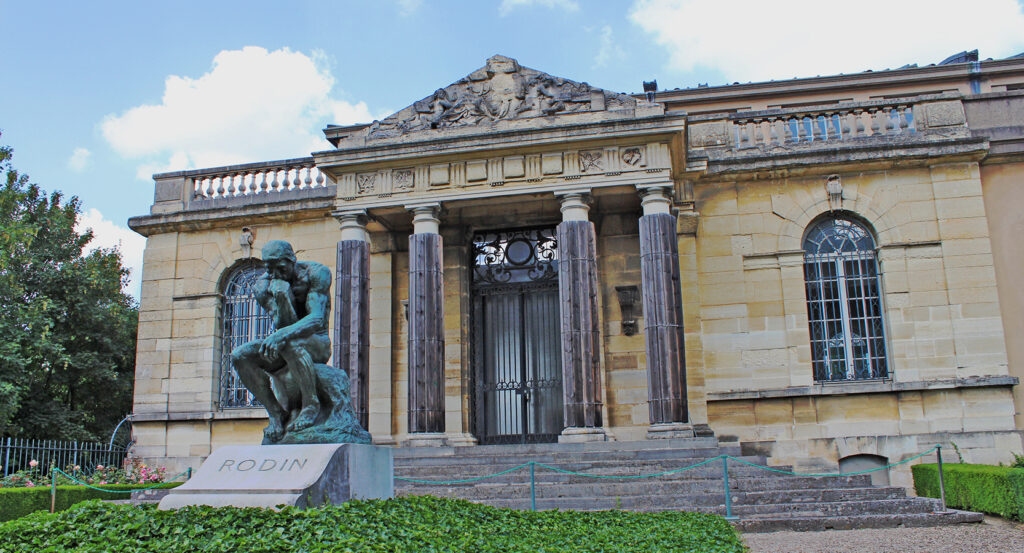
Why you should experience The Thinker at Musée Rodin in Paris, France.
To stand before The Thinker is to stand before the distilled essence of contemplation, a sculpture that compresses the weight of the world into the tension of a single human form.
At first glance, it is simply a man in thought: muscles taut, brow furrowed, chin pressed to hand. But step closer and the air changes. The veins, the strain, the unrelenting grip of introspection become palpable, you feel not just thought, but the burden of existence itself. Auguste Rodin's mastery lies in how he sculpts energy into stillness, creating a figure that seems both ancient and timeless, poised between action and paralysis. Originally conceived as part of The Gates of Hell, The Thinker evolved into an icon of human consciousness, a symbol of intellect wrestling with instinct, of creation born from doubt. When sunlight strikes its bronze surface, the patina gleams like an inner fire, a visual metaphor for the mind's spark against the darkness of uncertainty. Few works invite such intimacy from strangers, and fewer still return it with such quiet, devastating truth.
What you should know about The Thinker at Musée Rodin.
What many don't realize is that The Thinker was never meant to stand alone.
Rodin conceived him as Dante Alighieri, the poet surveying the damned souls below in The Gates of Hell. Yet over time, this figure transcended its literary origins, it became something universal, stripped of context yet loaded with meaning. The early casts of the statue were smaller, almost pocket-sized, before Rodin enlarged it to grand scale, forcing the observer to confront intellect as something physical, muscular, and alive. Rodin's fingerprints, quite literally, remain embedded in the sculpture's surface, a signature of imperfection that defied the classical obsession with polish. The Thinker's roughness is its strength; it's the evidence of struggle made permanent. Each cast produced since Rodin's death tells its own story, its patina aging differently in every climate. The Paris original, resting in the gardens of the Musée Rodin, absorbs light like a living being, shifting in tone as the day moves, mirroring the evolving mood of its admirers.
How to fold The Thinker at Musée Rodin into your trip.
To fold The Thinker into your Paris journey, don't rush it, this is not a work you glance at; it's one you meet.
Visit the Musée Rodin in the morning, when the sculpture's surface glows under soft sunlight filtering through the trees. Approach from a distance, watching how the figure's silhouette changes as you move, from defiance to exhaustion to revelation. Sit on one of the benches nearby and allow your thoughts to slow until they echo the stillness of the bronze before you. The Thinker is more than a symbol of intellect; it's a mirror for your own inner state, the questions you've avoided, the dreams you've postponed, the clarity that only comes through stillness. Pair your visit with a walk through the museum gardens to witness Rodin's other resonant extremes, The Kiss, The Burghers of Calais, The Gates of Hell, and see how they all orbit this single masterpiece.
Where your story begins.
Foresyte Travel reveals places that feel extraordinary long before you arrive.
Experience premium editorial crafted for luxury travelers.














































































































