Why The Westin Kaʻanapali Ocean Resort Villas matters.
The Westin Ka'anapali Ocean Resort Villas is a beachfront vacation ownership resort where North Ka'anapali's coastal geography meets Starwood's pioneering expansion of residential hospitality in Hawaii and the architectural development of Maui's western resort district.
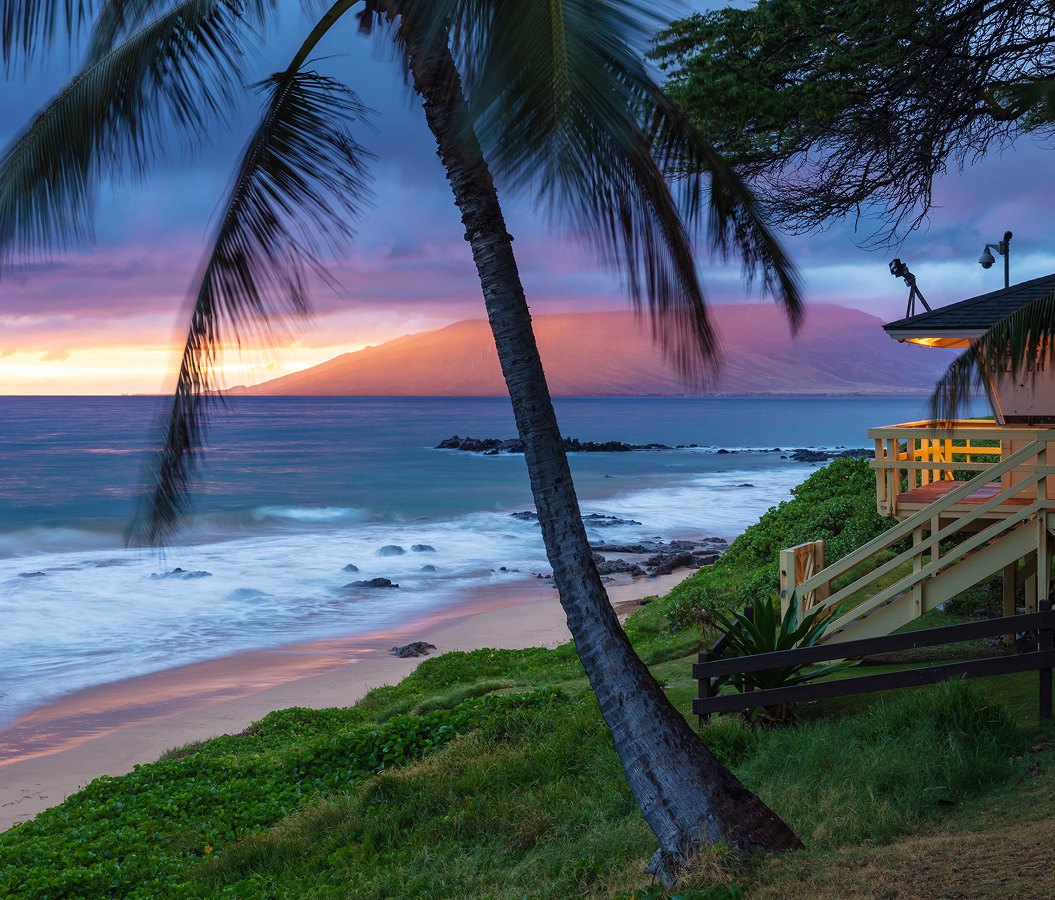
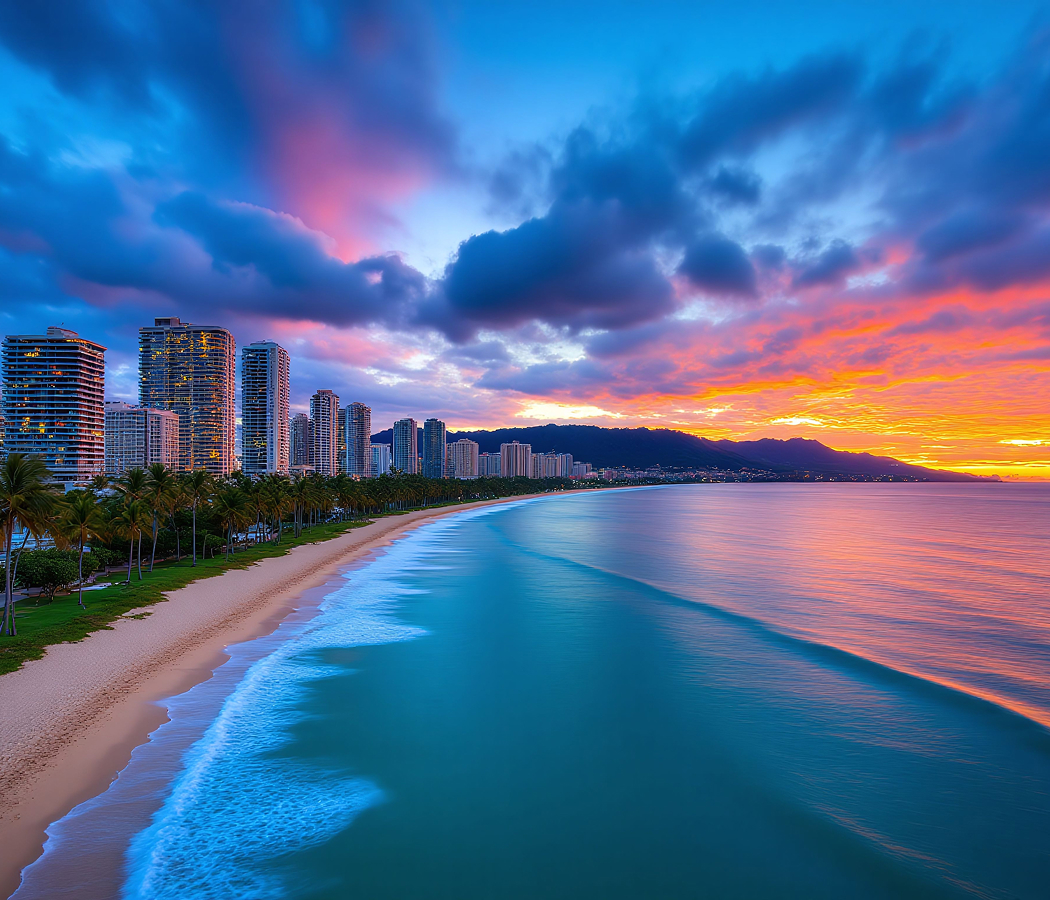
Occupying a substantial oceanfront parcel along Maui's western coastline, The Westin Ka'anapali Ocean Resort Villas stands between North Ka'anapali Beach and the West Maui Mountains, with Honoapiʻilani Highway extending inland and the islands of Lānaʻi and Molokaʻi visible across the Pacific. Design Partners Incorporated organized the property around three six-story residential buildings and a two-story central clubhouse. The principal buildings form a broad courtyard composition, with landscaped gardens, swimming pools and pedestrian circulation occupying the space between the residential wings. Their placement directs views toward the ocean and creates an architectural relationship between the interior gardens and the coastline. More than 90 percent of the original accommodations were positioned to receive ocean views, an outcome achieved through the orientation and separation of the buildings. The architectural plan incorporates natural cross-ventilation, using the prevailing coastal winds to support airflow through the residential structures. The clubhouse occupies a central position within the development, providing an architectural transition between the entrance and the surrounding gardens. A landscaped watercourse, waterfalls and a winding swimming pool organize the principal recreational courtyard. Tropical vegetation surrounds the pedestrian paths, connecting the buildings through a continuous garden landscape. The result is a coastal residential resort whose building orientation, open courtyards and integrated landscape establish a direct architectural relationship with Maui's western shoreline.
What defines The Westin Kaʻanapali Ocean Resort Villas.
The Westin Ka'anapali Ocean Resort Villas is best known for becoming Starwood Vacation Ownership's first Hawaiian resort and establishing the foundation for the company's subsequent expansion across Maui and Kauai. Starwood Hotels & Resorts Worldwide developed the property through its vacation ownership division, pursuing a residential hospitality model that combined deeded vacation interests with the services of an international hotel organization. Presales began on September 24, 2001, during a period of substantial disruption to the American travel industry following the September 11 attacks. The development nevertheless attracted strong initial demand, demonstrating the commercial potential of branded vacation ownership within Hawaii's established luxury resort market. Raymond L. Rip” Gellein Jr., chief executive officer of Starwood Vacation Ownership, directed the organization during this expansion, positioning Westin-branded residential properties as an important component of Starwood's international growth. The resort's first phase opened in December 2003, establishing a new hospitality format within a coastal district previously dominated by conventional resort hotels and condominium developments. Its initial residential offerings sold before construction was completed, and sales for the subsequent phase began during the first months of operation. Starwood connected the property with its broader Maui hospitality network, extending reciprocal charging privileges to affiliated hotels and incorporating the development into an international vacation ownership exchange system. The resort also accepted conventional hotel reservations, creating a commercial structure that combined vacation ownership sales with short-term hospitality operations. In May 2005, the American Resort Development Association awarded the property its ACE Project of Excellence, the organization's highest distinction for an individual vacation ownership development. The recognition preceded the completion of the resort's final construction phase, which opened during the summer of 2005. Starwood subsequently expanded its Hawaiian vacation ownership portfolio through the neighboring Westin Ka'anapali Ocean Resort Villas North, which began receiving occupants in July 2007 and completed its opening program that December. The company's Hawaiian development strategy extended to Kauai through the opening of The Westin Princeville Ocean Resort Villas in April 2008. The original Ka'anapali development became the starting point for a substantial regional expansion, demonstrating how internationally branded vacation ownership properties shaped the next generation of Hawaiian coastal resort investment.
How The Westin Kaʻanapali Ocean Resort Villas fits.
The Westin Ka'anapali Ocean Resort Villas works as the starting point for a coastal outing connecting the restoration of Maui's coral reefs, the sacred geography of Hawaiian chiefly traditions and the preservation of outrigger canoe paddling along the western shoreline.
Begin at Kahekili Beach Park, adjoining a marine conservation area established to protect the ecological relationships supporting Maui's coral reefs. The surrounding reef experienced a substantial decline in living coral cover, falling from 55 percent in 1994 to 33 percent in 2006 as algae expanded across the reef surface. Hawaii's Division of Aquatic Resources established the Kahekili Herbivore Fisheries Management Area in July 2009, introducing restrictions on the removal of parrotfish, surgeonfish, rudderfish and sea urchins. These marine animals graze on algae, helping preserve conditions necessary for coral growth. Subsequent monitoring revealed substantial increases in herbivorous fish populations, demonstrating the importance of protecting grazing species within reef conservation programs. Continue to Puʻu Kekaʻa, the volcanic promontory associated with Hawaiian spiritual traditions and the political history of eighteenth-century Maui. Hawaiian tradition connects the headland with the passage of spirits into the afterlife, giving the coastal formation a sacred significance extending beyond its geological character. The site also carries associations with Kahekili, the Maui ruler whose military campaigns expanded his influence across neighboring islands. Kahekili practiced lele kawa, the ceremonial act of leaping from coastal cliffs into the ocean, demonstrating physical courage through an activity associated with chiefly authority. The opening of Sheraton Maui in 1963 introduced a sunset cliff-diving ceremony honoring this tradition, maintaining a public connection with the headland's Hawaiian history. Conclude at Hanakaʻōʻō Beach Park, an important center of Hawaiian outrigger canoe paddling and the community organizations responsible for preserving traditional maritime skills. Lahaina Canoe Club was established in 1971 through the efforts of founders including George Paoa, Sam Kaʻai, John Earl Kukahiko and Leevan Sequiera. The organization developed competitive paddling as a means of sustaining Hawaiian cultural practices through organized community participation. Kahana Canoe Club followed in May 1976 through the efforts of the Naleieha family, initially operating from Kahana before relocating through Māla to Hanakaʻōʻō. Its annual Naleieha Regatta developed into a competitive gathering connecting paddlers across generations. The beach's association with canoe racing preserves a practical relationship between Hawaiian maritime knowledge, collective discipline and the transmission of traditional skills through community sport. The progression moves from Kahekili Beach Park's ecological restoration through Puʻu Kekaʻa's sacred and chiefly associations and culminates in Hanakaʻōʻō Beach Park's preservation of Hawaiian canoe traditions, connecting environmental stewardship, ancestral geography and living maritime culture along the Ka'anapali coastline.
Where your story begins.
Foresyte Travel reveals places that feel extraordinary long before you arrive.
Enjoy editorial crafted for luxury travelers.