
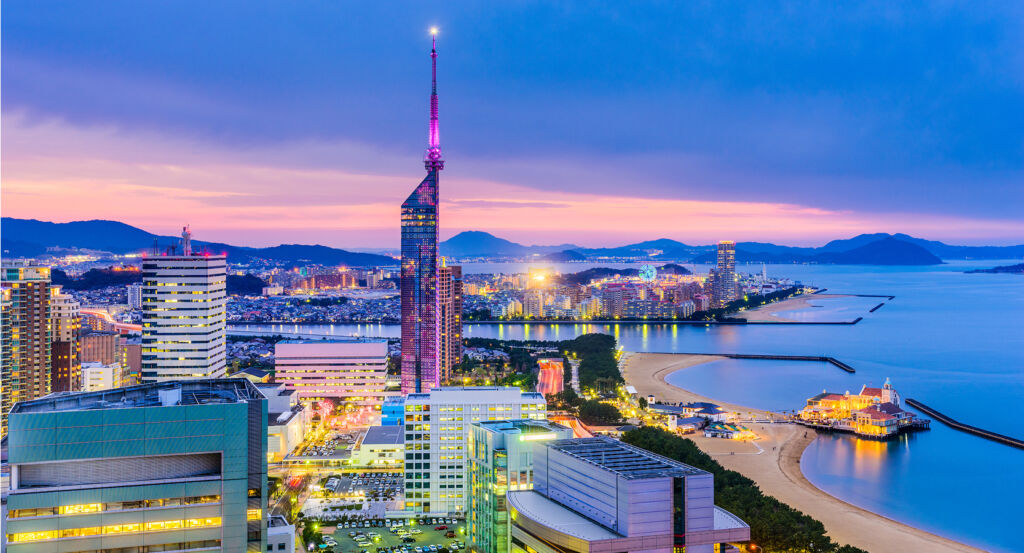
Why you should experience Tokyu Stay Fukuoka Tenjin in Fukuoka, Japan.
Tokyu Stay Fukuoka Tenjin is a self-directed urban residence that lets Fukuoka unfold at human pace, where autonomy, continuity, and everyday control replace hotel dependency and compressed travel behavior.
This property sits inside Tenjin not as a visitor-facing accommodation, but as something closer to residential infrastructure. From the moment you arrive, the experience signals a different contract with the traveler. There is no performance layer, no aspirational staging meant to frame your stay as an event. Instead, the hotel positions itself as a functional extension of daily life, allowing you to move through Fukuoka with the mindset of someone temporarily living there. Entry is efficient and calm. Public spaces are compact and intentionally restrained, designed to support transition. Circulation is legible within seconds, and once learned, it disappears from attention entirely. This absence is deliberate. Tokyu Stay does not want to occupy mental space; it wants to free it. Guest rooms complete this shift in psychology. These are not conventional hotel rooms designed for short-term consumption. They are compact urban studios built around routine. The presence of in-room laundry immediately redefines how time behaves. Packing pressure dissolves. Decision fatigue drops. The room becomes something you use, not just sleep in. Layouts are methodical and efficient, with each function clearly separated and intuitively placed. Beds are comfortable and reliable, tuned for consistency. Furnishings are minimal and pragmatic, chosen to support real use. Windows open onto Tenjin's everyday streetscape, pedestrians, signage, weather, motion, grounding you firmly inside the city's ongoing life. Bathrooms are modern, clean, and quietly efficient, supporting routine. Across the property, the experience feels stabilizing, rational, and quietly liberating. Tokyu Stay Fukuoka Tenjin is ideal for travelers who want Fukuoka to feel inhabitable rather than performative, a city experienced through repetition, routine, and personal agency.
What you should know about Tokyu Stay Fukuoka Tenjin.
Tokyu Stay Fukuoka Tenjin is built around time sovereignty, a philosophy that treats control over daily rhythm as the most valuable form of modern hospitality.
Unlike traditional hotels that structure your experience around housekeeping schedules, service touchpoints, and shared amenities, Tokyu Stay is engineered to remove dependency. The building is designed to recede into the background of your life rather than assert itself as a destination. Circulation paths are short and obvious, minimizing friction between intention and action. Public areas exist primarily as connective tissue, not social theater. Materials throughout the hotel emphasize durability and neutrality. Surfaces feel familiar and workmanlike rather than curated, finishes resist visual fatigue, and textures absorb sound instead of amplifying it. Acoustic behavior reinforces the residential sensibility. You are aware of life happening around you without being disrupted by it, creating an environment that feels lived-in rather than insulated. Lighting strategy is similarly pragmatic. Daylight is allowed to define spaces naturally, while artificial lighting remains consistent and functional, avoiding dramatic contrast or mood manipulation. This steadiness supports circadian balance, particularly for longer stays or irregular schedules. Service culture aligns tightly with autonomy. Interactions are polite, efficient, and minimal. Assistance is available without being imposed, and staff engagement feels transactional in a way that respects independence rather than neglecting care. The in-room laundry is not an amenity; it is the axis around which the experience turns. Over multiple days, it changes how travel feels. You stop rationing clothes. You stop planning outfits. You stop compressing time. The psychological effect compounds quickly. Travel fatigue decreases. Presence increases. The surrounding Tenjin neighborhood amplifies this design intent. Supermarkets, pharmacies, cafés, transit lines, offices, and everyday services sit within immediate reach, allowing the hotel to function as an extension of the city's residential fabric. Tokyu Stay Fukuoka Tenjin does not attempt to narrate Japanese tradition, regional identity, or boutique storytelling. It captures a contemporary value that is increasingly rare: hospitality that gets out of the way.
How to fold Tokyu Stay Fukuoka Tenjin into your trip.
Tokyu Stay Fukuoka Tenjin works best when you treat it as a temporary living base rather than a hotel, allowing your time in Fukuoka to expand horizontally instead of compress vertically.
Begin your mornings. Wake, prepare, and step into Tenjin when you are ready rather than when an itinerary demands it. The hotel's domestic setup supports natural routine, coffee, planning, laundry, rest, without forcing segmentation between “hotel time” and “city time.” Use proximity intentionally. Tenjin's transit lines, shopping streets, offices, and dining corridors are immediately accessible, but return is just as easy. Midday returns become part of the rhythm. Run a wash. Reset your space. Regroup mentally. Then step back out refreshed. Afternoons lend themselves to depth. Explore one neighborhood thoroughly. Take longer meals. Walk. Because your base supports continuity, there is no anxiety about distance or exhaustion. Evenings unfold. Dine nearby, explore nightlife, or return early and let the room function as a personal anchor rather than a place to collapse. Over longer stays, Tokyu Stay Fukuoka Tenjin fundamentally alters how the city feels. Fukuoka becomes legible through repetition. Routes become habitual. Favorites emerge. The line between visitor and resident softens. Business travelers benefit from the hotel's ability to support real routines, work-life balance, and recovery between obligations. Leisure travelers gain something rarer: the freedom to live normally in a foreign city. Anchoring your stay at Tokyu Stay Fukuoka Tenjin allows Fukuoka to be encountered as a functional, human-scale city, not a destination optimized for short-term consumption. The hotel does not compete with luxury towers, design statements, or experiential retreats. It offers something quieter and more radical: control over time. In doing so, it delivers a stay that feels grounding, empowering, and distinctly modern, where rest supports continuity, routine supports presence, and the city reveals itself through everyday life lived well.
Where your story begins.
Foresyte Travel reveals places that feel extraordinary long before you arrive.
Experience premium editorial crafted for luxury travelers.

















































































































