
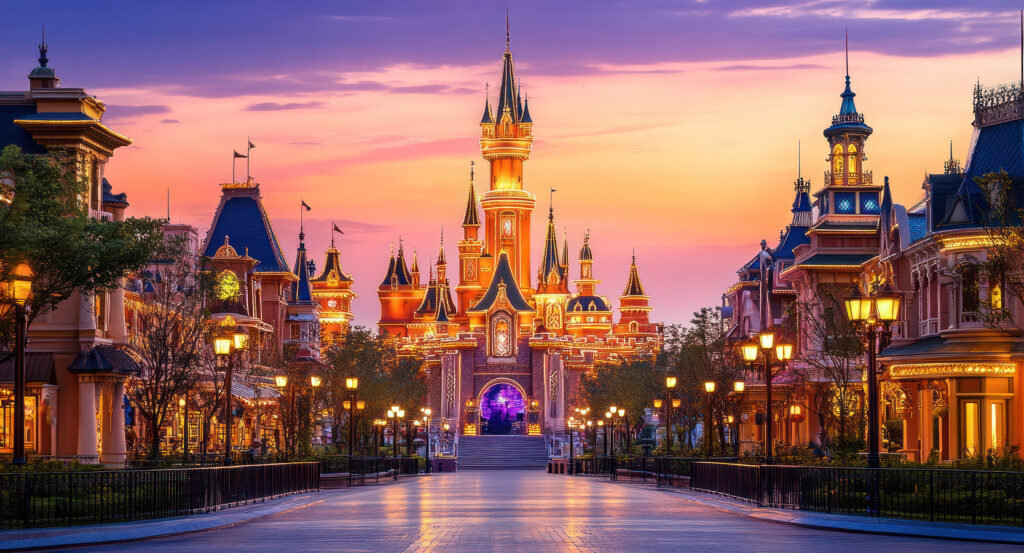
Why you should experience Toy Story Hotel in Shanghai, China.
Toy Story Hotel is a fully immersive, joy-forward environment where lively scale, bold color, and Pixar storytelling transform a theme-park stay into something exuberant, cinematic, and intentionally uncomplicated.
This is not a hotel that flirts with fantasy in subtle ways. It commits completely. From the moment you approach the property, the world shifts. The building itself feels oversized, toy-like, and deliberately animated, as if it were assembled from building blocks. Bright primary colors, graphic shapes, and oversized details immediately establish that realism has been replaced by imagination. You are no longer in Shanghai as you know it; you are inside the Toy Story universe, where proportions are exaggerated, logic is playful, and joy is the dominant design language. Arrival is designed to excite. The entrance sequence moves quickly and clearly, prioritizing momentum and delight over grandeur. Inside, the lobby opens into a high-energy space filled with character motifs, giant footprints, lively textures, and visual references that feel lifted straight from the films. Everything is legible, obvious, and intentional. This hotel is built for clarity, especially for families and younger travelers, and it never pretends otherwise. Circulation is wide, signage is intuitive, and spaces are designed to keep energy moving forward. Guest rooms continue the experience. Rooms are bright, cheerful, and thoughtfully composed, with color palettes and details inspired by Andy's bedroom. Beds feel oversized and inviting, furniture resembles toy blocks and lively props, and wall art brings familiar characters into the space. Importantly, the layout still prioritizes rest. After long park days, the room functions as a decompression zone. Storage is practical, seating is functional, and the overall flow supports families moving in and out efficiently. Windows frame views of the resort grounds, courtyards, or park-facing sightlines, reinforcing the sense that you are still inside the story even when resting. Bathrooms are clean, spacious, and practical, with bright finishes, generous counter space, and layouts designed for multiple users at once. Everything is optimized for ease rather than indulgence, ensuring mornings and evenings remain smooth rather than chaotic. Dining at Toy Story Hotel is energetic, colorful, and purpose-built for volume. The main restaurant leans into character theming, with environments that feel like extensions of the films. Menus are designed to satisfy a wide range of tastes quickly, prioritizing familiarity, speed, and abundance over culinary experimentation. Meals feel fun, loud, and communal, reinforcing the sense that this hotel is part of the park experience. Service throughout the hotel is upbeat, friendly, and highly structured. Staff are trained to guide, redirect, and assist efficiently, particularly for families navigating schedules, transport, and park timing. Interactions are cheerful and supportive, designed to keep energy high and friction low.
What you should know about Toy Story Hotel.
Toy Story Hotel was designed as a deliberate counterbalance to the grandeur and formality of its neighboring flagship resort, offering a high-energy, high-volume experience that emphasizes movement, clarity, and resonant accessibility.
From the earliest planning stages, the hotel was conceived to serve families and first-time Disney visitors who wanted total immersion without the ceremonial pacing of a luxury resort. Its architecture intentionally rejects realism. Instead of hiding mechanical systems or disguising scale, the building exaggerates it. Pipes, patterns, and surfaces feel exposed and oversized, reinforcing the illusion that guests have shrunk and entered a toy world. This approach is rooted in Pixar's visual storytelling language, where environment itself becomes a character. A lesser-known aspect of the hotel's design is how heavily it relies on color psychology and spatial rhythm. Bright hues are used to energize arrival and public spaces, while slightly calmer palettes appear in guest rooms to support rest. Circulation paths were engineered to prevent bottlenecks common in family-heavy hotels, with wide corridors, clear sightlines, and intuitive elevator placement that minimizes stress during peak movement times. Acoustic management also plays a crucial role. Despite the visual intensity, ceilings, flooring, and wall materials were selected to absorb noise and reduce echo, preventing physical overload even when the hotel is at full capacity. The hotel's operational model is equally intentional. Staff training focuses on clarity, repetition, and resonant reassurance, particularly for children. Directions are simple, processes are consistent, and interactions are designed to feel safe and predictable. This consistency builds trust quickly, allowing families to relax into the experience. Another subtle but important design decision is the hotel's refusal to fragment its identity. Unlike some themed hotels that dilute their concept across multiple franchises, Toy Story Hotel commits to a single narrative universe. This cohesion strengthens immersion and prevents visual confusion, making the experience feel complete. Seasonal overlays are handled carefully, adding festive elements. The result is a hotel that functions as an extension of the park itself. Toy Story Hotel is not about refinement or escape. It is about sustained delight, operational clarity, and resonant continuity, delivering one of the most focused examples of large-scale themed hospitality in Asia.
How to fold Toy Story Hotel into your trip.
Toy Story Hotel works best when you embrace its energy and let it shape your schedule.
Start early and lean into momentum. Mornings are most effective when you take advantage of the hotel's seamless transport links and early access rhythms, allowing you to enter the park before crowds peak. Breakfast works as a fueling stop rather than a leisurely ritual, setting the tone for full, active days. Plan intentional mid-day returns to the hotel. This is where Toy Story Hotel shines unexpectedly. Rooms are designed for fast resets. Showers, naps, costume changes, and short breaks can happen efficiently, turning what would otherwise be exhausting marathon days into sustainable experiences. Afternoons can then unfold with renewed energy. Evenings benefit from flexibility. Some nights may end early with a relaxed dinner and quiet downtime in the room, while others stretch into late park hours and night-time transport flows that remain smooth and predictable. Use the hotel's clarity to your advantage. Because nothing is ambiguous, you can focus attention on experience. For multi-day stays, alternate high-intensity park days with lighter schedules, allowing the hotel's lively environment to remain fun. Walk the courtyards, enjoy character encounters, and let the visual environment continue the story even when you are not inside the park.
Where your story begins.
Foresyte Travel reveals places that feel extraordinary long before you arrive.
Experience premium editorial crafted for luxury travelers.

















































































































