Why ULU matters.
ULU is an oceanfront Hawaiian restaurant where Kaʻūpūlehu's luxury coastal hospitality meets sustainable seafood cultivation, Pan-Asian cooking, and the agricultural abundance of Hawaiʻi Island.
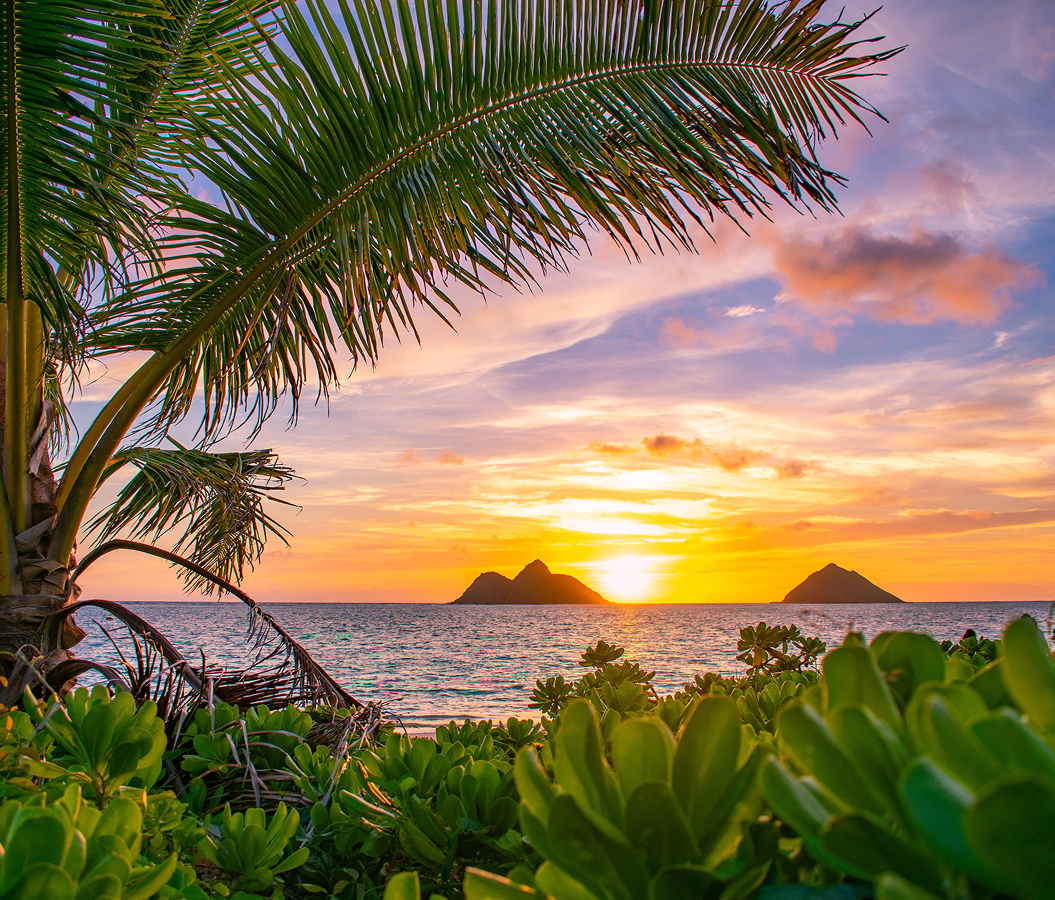
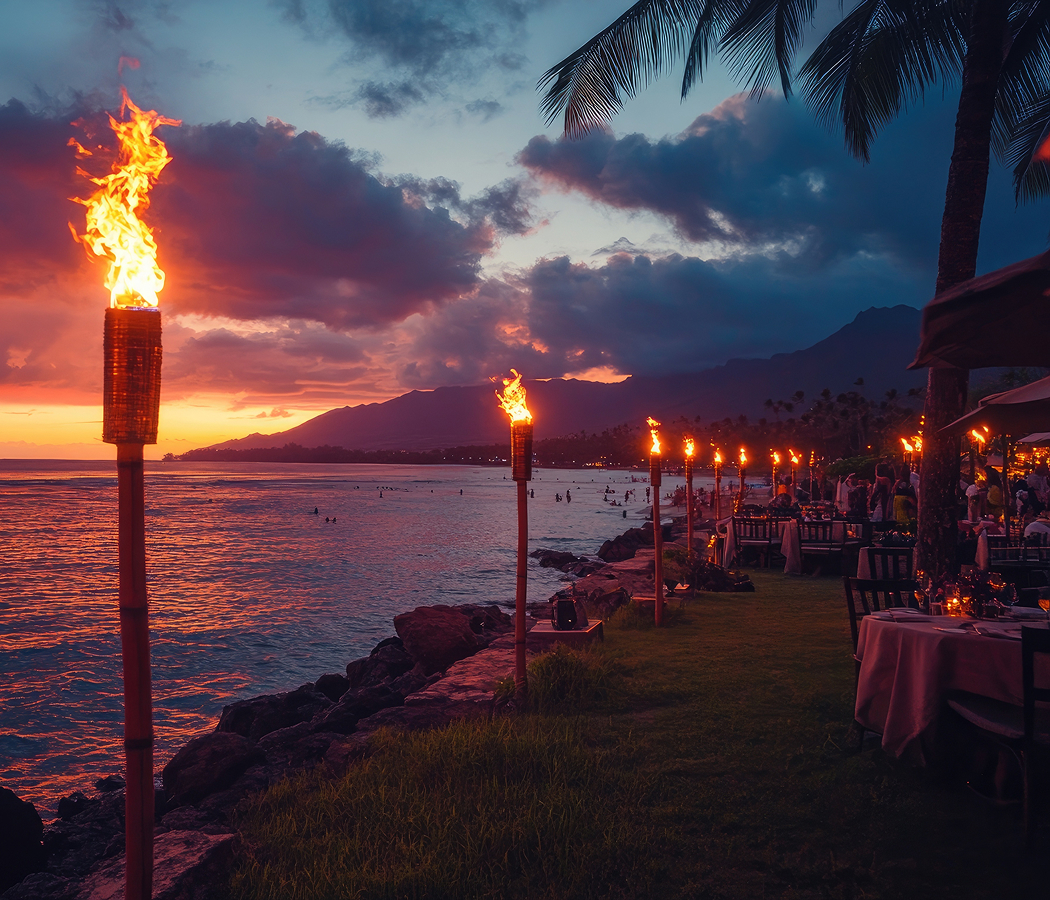
Occupying the Pacific-facing grounds of Four Seasons Resort Hualālai along the North Kona coast, ULU stands between the resort's Ocean Pool and King's Pond, with the volcanic slopes of Hualālai rising inland and the shoreline extending toward Kūkio Bay. The restaurant's open-air architecture combines broad ocean-facing terraces, natural wood finishes, contemporary furnishings, and a central bar positioned to overlook the beach. Dining unfolds across an expansive ground-floor restaurant and adjoining outdoor patio, where the proximity of the Pacific brings the movement of waves and changing coastal light directly into the meal. The transition from daylight to sunset transforms the dining room through shifting reflections across the water, with sheltered lounge seating and carefully arranged tables supporting a relaxed yet sophisticated atmosphere. The result is an exceptional oceanfront restaurant whose intimate relationship with Hawaiʻi Island's volcanic coastline provides the setting for one of the resort's most ambitious culinary programs.
What defines ULU.
ULU is best known for transforming Four Seasons Resort Hualālai's oceanfront dining program into a sophisticated expression of Hawaiʻi Island agriculture, sustainable seafood production, and contemporary Hawaiian cooking. The restaurant emerged from the resort's longstanding commitment to sourcing ingredients directly from island farmers and fishermen, a culinary approach that developed alongside the property's establishment at historic Kaʻūpūlehu in 1996. Executive Chef James Babian became a central figure in that development through his Regional, Seasonal and Artisanal approach, which connected restaurant preparations with the agricultural production and fishing traditions of Hawaiʻi Island. Babian established purchasing relationships with more than 160 farmers and fishermen, building a supply network that supported a substantial proportion of the resort's culinary requirements. His team developed menus incorporating 75 percent locally sourced ingredients, giving independent producers a significant commercial relationship with one of Hawaiʻi's most prestigious hospitality properties. ULU Ocean Grill & Sushi Lounge opened on November 14, 2012, establishing a dedicated oceanfront restaurant organized around the relationship between island agriculture and the surrounding Pacific. Its Hawaiian name refers to breadfruit, a Polynesian canoe plant whose cultivation became integral to traditional Hawaiian food production after its introduction by early voyagers. The restaurant's founding culinary program emphasized oven roasting, flame grilling, and wok cooking, combining established Hawaiian ingredients with techniques drawn from several Asian culinary traditions. Interior designer Jennifer Johanson of EDG Interior Architecture & Design developed the original dining environment, incorporating traditional Hawaiian architectural influences into a contemporary oceanfront restaurant. Three private terraces extended the dining program toward the shoreline, establishing distinct spaces for gatherings and formal meals. The restaurant also introduced an interactive wine program displayed through iPads, connecting its international wine selections with detailed information concerning individual producers and vintages. Babian's culinary leadership helped establish ULU as an important component of the resort's reputation for sustainable luxury dining, demonstrating the commercial possibilities of maintaining direct relationships with island agricultural producers. Another significant chapter began when Richard Polhemus joined the Hualālai culinary team in 2020, bringing extensive professional experience and a sustained commitment to regional sourcing. Polhemus expanded the resort's relationships with local farmers and developed its agricultural program through direct visits to producers and collaboration with the property's landscaping specialists. The resort's marine cultivation program also grew substantially, introducing a distinctive source of seafood through ponds maintained by on-site marine biologists. These facilities supported the production of Hualālai oysters and prawns, extending the restaurant's purchasing approach into direct aquaculture. A major transformation began in July 2024 when ULU temporarily closed for renovations, allowing its culinary and architectural programs to undergo substantial redevelopment. Regional Vice President and General Manager Charlie Parker oversaw the broader resort initiative, which also introduced a separate sushi restaurant above ULU. The redesigned restaurant debuted during December 2024, followed by its wider public introduction in January 2025. The transformation brought lighter contemporary interiors, additional lounge seating, and a substantially revised menu developed under Polhemus and Chef de Cuisine Chris Damskey. Their collaboration strengthened the restaurant's emphasis on local seafood, Hawaiian agricultural products, and cooking techniques incorporating Japanese and other Asian influences. The renovation also separated the resort's expanded sushi program into NOIO, a second-floor restaurant led by Sushi Chef Nuri Piccio. That establishment introduced a dedicated omakase counter, allowing ULU to concentrate its principal dining program on a broader interpretation of ocean-to-table cooking. The two restaurants received their formal joint introduction in March 2025, establishing a new chapter in the resort's culinary development. Polhemus subsequently became Senior Executive Chef for Hawaiʻi in 2025, assuming oversight of culinary operations across three Four Seasons properties while preserving his association with the Hualālai dining program. ULU's continued development reflects the transformation of a regional sourcing initiative into a sophisticated culinary operation connecting independent island agriculture, on-site aquaculture, and internationally influenced fine dining.
Richard Polhemus's culinary approach begins with the relationship between seafood quality and cooking technique, allowing the natural characteristics of Hawaiian fish and shellfish to determine how each preparation develops. The kitchen's tableside poke service demonstrates that approach through freshly cut bigeye ahi, Kona kanpachi, and premium tuna selections, with seasonings introduced at the table to preserve the texture and delicate flavor of the seafood. Japanese influences emerge through white soy dashi, shiso, ume, and ponzu, ingredients whose salinity, acidity, and aromatic character complement the richness of raw fish. The same attention to balance extends into crudo preparations, where Hokkaido scallops encounter lilikoi tiradito, jicama, sweet potato, and puffed corn. The scallops' natural sweetness develops against the concentrated acidity of passion fruit, with crisp vegetables introducing a contrasting texture. Cooking over intense heat creates another expression of the kitchen's seafood program, particularly through preparations that develop a caramelized exterior while protecting the moisture of the fish. Miso introduces fermented depth to roasted and broiled seafood, with ginger, nori, and citrus sharpening the relationship between savory richness and the clean character of the principal ingredient. The restaurant's ahi tuna Wellington carries that approach into a more elaborate preparation, incorporating aliʻi mushrooms, luʻau leaf, and foie gras bordelaise within a composition that connects Hawaiian ingredients with classical European cooking. Its development demonstrates the kitchen's willingness to translate familiar fine-dining techniques through the agricultural products and culinary traditions of the islands. The resort's aquaculture program supplies another defining element through Hualālai oysters, whose briny character complements the restrained acidity of cucumber dashi and the richness of reserve caviar. Shellfish preparations extend into chilled platters combining prawns, lobster, crab, and poke, preserving the contrasting textures of different marine species through careful temperature control and complementary sauces. Agricultural relationships become equally important as the meal advances beyond seafood, particularly through produce from Kekela Farms and other Hawaiʻi Island growers. Baby romaine develops a Japanese-inflected interpretation of green goddess dressing through shiso, garlic chili crisp, and puffed rice, introducing herbal freshness and crisp texture alongside the kitchen's more substantial preparations. Beets gain sweetness through roasting before Kaʻū citrus, ume, and Hāmākua goat feta introduce acidity and creaminess. The kitchen's treatment of vegetables reflects the same technical attention given to seafood, allowing the agricultural character of each ingredient to remain central to the finished preparation. Pastry extends that relationship through ingredients associated with Hawaiʻi's tropical forests and agricultural communities, including ʻōhiʻa honey, māmaki, and citrus. The ʻōhiʻa honey mousse cake incorporates māmaki sponge and sudachi curd, connecting floral sweetness with the aromatic character of Hawaiian tea and Japanese citrus. The beverage program follows a complementary direction through cocktails incorporating Hawaiian rum, local pineapple, shiso, and Japanese whisky. Kuleana Nanea Aged Rum provides the foundation for the Kahakai Sour, whose pineapple and sudachi introduce a combination of tropical sweetness and concentrated acidity. ULU's culinary distinction emerges through the sustained relationship between island-grown ingredients, carefully controlled seafood preparations, and the Japanese and Hawaiian flavors that shape its contemporary oceanfront dining.
How ULU fits.
ULU works as the culinary anchor for an exploration connecting Kaʻūpūlehu's indigenous cultural traditions, the expansive fishpond engineering of Hawaiian royalty, and the ancient rock carvings preserved along the Kohala Coast.
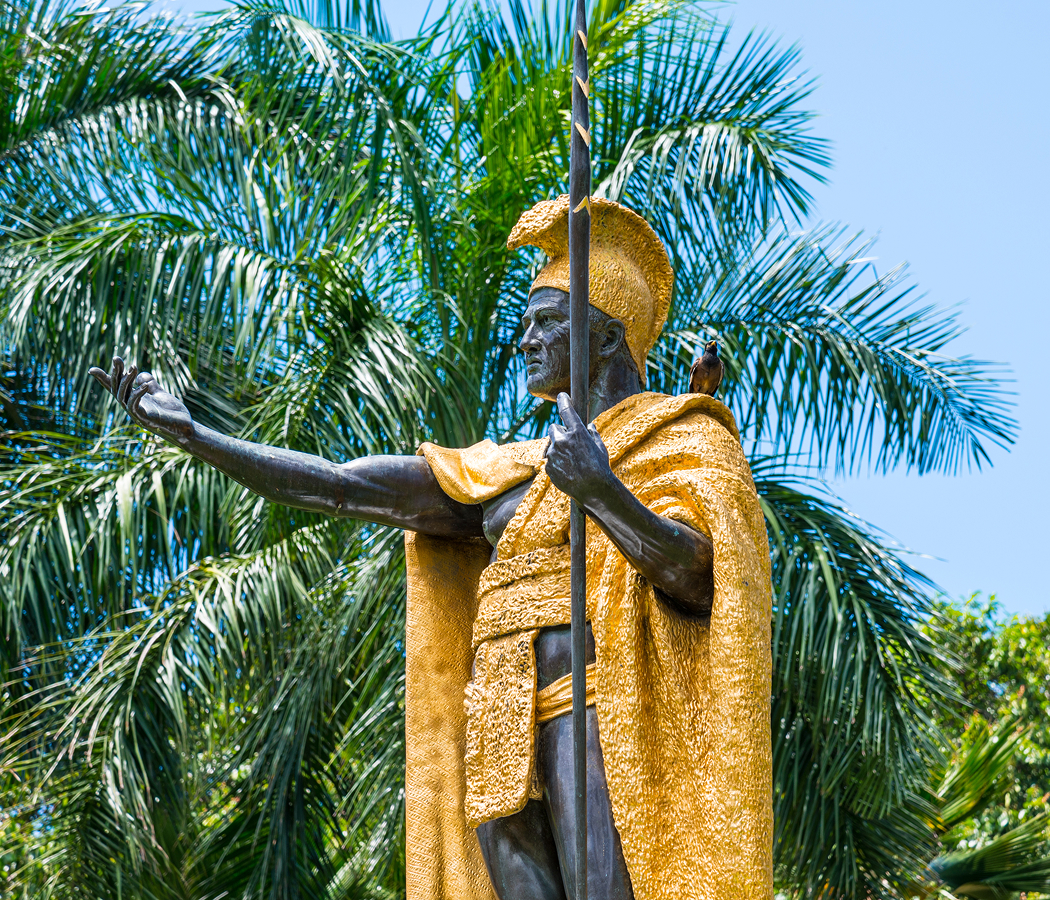
Begin at Kaʻupulehu Cultural Center, the Hawaiian cultural institution within Four Seasons Resort Hualālai dedicated to preserving traditional arts, language, and practices associated with the surrounding coastal district. The center's cultural ambassadors maintain knowledge passed through generations of Hawaiian practitioners, connecting contemporary instruction with the ancestral traditions of the islands. Its programs include oli, the formal chanting tradition used in ceremonial and social contexts, and hula, whose movements communicate Hawaiian history through coordinated gesture and song. Lauhala weaving develops another dimension of indigenous craftsmanship through the preparation and interlacing of pandanus leaves, a technique historically associated with mats, baskets, and other domestic objects. Traditional lei construction and featherwork extend the center's educational program into decorative arts whose significance encompasses ceremony, personal relationships, and chiefly culture. Continue to Kīholo State Park Reserve, the volcanic coastal landscape associated with one of Kamehameha I's most ambitious fishpond projects. Following the destruction of his Pāʻaiea fishpond during Hualālai's 1801 eruption, Kamehameha directed the construction of an immense replacement at Wainānāliʻi on the northern side of Kīholo Bay. Laborers from several districts completed the project 1812, establishing a stone enclosure whose circumference reached two miles and whose substantial walls controlled a productive marine environment. Missionary William Ellis encountered the fishpond during his 1823 journey along the Kona coast, encountering an extraordinary example of Hawaiian engineering and centralized royal authority. Mauna Loa's 1859 eruption subsequently sent lava across the coastal settlement and much of the fishpond, leaving surviving wall fragments embedded within the transformed volcanic shoreline. Conclude at Puakō Petroglyph Archaeological Preserve, among Hawaiʻi's largest surviving concentrations of ancient Hawaiian rock carvings. The protected archaeological district encompasses more than 3,000 kiʻi pōhaku distributed across an extensive field of pāhoehoe lava, preserving images created by generations of Hawaiian inhabitants. Human figures, canoe paddlers, animals, geometric forms, and ceremonial symbols appear across the volcanic surfaces, connecting artistic expression with ancestral relationships and the movement of people through the surrounding coastal lands. Archaeological investigations associated with Bishop Museum and subsequent specialists helped establish the significance of the carvings, leading to the district's addition to the Hawaiʻi Register of Historic Places in 1982 and the National Register of Historic Places in 1983. The preserve's surviving carvings connect the region's ancient inhabitants with religious observances, genealogical traditions, and the historic trails that once linked coastal settlements. The progression moves from Kaʻupulehu Cultural Center's preservation of Hawaiian artistic traditions through Kīholo State Park Reserve's expansive royal fishpond engineering and culminates at Puakō Petroglyph Archaeological Preserve, connecting the cultural knowledge, political authority, and ancestral expression that shaped the historic Kona and Kohala coasts.
Where your story begins.
Foresyte Travel reveals places that feel extraordinary long before you arrive.
Enjoy editorial crafted for luxury travelers.
Foresyte may earn a commission when you book.