Why The Wrigley Building matters.
The Wrigley Building is a renowned architectural landmark where Grand Mile's commercial prestige, Beaux-Arts elegance, civic identity, and Chicago River grandeur announce one of the city's most recognizable skylines.
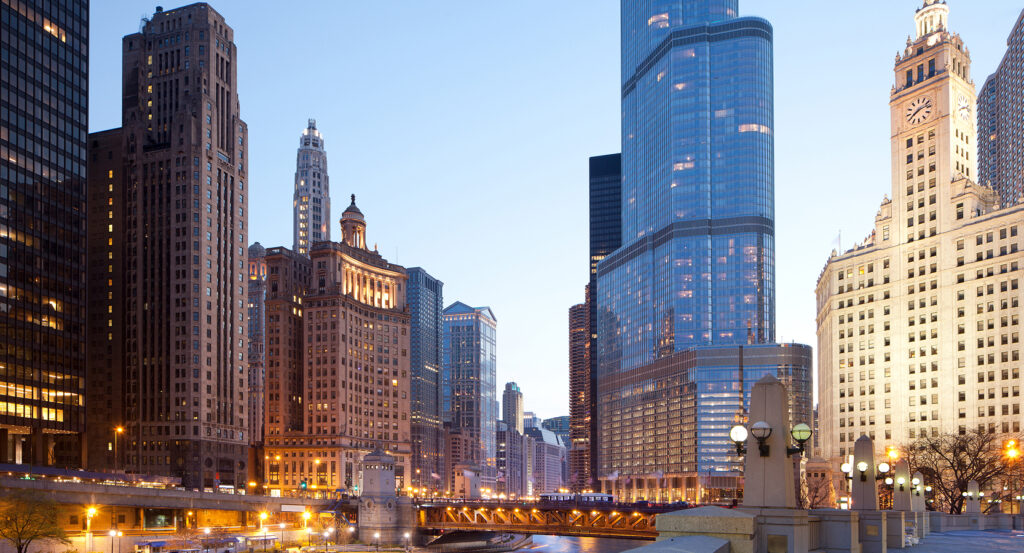
Set along North Michigan Avenue near the Chicago River and just steps from DuSable Bridge, this gleaming white terra-cotta skyscraper commands the entrance to the Grand Mile through twin towers, illuminated clock faces, graceful arcades, and richly ornamented façades inspired by European Renaissance architecture. Elegant detailing, dramatic riverfront views, and one of Chicago's most photographed silhouettes create an unmistakable sense of arrival at the city's premier commercial corridor. Every perspective reveals another reason the building has remained an enduring symbol of Chicago for more than a century. The result is a landmark experience defined by architectural distinction, civic prominence, and one of the city's most iconic skyscrapers.
What defines The Wrigley Building.
The Wrigley Building is best known for becoming Chicago's first major office tower constructed north of the Chicago River when its South Tower opened in 1921, establishing the expansive gateway to North Michigan Avenue while serving as the global headquarters of the Wm. Wrigley Jr. Company for nearly a century. Designed by Graham, Anderson, Probst & White, the complex was completed in two phases with the South Tower in 1921 and the North Tower in 1924, joined by an elegant skybridge spanning the public street below. Clad in more than 250,000 glazed terra-cotta tiles whose brilliant white finish was inspired by Seville Cathedral's Giralda Tower, the building became one of Chicago's earliest skyscrapers to employ nighttime floodlighting, creating a luminous presence that has remained a defining feature of the city's skyline. Its expansive clock tower, Renaissance-inspired detailing, and commanding position at the intersection of Michigan Avenue and the Chicago River established a new architectural standard for North Michigan Avenue while helping transform the surrounding district into one of America's premier commercial boulevards. Together, visionary urban development, architectural innovation, corporate legacy, and enduring civic symbolism establish The Wrigley Building as one of Chicago's most celebrated skyscrapers.
The building continues demonstrating how exceptional architecture can define an entire city's character through timeless design, meticulous preservation, and an unforgettable presence along one of America's great urban avenues. Brilliant terra-cotta façades, dramatic nighttime illumination, and its enduring relationship with the Chicago River reinforce The Wrigley Building's status as one of the architectural masterpieces that continue shaping Chicago's international image.
How The Wrigley Building fits.
The Wrigley Building works as the grand gateway to Chicago's celebrated riverfront and Grand Mile.
Begin at DuSable Bridge, where sweeping views of the Chicago River introduce the architectural grandeur surrounding The Wrigley Building. Continue to Tribune Tower, whose internationally inspired Gothic Revival design provides a remarkable architectural companion while illustrating another defining chapter of Chicago's skyscraper history. Conclude at Chicago Riverwalk, where energetic public spaces, river cruises, cafés, and extraordinary skyline views provide a memorable finale celebrating the city that pioneered the modern skyscraper. The progression moves naturally from Chicago's historic bridge to one of its most celebrated newspaper landmarks before concluding along its world-famous riverfront, revealing why The Wrigley Building remains one of the defining symbols of Chicago.
Where your story begins.
Foresyte Travel reveals places that feel extraordinary long before you arrive.
Enjoy editorial crafted for luxury travelers.
Foresyte may earn a commission when you book.