
Why 11th Arrondissement matters.
11th Arrondissement is a kinetic enclave where the historic faubourgs of eastern Paris meet dense residential streets, concealed artisan courts and long commercial axes shaped by labor, entertainment and successive waves of urban reinvention.
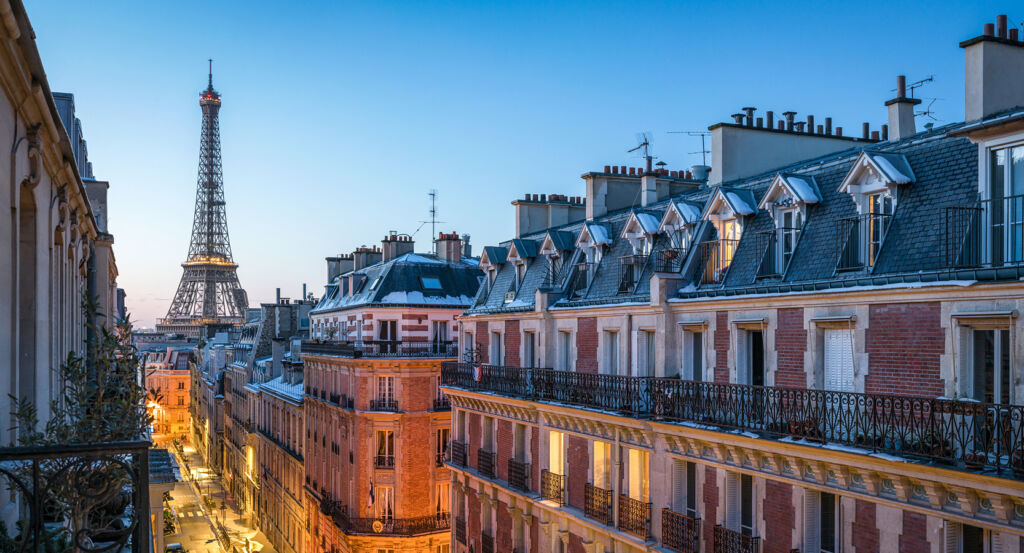
Positioned between the Marais, Belleville, and the 12th Arrondissement, the neighborhood occupies a broad eastern pocket where the grand spaces of République, Bastille and Nation frame an interior web of streets descending from the heights near Ménilmontant toward the former Faubourg Saint-Antoine. Long arteries such as Rue Oberkampf, Rue de Charonne and Rue du Faubourg Saint-Antoine cross a finer grain of passages, courtyards and former workshop compounds, giving the Arrondissement pronounced changes in scale within only a few blocks. Rue du Faubourg Saint-Antoine establishes the primary encounter through an old route where deep plots allowed craftsmen to work behind street-facing buildings, producing sequences of passages and interior courts that remain embedded within the surrounding residential fabric. The northern half shifts toward narrower climbing streets around Oberkampf and Jean-Pierre Timbaud, where former industrial buildings, small theaters and densely packed apartment houses reveal a separate physical inheritance from the lower faubourg. Major squares provide a third spatial register, with République opening the Arrondissement toward the grands boulevards and Bastille marking the historic threshold between Central Paris and its eastern suburbs. The result is an Arrondissement whose scale continually shifts between metropolitan avenues and intimate working streets, preparing a history built from two faubourgs that became central stages for craftsmanship, revolution and industrial Paris.
What you should know 11th Arrondissement.
11th Arrondissement is best known for uniting the former Faubourg du Temple and Faubourg Saint-Antoine, two eastern suburbs whose growth outside the old city walls created one of Paris's strongest concentrations of artisans and working communities before their incorporation into the modern Arrondissement in 1860. Gardens, orchards, vineyards and meadows occupied much of the territory during the medieval and early modern periods, with settlement extending outward along roads leaving Paris toward Vincennes, Charonne and northeastern France. Faubourg Saint-Antoine developed into a major manufacturing district as cabinetmakers, joiners, upholsterers, gilders and woodcarvers concentrated beyond the Bastille, where freedom from many guild restrictions encouraged specialized production. Workshops multiplied inside long parcels whose interconnected trades supported sophisticated furniture making and attracted craftsmen from elsewhere in France and abroad. Social geography followed economic geography: dense populations of skilled workers placed eastern Paris at the center of political mobilization during successive periods of upheaval. The April 1789 Réveillon riots erupted after claims concerning wages circulated around wallpaper manufacturer Jean-Baptiste Réveillon, whose establishment occupied the former Folie Titon on Rue de Montreuil. Crowds attacked the property on April 28, and military suppression produced deaths only weeks before the Estates General assembled at Versailles. The Bastille's fall on July 14 then placed the western threshold of the faubourg inside the opening rupture of the French Revolution, establishing a relationship between eastern Paris, organized labor and political insurrection that would recur throughout the following century.
The nineteenth century carried that political geography into an Arrondissement increasingly defined by population growth, dense housing and recurrent revolt. Barricades rose through the eastern districts during the revolutions of 1830 and February 1848, drawing strength from streets whose working populations retained close connections to artisanal trades. Napoleon III's enlargement of Paris in 1860 created the present 11th Arrondissement from portions of the older eighth Arrondissement and surrounding territory, placing Bastille, République and Nation around three edges of the new jurisdiction. Industrial expansion intensified during the same era as metalworking, small manufacturing, mechanical trades and other production entered streets already shaped by workshops. The Paris Commune of 1871 returned the eastern districts to the center of armed conflict, with fighting around Bastille and neighboring quarters during the final stages of Bloody Week. Population subsequently climbed as industrial employment and inexpensive housing drew more residents into an area containing little of the open ground found in peripheral Arrondissements. The resulting density helped sustain a distinctive urban structure in which production, housing, political organization and commercial streets occupied adjoining parcels, carrying the old faubourgs into modern Paris long after their physical position outside the city had disappeared.
How 11th Arrondissement fits.
11th Arrondissement works as the anchor for an afternoon connecting Second Empire performance, nineteenth-century heavy industry and a brass-instrument factory that became a major center of organized labor before entering Parisian cultural life.
Begin at Cirque d'Hiver, where circus entrepreneur Louis Dejean commissioned Jacques Ignace Hittorff to create the Cirque Napoléon after construction received authorization in December 1851, producing a 42-meter-wide, twenty-sided building containing forty windows, twenty-one gas chandeliers and 3,900 seats when Louis-Napoléon inaugurated it on December 11, 1852. Sculpture and painting by James Pradier, François Joseph Bosio, Nicolas Gosse and Louis-Ernest Barrias joined Hittorff's architecture, and Jules Léotard added another chapter on November 12, 1859 when he performed the flying trapeze there, binding a new circus discipline to the building before its eventual renaming as Cirque d'Hiver in 1873. Continue to Atelier des Lumières, occupying the former Chemin-Vert iron foundry established in 1835 by brothers Jacques François Alexandre and Hilaire Pierre Plichon to produce cast components for naval and railway engineering during France's industrial expansion. Jacques transferred the enterprise to sons Jean and Édouard in 1859, and four Plichon generations carried the operation through a century in which its 3,126-square-meter plant employed sixty workers by 1891 and produced castings weighing as much as 10,000 kilograms for warships, locomotives and engines; the international crisis of 1929 accelerated its decline before dissolution in 1935. Conclude at Maison des Métallos, where a brass-instrument factory opened in 1881 before passing to Couesnon, a manufacturer whose international business supplied musicians and whose factories pioneered steam-powered instrument production. Economic contraction after 1929 led Couesnon to relinquish the building in 1936, the same year the Union Fraternelle de la Métallurgie expanded dramatically during the Popular Front and acquired the premises; inaugurated as Maison des Métallurgistes on May 2, 1937, it became a center for union organization, assistance to Republican Spain, Resistance activity and later opposition to the Algerian and Vietnam wars before the City of Paris acquired the complex and reopened it as a cultural institution in 2007. The progression moves from Hittorff translating Second Empire performance into purpose-built architecture through the Plichon family supplying industrial machinery from a specialized iron foundry into Couesnon and the metalworkers converting manufacturing infrastructure into organized social and cultural action, tracing three distinct stages in the productive and performing history of the 11th Arrondissement.
Where your story begins.
Foresyte Travel reveals places that feel extraordinary long before you arrive.
Experience premium editorial crafted for luxury travelers.
Foresyte Travel may earn a commission when you book through the link on this page.














































































































