
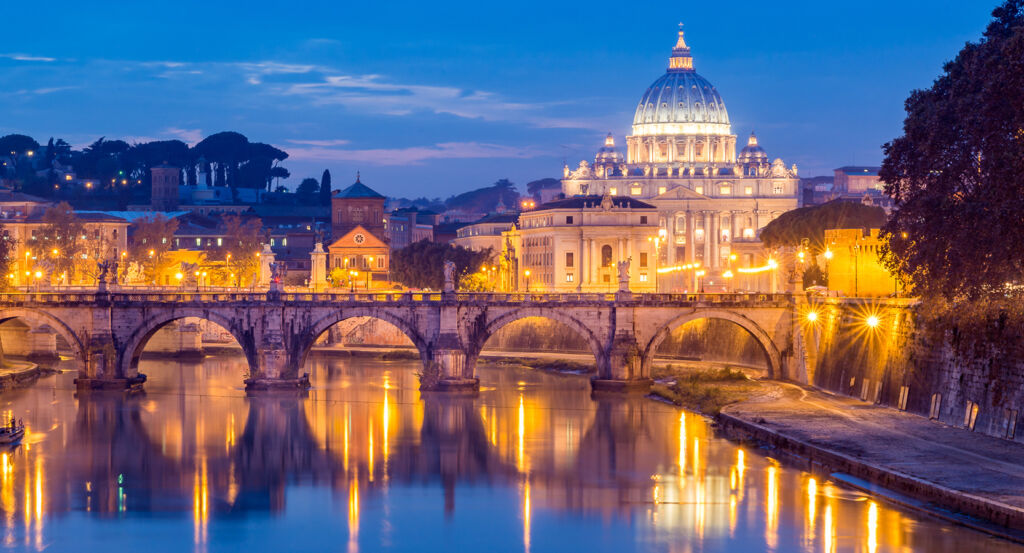
Why you should experience Tiburtino in Rome, Italy.
Tiburtino is a crossroads of industry and innovation, where working-class heritage, academic influence, and contemporary urban development converge across one of the capital's most transformative districts.
Historic industrial sites, university facilities, modern business centers, neighborhood markets, residential communities, public spaces, and evolving cultural venues create a neighborhood that reflects Rome's growth beyond its ancient core. Developed along the ancient Via Tiburtina, among the oldest roads leading east from Rome, the district became an important corridor for commerce, manufacturing, and transportation during the nineteenth and twentieth centuries. Workers, engineers, students, entrepreneurs, and families helped shape a neighborhood defined by productivity, resilience, and opportunity. Over generations, Tiburtino evolved from an industrial hub into a diverse urban district balancing economic activity with community life. Today, visitors encounter a neighborhood where Rome's future continues to take shape. The result is a neighborhood that feels energetic, authentic, and unmistakably Roman. To the west, Rome City Centre's celebrated monuments and historic landmarks extend naturally from Tiburtino along one of the city's most important transportation corridors, reinforcing the neighborhood's role within the broader metropolitan story of Rome. Every boulevard, station, and public square reflects a district shaped by movement, ambition, and reinvention.
What you should know about Tiburtino.
Tiburtino is best known for being home to Tiburtina Station, Italy's largest high-speed rail interchange, where millions of travelers pass through one of the country's most important transportation gateways each year.
Originally opened in the nineteenth century and dramatically redeveloped in the twenty-first century, the station evolved into a centerpiece of Italy's modern rail network. Its striking contemporary design and strategic location established it as a critical connection point linking Rome with major cities across the country. The station helped redefine Tiburtino as a district of mobility, commerce, and urban transformation while attracting significant investment and redevelopment to the surrounding area. Today, it serves as one of the busiest transportation hubs in Europe. Few neighborhoods possess an infrastructure landmark so closely associated with the movement of an entire nation.
How to fold Tiburtino into your trip.
Tiburtino works as an exploration of the modern landmarks, transportation corridors, and evolving urban spaces that define one of Rome's most dynamic districts.
Begin at Tiburtina Station, where the neighborhood's defining connection to mobility and modernization immediately comes into focus. Continue toward Parco delle Valli, whose green spaces and recreational areas reveal the balance between development and livability that has shaped the district for generations. From there, make your way to the nearby sections of Via Tiburtina, where historic commercial activity and contemporary businesses provide a broader perspective on the economic forces that continue to define Tiburtino today. Along the route, you'll encounter public plazas, modern architecture, transportation landmarks, neighborhood markets, cultural venues, community gathering spaces, and commercial corridors that reveal the neighborhood's remarkable evolution. The progression moves naturally from transportation hub to urban green space to historic thoroughfare, revealing the forces that shaped the neighborhood. The experience showcases a side of Rome defined by connectivity, progress, and the constant movement of city life.
Where your story begins.
Foresyte Travel reveals places that feel extraordinary long before you arrive.
Experience premium editorial crafted for luxury travelers.




















































































































