
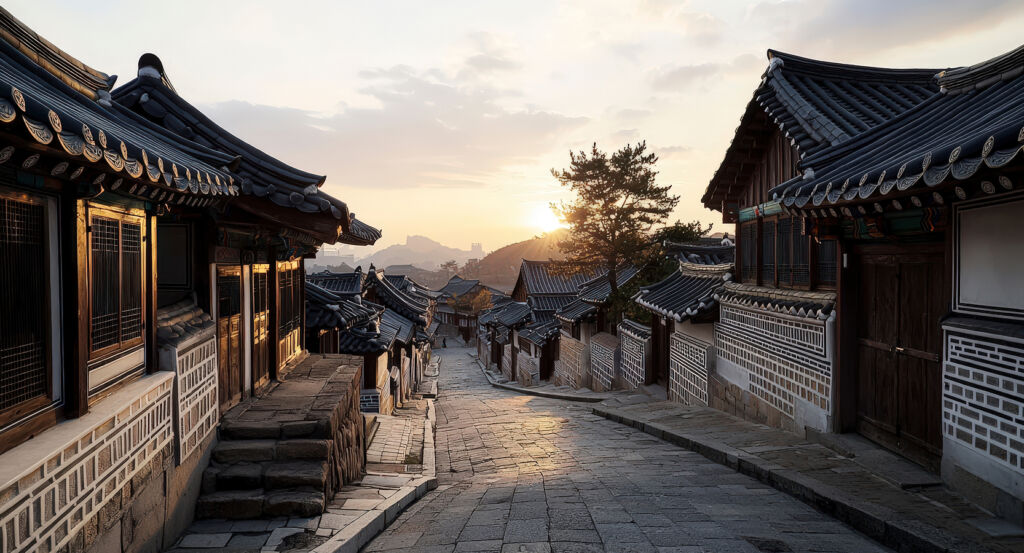
Why you should experience Dongjak-gu in Seoul, South Korea.
Dongjak-gu is a district of remembrance and resilience, where national sacrifice, riverside landscapes, and residential Seoul converge along the southern banks of the Han River.
National memorials, university campuses, residential communities, cultural facilities, riverside parks, transportation corridors, and neighborhood markets create a district shaped by both reflection and daily life. Positioned between Central Seoul and the capital's southern expansion, the area developed as an important residential and civic district serving generations of students, workers, military families, and public servants. Educators, veterans, residents, civic leaders, and community organizations helped shape a neighborhood defined by service, continuity, and community. Today, Dongjak-gu occupies a unique place within Seoul, balancing the pace of modern urban life with some of the nation's most significant sites of remembrance. Its character is rooted in memory, honoring those who shaped modern Korea while supporting the lives of those building its future. To the north, Eunpyeong-gu's celebrated mountain landscapes, historic temples, and cultural heritage sites extend naturally from Dongjak-gu across one of Seoul's most diverse civic and cultural networks.
What you should know about Dongjak-gu.
Dongjak-gu is best known for being home to Seoul National Cemetery, the national resting place for South Korea's fallen soldiers, presidents, and distinguished patriots.
Established in 1955 following the Korean War, the cemetery became the nation's most important memorial site dedicated to those who served and sacrificed for the Republic of Korea. Tens of thousands of military personnel, independence activists, public servants, and national leaders are buried within its grounds. The cemetery serves not only as a place of remembrance but also as a symbol of national resilience and collective memory. State ceremonies, commemorations, and public tributes regularly take place here, reinforcing its role within South Korean civic life. Few districts possess a landmark so closely associated with national sacrifice and remembrance.
How to fold Dongjak-gu into your trip.
Dongjak-gu is best experienced through the landmarks that reveal its connection to national history, education, and riverside life.
Begin at Seoul National Cemetery, where the district's defining connection to remembrance and national character immediately comes into focus. Continue toward Chung-Ang University, whose prominent campus reveals the educational and community forces that shaped the district for generations. From there, make your way to Nodeul Island, where cultural programming, Han River views, and public gathering spaces provide a broader perspective on the contemporary character that continues to define Dongjak-gu today. Along the route, you'll encounter memorial grounds, university campuses, cultural venues, riverside landscapes, public parks, community institutions, and civic landmarks that reveal the district's distinctive character. The progression moves naturally from national memorial to academic institution to waterfront destination, illustrating the forces that continue to shape this important part of Seoul.
Where your story begins.
Foresyte Travel reveals places that feel extraordinary long before you arrive.
Experience premium editorial crafted for luxury travelers.

















































































































