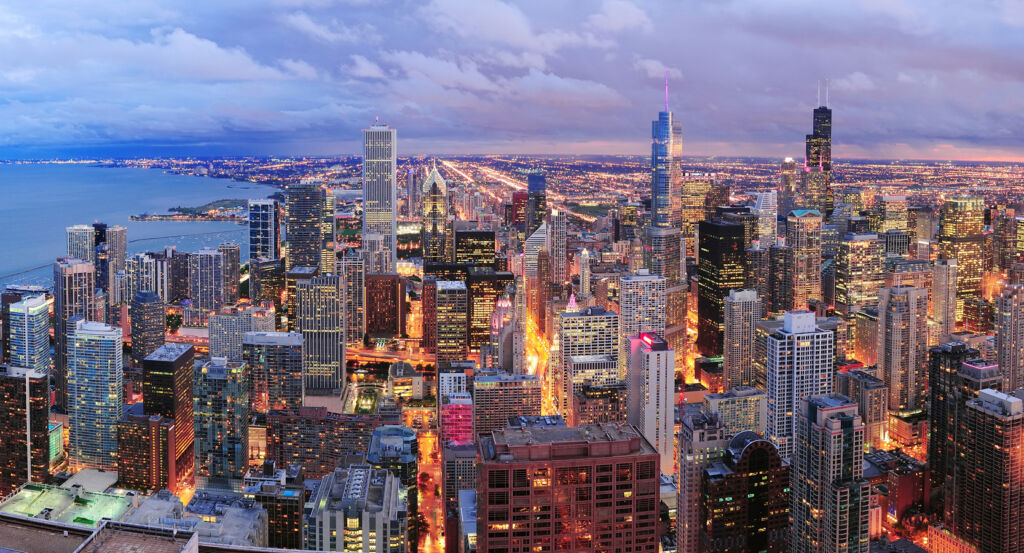
Why you should experience the Red Line in Chicago, Illinois.
The Red Line is an iconic rapid transit corridor where urban connectivity, neighborhood diversity, and transportation innovation converge along the backbone of Chicago's transit network.
Running from Rogers Park on the Far North Side to Roseland on the Far South Side, this historic rail line connects lakefront communities, commercial districts, cultural institutions, residential neighborhoods, educational centers, and employment hubs that have shaped city life for generations. Elevated tracks, subway tunnels, historic stations, neighborhood landmarks, public gathering places, and constantly evolving streetscapes create a transportation corridor defined by movement and accessibility. The line developed throughout the twentieth century as Chicago expanded into one of America's largest metropolitan regions, helping knit together communities separated by geography, culture, and economic activity. Commuters, students, workers, entrepreneurs, visitors, and residents helped establish a reputation that continues to make the route indispensable to everyday city life. The result is a transit corridor defined by connectivity, diversity, and urban vitality.
What you should know about Red Line.
The Red Line is best known for operating as the only Chicago Transit Authority rail line that provides continuous twenty-four-hour service, making it among the few major rapid transit routes in the United States to run around the clock.
Since its establishment, the route has served as a critical transportation lifeline connecting neighborhoods across nearly the entire length of the city. Its uninterrupted operation supports workers, travelers, students, emergency personnel, and residents at all hours, reinforcing Chicago's character as a city that never fully stops moving. The line carries hundreds of thousands of riders each week while linking many of Chicago's most important destinations, including downtown, major universities, sports venues, and cultural districts. Continuous service has become one of its defining characteristics and a cornerstone of the region's transit system. Few American rail lines are associated with such extensive geographic reach combined with uninterrupted daily operation.
How to fold Red Line into your trip.
The Red Line works as an exploration of Chicago's neighborhoods, cultural diversity, and urban energy.
Begin at Chicago Union Station, where connections to the broader transportation network reveal the line's defining relationship with mobility and city-building. Continue toward the Lake Station area in the Loop, whose concentration of employment centers and civic landmarks demonstrates the economic forces that helped shape the city across generations. From there, make your way to Wrigley Field via Addison Station, where one of Chicago's most iconic destinations provides a broader perspective on the cultural traditions and neighborhood character that continue to define the route today. Along the journey, you'll encounter historic stations, commercial districts, architectural landmarks, cultural institutions, public gathering places, neighborhood business corridors, and celebrated streetscapes that showcase the line's remarkable reach. The progression moves naturally from transportation hub to downtown core to sports landmark, revealing the forces that transformed the Red Line into one of Chicago's most consequential public transit corridors. The Red Line remains one of the city's most rewarding ways to experience Chicago, preserving a distinctive balance between transportation significance, neighborhood diversity, and everyday urban life.
Where your story begins.
Foresyte Travel reveals places that feel extraordinary long before you arrive.
Experience premium editorial crafted for luxury travelers.