Why Wrigley Field matters.
Wrigley Field is a heartbeat frozen in ivy and brick.
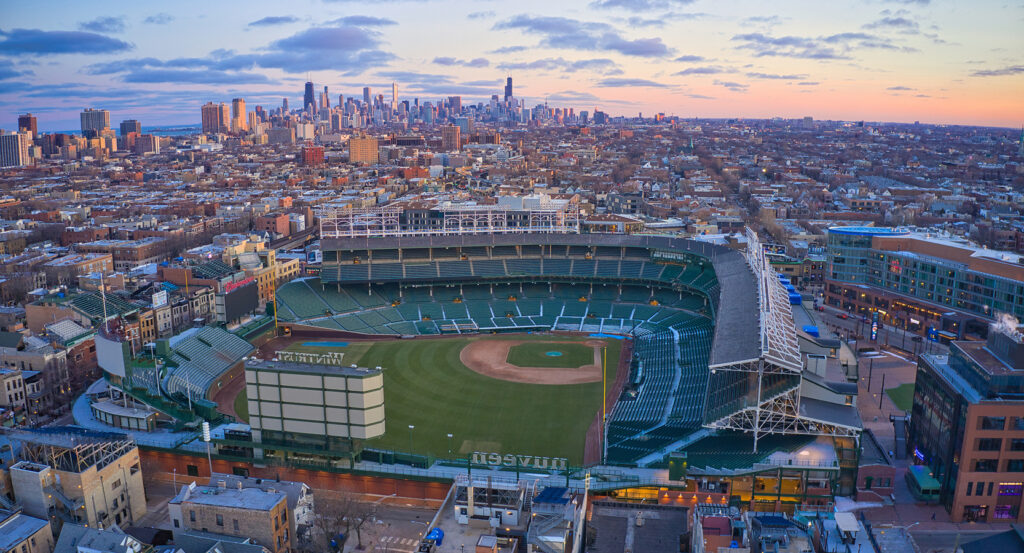
Tucked into the Lakeview neighborhood's rhythm, this century-old ballpark feels more like a neighborhood ritual than a sporting venue. Since opening in 1914, Wrigley has been home to the Chicago Cubs and generations of fans who treat every game as an act of devotion. Step inside, and the air hums with nostalgia, the crack of the bat echoing beneath the old steel beams, the hand-turned scoreboard watching like a guardian from center field, and the outfield walls wrapped in emerald ivy that whispers the stories of summers past. Here, baseball isn't about performance, it's about ritual: the seventh-inning stretch sung in unison, the cheers that rise and fall like the city's heartbeat, the smell of grilled onions drifting through the stands. Whether it's a weekday afternoon under an open blue sky or a night game beneath the glow of lights added nearly seventy years after the park's birth, Wrigley Field reminds you that some places don't just endure, they live.
What defines Wrigley Field.
Behind its charm and old-school simplicity lies one of the most carefully preserved and modernized stadiums in professional sports.
Wrigley Field's ivy-covered walls and antique scoreboard mask a world of innovation beneath, from reinforced seating decks and climate-controlled locker rooms to eco-conscious energy systems that make it one of the most sustainable parks in Major League Baseball. Its 1060 Project restoration, completed over multiple seasons, balanced modernization with reverence: new bleachers, suites, and concourses were seamlessly woven into the ballpark's historic fabric. The iconic red marquee, first lit in 1934, was refurbished with LED brilliance that preserves its glow while cutting power use in half. Even the neighborhood surrounding the park, Wrigleyville, has evolved into an experience of its own, filled with rooftop decks, microbreweries, and live music venues that keep the energy rolling long after the final out. Yet through all its updates, Wrigley remains untouched at its core, the same place where Ernie Banks said, “Let's play two,” and where hope always outlives heartbreak.
How Wrigley Field fits.
To experience Wrigley Field the right way, don't rush, savor.
Arrive early to wander Clark and Addison Streets, where fans flood into bars like Murphy's Bleachers and The Cubby Bear, their laughter mixing with the echo of batting practice from inside the park. Step through the turnstiles and take a slow lap around the concourse, letting the sightlines reveal themselves, the ivy, the rooftops, the lake breeze rolling through the upper decks. Grab a Chicago-style hot dog (no ketchup, ever) and settle into your seat as the organ hums to life, the sunlight bouncing off the field in a shimmer of gold. Stay until the final out, and if the Cubs win, don't leave right away. Join the crowd in singing “Go Cubs Go” while the scoreboard flashes its triumphant “W.” As you spill back into the streets, the night feels alive with history and heart, proof that Wrigley isn't just a stadium, it's Chicago distilled into joy, patience, and a little bit of magic under the Midwestern sky.
Where your story begins.
Foresyte Travel reveals places that feel extraordinary long before you arrive.
Enjoy editorial crafted for luxury travelers.
Foresyte may earn a commission when you book.