
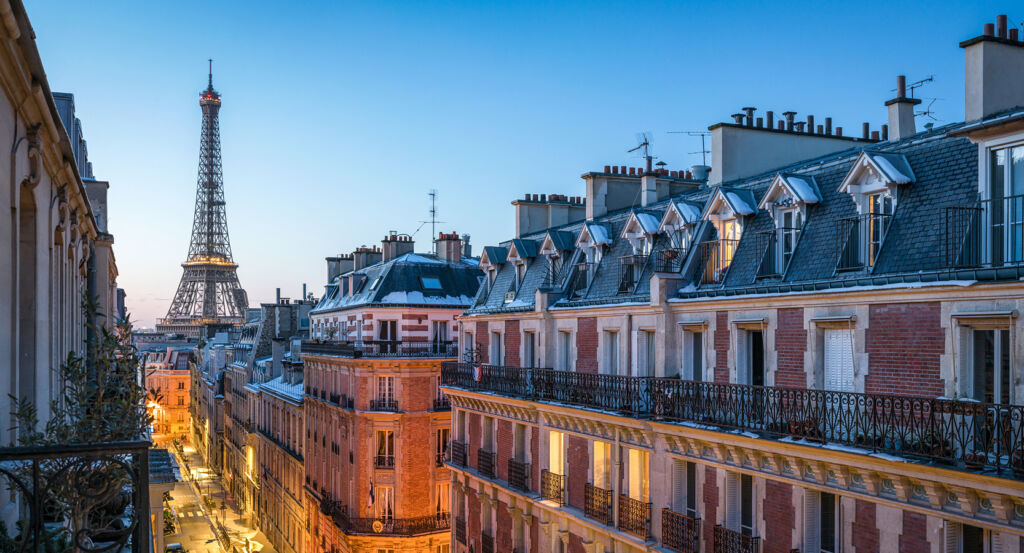
Why you should experience Rue La Fayette in Paris, France.
Rue La Fayette is a grand Faubourg-Montmartre corridor where nineteenth century urban ambition, transportation innovation, architectural elegance, and commercial vitality converge along one of Central Paris' defining boulevards.
Running through Faubourg-Montmartre between Opéra and Stalingrad, this expansive historic corridor unfolds through stately Haussmannian façades, distinguished hotels, landmark department stores, elegant office buildings, and energetic neighborhood cafés that demonstrate the transformation of Paris into a modern capital during the Second Empire. Monumental limestone architecture, broad sidewalks, ornamental balconies, and lively intersections create an energetic streetscape where commerce, culture, and everyday city life intersect from morning until late evening. Every block reflects the confidence of a boulevard conceived to connect the historic center with the rapidly expanding northeastern districts of Paris. The result is a corridor defined by metropolitan ambition, architectural grandeur, and one of the capital's most significant urban arteries.
What you should know about Rue La Fayette.
Rue La Fayette is best known for being created between 1823 and 1824 and named in honor of Gilbert du Motier, Marquis de Lafayette, the celebrated French military officer whose leadership during both the American Revolutionary War and the French Revolution established him as one of history's greatest champions of constitutional liberty, while the boulevard itself became a defining axis of nineteenth century Parisian expansion linking the Grands Boulevards with the city's rapidly developing eastern quarters. The corridor later assumed a pivotal role in Parisian transportation history through the opening of Gare du Nord and Gare de l'Est nearby, transforming Rue La Fayette into one of the capital's principal commercial approaches as generations of international travelers, merchants, and residents flowed through one of Europe's busiest railway districts.
Elegant nineteenth century buildings, thriving businesses, celebrated cafés, and landmark institutions preserve the boulevard's role as one of Paris' great urban connectors. Continuous commercial activity, remarkable architectural coherence, and the constant movement between major railway terminals and the historic city center demonstrate how Rue La Fayette remains an enduring expression of Parisian mobility, commerce, and metropolitan life.
How to fold Rue La Fayette into your trip.
Rue La Fayette works as an exploration through Faubourg-Montmartre's celebrated architecture, cultural landmarks, and historic railway district.
Begin at Palais Garnier, where one of the world's greatest opera houses establishes the extraordinary architectural ambition of nineteenth century Paris before following Rue La Fayette toward the city's historic railway quarter. Continue to Gare du Nord, whose grand façade and international significance reveal the engineering achievement that transformed Paris into one of Europe's foremost transportation hubs. Conclude at Passage Jouffroy, where elegant nineteenth century arcades, specialty shops, and beautifully preserved architecture provide a memorable finale celebrating commerce, craftsmanship, and urban history. The progression moves naturally from grand cultural architecture to world-renowned transportation heritage before concluding through one of Paris' finest covered passages, revealing why Rue La Fayette remains one of the capital's defining historic corridors.
Where your story begins.
Foresyte Travel reveals places that feel extraordinary long before you arrive.
Experience premium editorial crafted for luxury travelers.














































































































