
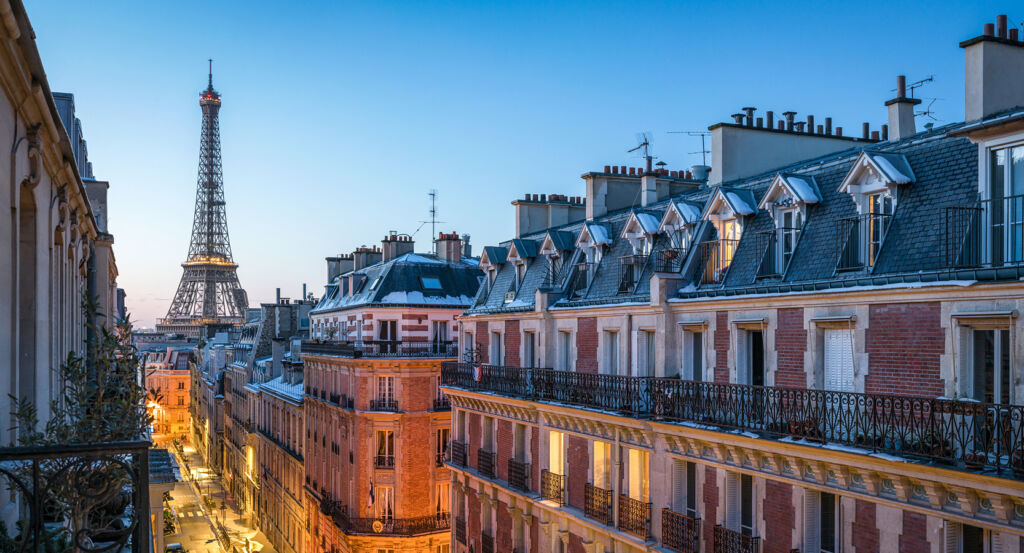
Why you should experience Rue Rambuteau in Paris, France.
Rue Rambuteau is a visionary Les Halles corridor where nineteenth century urban reform, architectural innovation, cultural vitality, and everyday Parisian life converge along one of the capital's most influential modern streets.
Running through Les Halles between Beaubourg and Le Marais, this broad historic corridor unfolds through elegant Haussmannian façades, neighborhood cafés, independent boutiques, celebrated galleries, energetic food shops, and landmark cultural institutions that embody the transformation of Central Paris during the nineteenth century. Wide sidewalks, generous street proportions, finely detailed stone buildings, and continuous pedestrian activity reveal an ambitious urban vision that prioritized light, circulation, and public health while preserving the energy of one of the city's oldest districts. Every block demonstrates how thoughtful planning reshaped medieval Paris into a modern capital. The result is a corridor defined by urban innovation, architectural harmony, and one of Central Paris' most engaging streets.
What you should know about Rue Rambuteau.
Rue Rambuteau is best known for opening in 1838 under the direction of Claude-Philibert Barthelot, Comte de Rambuteau, the visionary Prefect of the Seine whose pioneering modernization program introduced Paris' first major wide street through the medieval city decades before Baron Haussmann's celebrated transformations, establishing a revolutionary model for healthier, brighter, and more navigable urban planning. Conceived alongside Rambuteau's sweeping civic reforms that expanded public fountains, sewer networks, street lighting, and green spaces, the corridor became an influential precedent for the grand boulevards that later redefined Paris, while its direct connection to the Centre Pompidou has further established the street as one of the capital's foremost cultural and pedestrian corridors.
Rue Rambuteau continues expressing that progressive vision through an energetic blend of neighborhood commerce, contemporary culture, and historic architecture that seamlessly connects Les Halles, Beaubourg, and Le Marais. Elegant nineteenth century façades, thriving independent businesses, lively terraces, and constant pedestrian movement reinforce the remarkable success of a street conceived nearly two centuries ago to improve everyday urban life while remaining one of Paris' most animated and welcoming public spaces.
How to fold Rue Rambuteau into your trip.
Rue Rambuteau works as an exploration through Les Halles' celebrated architecture, contemporary culture, and historic neighborhoods.
Begin at Centre Pompidou, where one of the world's most influential museums of modern and contemporary art establishes the district's creative energy before following Rue Rambuteau through the heart of historic Paris. Continue to Église Saint-Eustache, whose extraordinary Gothic and Renaissance architecture provides a remarkable contrast to the surrounding modern cityscape while celebrating centuries of Parisian history. Conclude at Canopée des Halles, where one of the capital's most ambitious contemporary urban renewal projects provides a fitting finale celebrating innovation, architecture, and the continuing evolution of Central Paris. The progression moves naturally from world renowned contemporary art to historic architectural grandeur before concluding through one of the city's defining civic redevelopments, revealing why Rue Rambuteau remains one of Paris' most successful urban corridors.
Where your story begins.
Foresyte Travel reveals places that feel extraordinary long before you arrive.
Experience premium editorial crafted for luxury travelers.














































































































