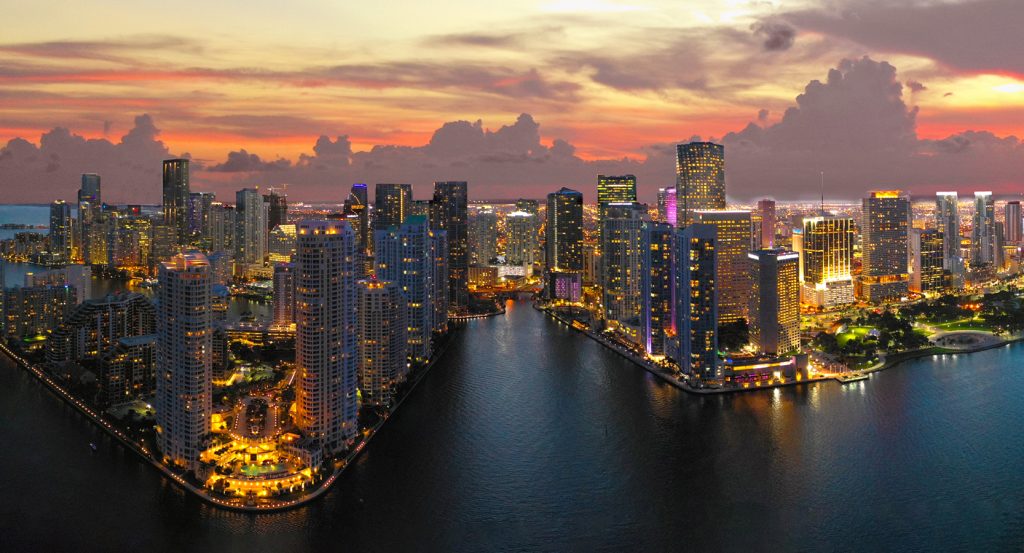
Why you should experience North River Drive in Miami, Florida.
North River Drive is a storied corridor where Spring Garden's riverfront heritage, Miami's maritime origins, architectural legacy, and tropical landscape continue shaping one of the city's most distinctive waterfront streets.
Running through Spring Garden between Allapattah and Overtown, the corridor follows the north bank of the Miami River while connecting historic homes, working marinas, yacht facilities, medical campuses, and shaded riverfront landscapes that collectively reflect more than a century of continuous waterfront development. Mature banyans, royal palms, live oaks, and native tropical vegetation soften the urban setting while preserving sweeping views across one of Florida's most historically significant waterways. Throughout the corridor, early twentieth-century residences, maritime infrastructure, and carefully preserved historic districts reinforce a setting whose character has evolved alongside the river that gave Miami both its name and its earliest commercial foundation. The result is an experience defined by heritage, waterfront character, and one of Miami's most remarkable river corridors.
What you should know about North River Drive.
North River Drive is best known for tracing the northern bank of the Miami River through Spring Garden, among Miami's oldest planned residential neighborhoods, where development accelerated after Henry Flagler's Florida East Coast Railway reached the city in 1896 and stimulated rapid expansion along the river. The corridor follows a section of the Miami River that has served as a transportation corridor for thousands of years, first supporting Tequesta settlements before becoming a commercial waterway central to Miami's incorporation in 1896. Spring Garden was formally platted in 1919 and today preserves one of Miami's finest collections of Mediterranean Revival, Mission Revival, Prairie School, and early Masonry Vernacular residences, many constructed between the 1910s and 1930s beneath an expansive canopy of mature tropical trees. The adjacent Miami River remains one of the few working urban rivers in the United States, supporting commercial shipping, tugboats, repair yards, and recreational vessels while maintaining direct access between the Atlantic Ocean and inland marine industries. Royal palms, gumbo limbo, live oaks, strangler figs, mahogany trees, and native riverine vegetation continue defining the lush landscape that distinguishes North River Drive from conventional urban corridors.
The Spring Garden Historic District was listed on the National Register of Historic Places in 1997, recognizing the neighborhood's exceptional architectural integrity and its importance within Miami's early residential development. Nearby the Scottish Rite Temple, completed in 1924 with Egyptian Revival detailing, reflects the civic and institutional investment that accompanied the city's rapid expansion during the Florida Land Boom. Oolitic limestone retaining walls, coral rock landscape features, decorative clay roof tiles, and original terrazzo entrance courts surviving throughout adjoining properties demonstrate the craftsmanship and regional materials that became hallmarks of Miami's early residential architecture. Together, these preserved historic resources, civic landmarks, and enduring architectural materials deepen the historical narrative established by North River Drive's riverfront setting, demonstrating why the corridor remains inseparable from Miami's architectural and maritime heritage.
How to fold North River Drive into your trip.
North River Drive works as a journey through Miami's riverfront history and architectural legacy.
Begin at Lummus Park Historic District, where preserved early Miami buildings and mature tropical landscaping introduce the city's formative years before following North River Drive along the historic north bank of the Miami River. Continue to Miami Riverwalk, whose waterfront promenades, working vessels, and panoramic river views reveal the commercial waterway that shaped the city's development. Conclude at José Martí Park, where expansive green space, river access, and views across the historic waterway provide a memorable finale celebrating the enduring relationship between Miami and the Miami River. The progression moves naturally from preserved urban history through an active maritime landscape before concluding beside the river that gave birth to the city, revealing why North River Drive remains one of Miami's defining waterfront corridors.
Where your story begins.
Foresyte Travel reveals places that feel extraordinary long before you arrive.
Experience premium editorial crafted for luxury travelers.