
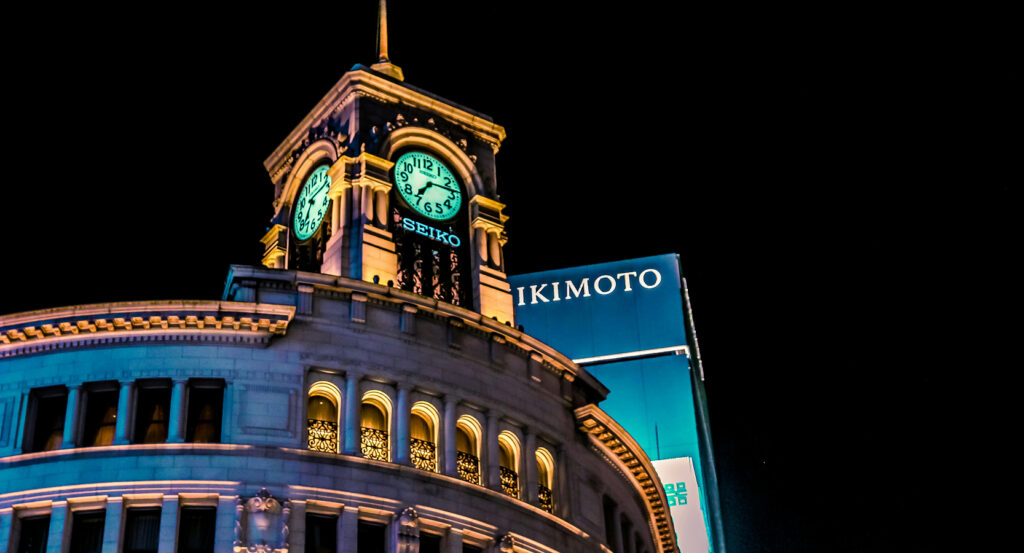
Why you should experience Chuo-dori Street in Tokyo, Japan.
Chuo-dori Street is a celebrated Ginza corridor where luxury retail, architectural innovation, commercial heritage, and contemporary Japanese culture define one of the world's most influential shopping avenues.
Running through Ginza between Kyobashi and Shimbashi, this internationally recognized boulevard unites flagship department stores, architect-designed fashion houses, historic retailers, cultural institutions, refined cafés, and celebrated restaurants within a streetscape that has continually represented the highest standards of Japanese commerce since the nineteenth century. Landmark buildings by globally acclaimed architects, impeccably maintained sidewalks, and coordinated streetscape improvements reinforce an atmosphere where tradition and innovation coexist with exceptional precision. Weekly pedestrianization transforms the avenue into the celebrated Hokōsha Tengoku, creating one of Tokyo's most energetic civic promenades. The result is a corridor defined by urban sophistication, architectural distinction, and enduring commercial prestige.
What you should know about Chuo-dori Street.
Chuo-dori Street is best known for following the historic route of Edo-period Nakamachi Street before evolving into the principal commercial spine of Ginza after the district's comprehensive reconstruction following the devastating Great Ginza Fire of 1872, when the Meiji government commissioned British architect Thomas James Waters to redesign the neighborhood with Western-style brick architecture that established one of Japan's earliest modern commercial districts. Running for 15 kilometers across Central Tokyo, the Ginza section became the nation's foremost showcase for luxury retail, introducing pioneering department stores including Wako, Mitsukoshi, and Matsuya while attracting flagship boutiques for the world's leading fashion houses, jewelers, watchmakers, and technology companies. The avenue later became internationally recognized for Hokōsha Tengoku, the weekend pedestrianization program introduced in 1970 that closes the street to vehicle traffic on designated afternoons, allowing hundreds of thousands of pedestrians to experience one of Tokyo's most celebrated public spaces while influencing similar urban initiatives throughout Japan. Contemporary architectural commissions by Renzo Piano, Shigeru Ban, Toyo Ito, Jun Mitsui, Yoshio Taniguchi, and numerous internationally acclaimed designers have continually reshaped the boulevard through sophisticated flagship buildings including Ginza Six, Mikimoto Ginza 2, Hermès Ginza, and Maison Hermes, reinforcing Chuo-dori Street's reputation as one of the world's foremost destinations for architecture, luxury commerce, and urban design.
Elegant stone façades, transparent curtain walls, illuminated storefronts, carefully proportioned public spaces, and coordinated streetscape standards create a remarkably cohesive urban environment despite continual architectural renewal spanning more than a century. Cultural institutions, historic department stores, luxury boutiques, galleries, cafés, and MICHELIN-recognized restaurants sustain uninterrupted activity throughout the day and evening while preserving Ginza's longstanding role as Japan's premier commercial district. Chuo-dori Street continues demonstrating how architectural excellence, thoughtful planning, commercial leadership, and civic programming collectively define one of the world's great shopping boulevards.
How to fold Chuo-dori Street into your trip.
Chuo-dori Street works as a curated exploration through Ginza's celebrated architecture, luxury retail, and cultural institutions.
Begin at Wako Department Store, where one of Ginza's most recognizable buildings establishes the district's enduring commercial heritage before strolling along Chuo-dori Street. Continue to Ginza Six, whose architecturally ambitious retail complex, contemporary art installations, and rooftop garden demonstrate the boulevard's continuing evolution as Japan's premier luxury shopping destination. Conclude at Pola Museum Annex, where rotating exhibitions of contemporary art provide a fitting cultural finale celebrating the creative spirit that has long distinguished Ginza. The progression moves naturally from historic department store to contemporary architectural achievement before concluding through an acclaimed cultural institution, revealing why Chuo-dori Street remains the defining expression of Ginza's commercial and artistic identity.
Where your story begins.
Foresyte Travel reveals places that feel extraordinary long before you arrive.
Experience premium editorial crafted for luxury travelers.

















































































































