
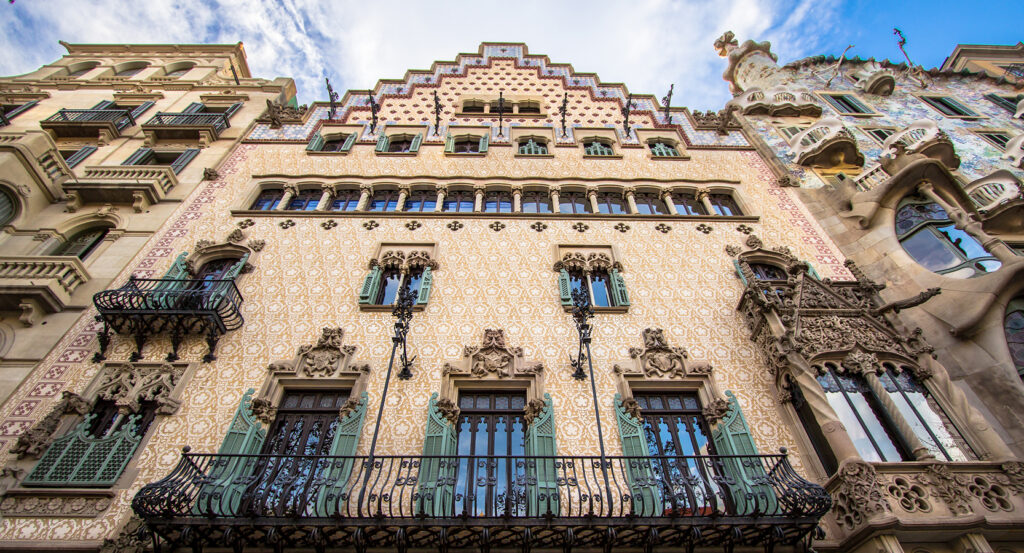
Why Almanac Barcelona matters.
Almanac Barcelona is where refined modern luxury, sun-washed Mediterranean elegance, and a quietly theatrical sense of design come together to create a stay that feels sensual, intimate, and deeply connected to the living pulse of Barcelona.
Rising along Gran Via, just steps from Passeig de Gràcia, the hotel occupies a privileged position where the Eixample's grand boulevards, Gaudí landmarks, and cosmopolitan rhythm converge into one of the most iconic urban landscapes in Europe. From the outside, Almanac strikes a bold yet graceful silhouette, sophisticated stonework, sweeping lines, and golden tones that shimmer subtly in the Barcelona light. It carries itself with a kind of confident restraint: unmistakably contemporary, yet never cold; luxurious, yet never ostentatious. Step inside, and you feel the shift. The lobby unfolds like a warm, sculpted gallery, rich woods, brushed metals, soft caramel leathers, ambient lighting, and curated art pieces that draw the eye into corners of texture and shadow. It's a space designed for atmosphere, not performance, and it sets the resonant tone for everything that follows. Rooms continue this narrative of refined sensuality. Expect a palette of golds, creams, soft charcoals, and warm woods; plush bedding; tactile details; sculptural lighting; and floor-to-ceiling windows that invite the city's glow inward. Many rooms offer small balconies or expansive views over the Eixample grid, where the rhythm of Barcelona unfolds in geometric beauty, tree-lined avenues, sunlit façades, and the slow movement of daily life. Bathrooms feel serene and spa-like, with marble surfaces, rain showers, freestanding tubs in select categories, and amenities chosen with an uncompromising eye for quality. Every detail, every material, every line serves the hotel's signature tone: warm, modern, and intimately crafted. One of Almanac Barcelona's true treasures is its rooftop. The panoramic terrace, with its pool, loungers, and gentle breeze rolling in from the Mediterranean, is a sanctuary above the city, a place where afternoon sunlight diffuses into gold, conversations linger, and the skyline stretches toward Tibidabo and the Sagrada Família. Evenings here feel cinematic: glowing lanterns, soft music, and Barcelona flickering beneath you. The hotel's restaurant carries the same signature warmth. Expect contemporary Mediterranean cuisine rooted in Catalan tradition, seasonal vegetables, coastal seafood, roasted meats, local oils, artisanal breads, and thoughtfully selected wines from across Spain. The atmosphere is elegant yet welcoming, more intimate dining room than formal stage. Breakfast, served with sunlight drifting through tall windows, becomes its own daily ritual: fresh pastries, fruit, cheeses, eggs, yogurts, breads, and rich coffee that arrives with an intuitive sense of timing. Almanac's location enriches every moment of the stay. Within a short walk, you're on Passeig de Gràcia, standing before La Pedrera or Casa Batlló; wandering the boutiques and cafés of Rambla de Catalunya; or reaching the Gothic Quarter's ancient alleyways and cathedral spires. The hotel offers both connection and retreat, close to everything, yet cocooned in its own serenity.
What you did not know about Almanac Barcelona.
Almanac Barcelona occupies ground layered with the architectural, social, and cultural evolution of the Eixample, among the most visionary urban projects of the 19th century and a symbol of Barcelona's progressive spirit.
Long before the hotel rose, this stretch of Gran Via was part of a vast, open plain between the medieval walls of the Gothic Quarter and the independent villages that dot today's city. For centuries, the land functioned as agricultural terrain, crisscrossed by small paths leading toward the hills of Collserola and the coastal trading routes. In the early 19th century, as Barcelona faced overcrowding and health crises within its medieval core, urban planners proposed expanding the city outward. The decision to demolish the defensive walls set the stage for Ildefons Cerdà's revolutionary Eixample plan, a grid designed for sunlight, ventilation, mobility, equality, and human wellbeing. The land where Almanac stands today became part of this grand transformation, shifting from rural fringe to one of the most forward-thinking urban districts of its time. Throughout the late 1800s and early 1900s, the surrounding area filled with elegant residential buildings, artisan workshops, cafés, and early forms of Catalan modernist expression. Wealthy families built grand apartments along Passeig de Gràcia, while more modest but still beautifully crafted structures lined the connecting streets. The neighborhood became a living museum of creativity: wrought-iron balconies, carved stone façades, stained-glass windows, and decorative motifs that blended craftsmanship with architectural innovation. In the mid-20th century, this part of Gran Via evolved further as Barcelona modernized. Commercial spaces, cultural venues, and design studios moved in, setting the tone for the cosmopolitan district that remains today. By the time Almanac Barcelona was envisioned, the neighborhood had become a center of culture, texture, and energy, ripe for a property that would honor the city's design heritage while embracing a contemporary worldview. The hotel's modern architecture, warm materials, and interior artistry reflect this layered history: a discussion between tradition and innovation, between the Barcelona that was and the Barcelona that continues to reinvent itself.
How Almanac Barcelona fits.
Almanac Barcelona becomes the refined, atmospheric anchor of your Barcelona journey, where mornings begin with golden Mediterranean light, days unfold into architectural discovery and urban rhythm, and evenings settle into warm, contemporary elegance.
Start the morning with a quiet breakfast in the restaurant or on the rooftop terrace, sunlight drifting through the city grid as the day awakens. Then step outside onto Gran Via and let the city pull you forward: stroll toward Passeig de Gràcia to explore Gaudí's masterpieces; slip into Rambla de Catalunya for cafés and boutiques; or wander deeper into the Gothic Quarter, where medieval stone passages curl outward into plazas filled with light and voices. Spend your afternoon discovering Barcelona's creative edges, the galleries of El Born, the markets of Santa Caterina, or the waterfront promenade stretching toward Barceloneta. In warmer months, consider a slow walk to the beach, where sea breezes and sun-warmed sand offer an entirely different rhythm of the city. Return to Almanac in the golden hour for a moment of calm, float in the rooftop pool, savor a drink with panoramic views, or rest in your room as the sky turns peach and lavender over the Eixample. As night falls, enjoy a thoughtful dinner in the hotel's restaurant, blending regional flavors with contemporary technique. Afterward, step back onto the terrace or into your room's balcony to watch Barcelona glitter across its geometries and avenues. End your night wrapped in soft bedding, windows open to the hum of the city, feeling held by warmth, design, and atmosphere. Almanac Barcelona becomes not just where you stay, but the beautifully composed, resonant soul of your entire Barcelona experience.
Where your story begins.
Foresyte Travel reveals places that feel extraordinary long before you arrive.
Enjoy editorial crafted for luxury travelers.
Foresyte may earn a commission when you book.














































































































