Why Arii Moana matters.
Arii Moana is a refined Polynesian seafood restaurant where Motu Tehotu's lagoonfront seclusion meets French culinary technique, the maritime food traditions of the Society Islands and the distinctive dining heritage of the Four Seasons Resort Bora Bora.
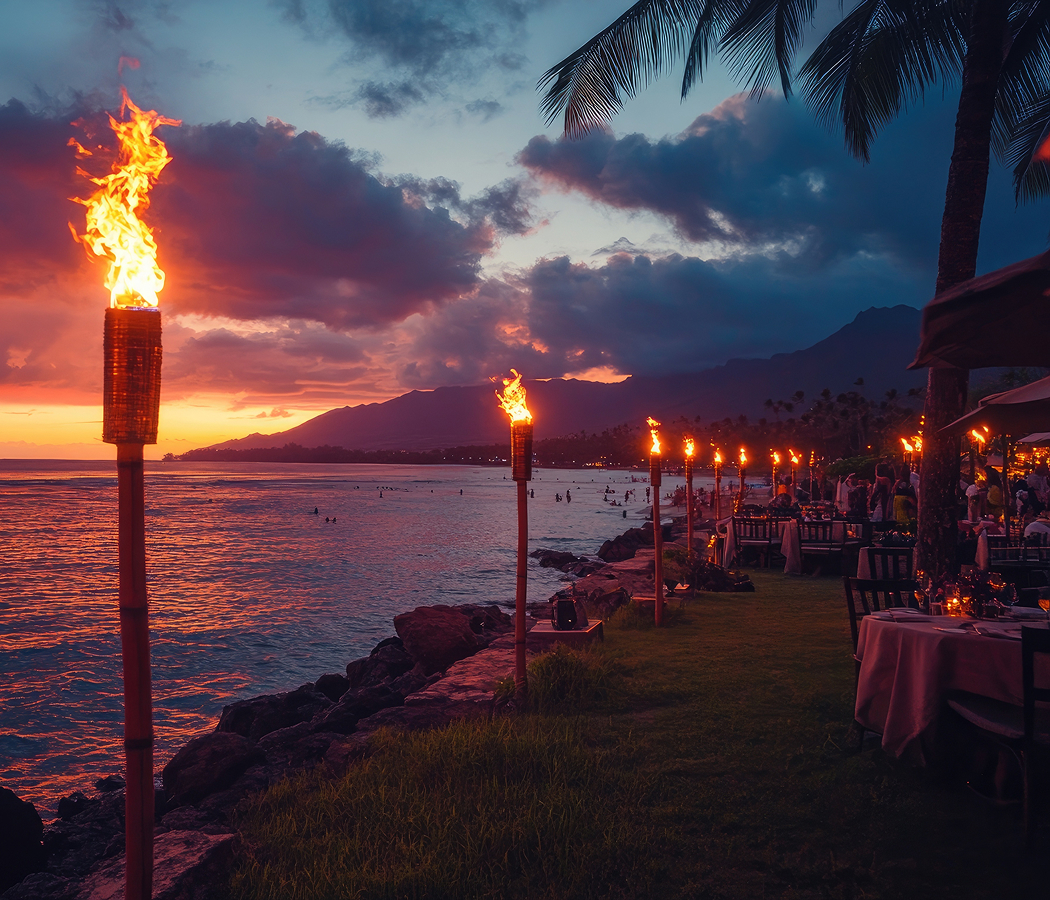
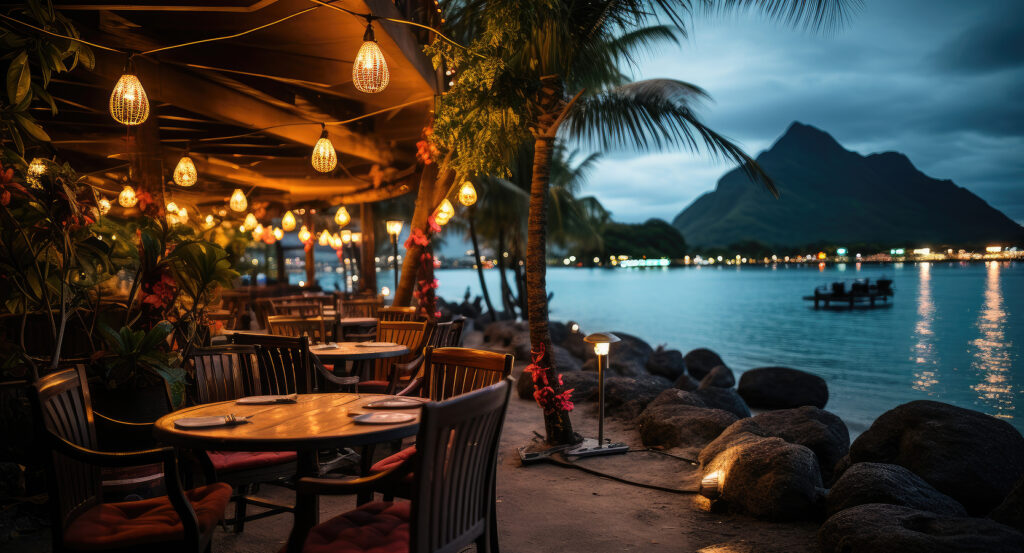
Situated on Motu Tehotu along Bora Bora's eastern barrier reef, the restaurant occupies a waterfront pavilion within the Four Seasons Resort Bora Bora, overlooking the sheltered lagoon and the volcanic peaks of the main island, with open-air dining areas positioned beside landscaped tropical gardens and resort pathways. Its covered terrace extends the dining room toward the water, placing the surrounding mountain scenery within view of the tables. Natural timber, woven textures and restrained tropical furnishings complement the open-sided architecture. The restaurant's position within the resort creates a close relationship between evening dining, the surrounding lagoon and the island's mountainous interior. The result is an intimate seafood restaurant whose culinary focus, Polynesian architectural setting and waterfront geography distinguish it within Bora Bora's luxury dining scene.
What defines Arii Moana.
Arii Moana is best known for its seafood-centered cuisine, its association with Four Seasons Resort Bora Bora and its combination of French culinary technique with ingredients associated with the South Pacific. The restaurant belongs to the resort's development on a coral islet along Bora Bora's eastern reef, where the surrounding lagoon became the central geographical feature of the property. Four Seasons Resort Bora Bora opened in September 2008, introducing the brand's hospitality model to French Polynesia during a period of expanding international investment in the island's luxury accommodation sector. The resort's development included overwater bungalows, beachfront villas and dining facilities designed to engage with the surrounding marine landscape. Arii Moana emerged as its principal evening restaurant, emphasizing composed seafood preparations and a more formal dining format than the property's casual waterfront establishments. Its name draws upon Polynesian language and chiefly associations, connecting the restaurant's presentation with the cultural heritage of the Society Islands. The kitchen developed around the availability of Pacific fish, tropical produce and ingredients imported to support classical European cooking. French culinary training provided a foundation for sauces, controlled cooking techniques and carefully balanced accompaniments. Polynesian ingredients introduced coconut, vanilla, tropical fruit and regional seafood into the restaurant's gastronomic approach. The combination established a dining style suited to the island's international clientele and its surrounding maritime environment. Resort dining evolved through successive culinary teams, with menus incorporating changing interpretations of seafood, meat and seasonal produce. The restaurant subsequently developed a stronger emphasis on Mediterranean influences alongside its French and Polynesian foundations. Its seafood preparations increasingly incorporated olive oil, citrus, herbs and techniques associated with coastal European cooking. The restaurant's position within the resort's evening dining program maintained its importance as a destination for special occasions and extended meals. Its culinary character developed through the continuing relationship between European restaurant traditions and the ingredients available within French Polynesia.
Four Seasons Resort Bora Bora's culinary program places Arii Moana within a broader dining structure that distinguishes its evening service from the property's casual restaurants. The kitchen emphasizes fish and shellfish preparations supported by carefully composed sauces and seasonal accompaniments. Yellowfin tuna provides an important regional ingredient, valued for its firm texture and suitability for both raw and cooked preparations. Mahi-mahi contributes a mild, substantial fish suited to grilling, roasting and preparations incorporating aromatic sauces. Lobster and other shellfish introduce richer textures that accommodate citrus, herbs and butter-based preparations. Mediterranean influences appear through olive oil, tomatoes and vegetable combinations associated with southern European coastal cuisine. French technique contributes reductions, emulsions and controlled cooking methods that structure the relationship between seafood and its accompaniments. Tahitian vanilla supplies a distinctive regional aromatic ingredient, particularly in sauces and desserts. Coconut contributes sweetness and richness to selected preparations, connecting the menu with familiar Polynesian flavors. Tropical fruit introduces acidity that balances seafood and richer components. The restaurant's presentation emphasizes composed individual plates and a measured sequence of courses. Wine service supports the European dimension of the meal, with selections intended to complement seafood and more substantial dishes. Evening dining takes place in a covered, open-air environment shaped by tropical breezes and the surrounding coastal landscape. The restaurant's architectural arrangement provides views toward the main island during the transition from daylight to evening. Its service combines the conventions of international fine dining with the informal physical character of an island resort. The resulting culinary approach connects seafood, Mediterranean ingredients and French preparation methods within a setting directly associated with Bora Bora's lagoon.
How Arii Moana fits.
Arii Moana works as the culinary centerpiece for a Bora Bora outing connecting the island's ancient volcanic structure, its accessible southern shoreline and the maritime community that supports life beyond the surrounding resort properties.
Begin at Mount Otemanu, the jagged volcanic summit dominating Bora Bora's central mountain mass. Rising 727 meters above sea level, the peak preserves the eroded remains of the ancient volcano responsible for the island's formation. Its steep basaltic cliffs and exposed ridges reveal the effects of prolonged erosion on the original volcanic structure. Tropical vegetation covers portions of the lower slopes, contrasting with the exposed rock above. Guided excursions through accessible lower terrain provide perspectives on the island's mountainous geography and its relationship with the surrounding coral reef. Continue to Matira Beach, the extensive public shoreline occupying Bora Bora's southern peninsula. Its fine coral-derived sand descends gradually into sheltered turquoise water, creating broad swimming areas under favorable conditions. Coconut palms border sections of the beach, and local restaurants connect the waterfront with the surrounding residential district. The western shoreline provides expansive sunset views across the lagoon. Its accessible coastal setting demonstrates the processes through which marine sediments accumulate along the protected margins of tropical volcanic islands. Conclude at Vaitape, Bora Bora's principal settlement and commercial harbor along the island's western coast. The village serves as the administrative and transportation center, with ferry services connecting the main island to its airport and surrounding maritime routes. Shops, restaurants and community facilities occupy the waterfront, maintaining the harbor's importance within the local economy. Its position beside the lagoon provides views toward the mountainous interior and the surrounding reef. Vaitape's commercial activity introduces the continuing importance of maritime transportation and local services within Bora Bora's island economy. The progression moves from Mount Otemanu's volcanic geology through Matira Beach's sheltered shoreline and culminates at Vaitape's working harbor, connecting Arii Moana with the natural and cultural foundations of Bora Bora.
Where your story begins.
Foresyte Travel reveals places that feel extraordinary long before you arrive.
Enjoy editorial crafted for luxury travelers.
Foresyte may earn a commission when you book.