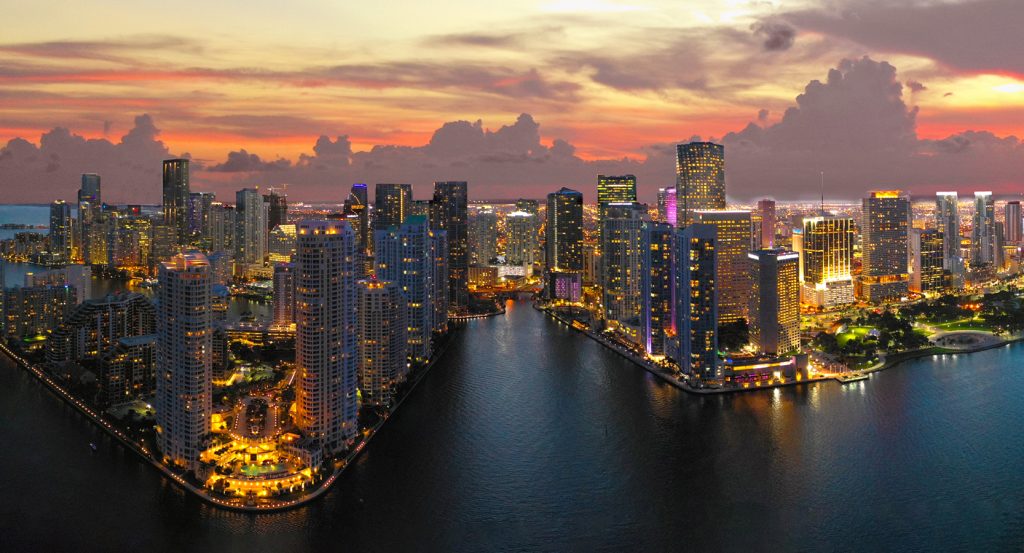
Why you should experience Arthur Godfrey Road in Miami, Florida.
Arthur Godfrey Road is a spirited corridor where Mid-Beach's waterfront lifestyle, architectural legacy, neighborhood commerce, and tropical character converge along one of Miami Beach's defining east-west thoroughfares.
Running through Mid-Beach between Biscayne Bay and the Atlantic shoreline, the corridor links residential neighborhoods, boutique hotels, local businesses, public parks, and palm-lined streets that collectively reflect Miami Beach's evolution from a seasonal resort into a year-round coastal community. Broad sidewalks, mature royal palms, Miami Modern architecture, and an active pedestrian environment create a streetscape where neighborhood life and beachfront culture remain closely connected. Throughout the corridor, independently owned businesses, longstanding institutions, landscaped public spaces, and carefully preserved architecture reinforce an environment shaped through decades of steady growth and coastal stewardship. The result is an experience defined by neighborhood energy, architectural character, and one of Miami Beach's most recognizable corridors.
What you should know about Arthur Godfrey Road.
Arthur Godfrey Road is best known as the modern name for 41st Street, redesignated in 1955 to honor broadcaster Arthur Godfrey after his nationally televised programs helped elevate Miami Beach's profile during the postwar tourism boom. The corridor became a principal east-west gateway as the Julia Tuttle Causeway, completed in 1920, directed growing automobile traffic into Mid-Beach and encouraged commercial and residential development surrounding the roadway. Construction accelerated throughout the 1940s, 1950s, and 1960s with Miami Modern hotels, apartment buildings, neighborhood shopping centers, and civic facilities introducing cantilevered balconies, breeze-block screens, terrazzo finishes, ribbon windows, and climate-responsive design suited to South Florida's subtropical environment. The surrounding streetscape preserves notable examples of work by architects including Morris Lapidus, Melvin Grossman, and Norman Giller, whose contributions helped define Miami Beach's internationally recognized postwar architectural identity. Royal palms, coconut palms, sea grape, gumbo limbo, sabal palms, and native flowering trees complement reinforced concrete roadways, hurricane-resistant utilities, and landscaped medians that continue supporting one of Miami Beach's busiest neighborhood corridors.
Nearby Mount Sinai Medical Center, established in 1949, grew into one of South Florida's leading healthcare institutions while reinforcing Arthur Godfrey Road's importance as a year-round neighborhood corridor serving residents as well as visitors. Mid-century commercial buildings lining the avenue retain porcelain enamel panels, decorative mosaic surfaces, glazed storefronts, and shaded arcades that demonstrate how architects adapted retail design to Miami Beach's tropical climate and pedestrian activity. Annual cultural events, neighborhood festivals, and locally owned cafés have continued strengthening the corridor's character as a gathering place where long-established businesses coexist with newer independent enterprises. Together, these institutional anchors, architectural details, and evolving commercial traditions demonstrate how Arthur Godfrey Road has remained a defining component of Mid-Beach by balancing preservation, everyday activity, and continuing investment.
How to fold Arthur Godfrey Road into your trip.
Arthur Godfrey Road works as a journey through Mid-Beach's architecture, public spaces, and coastal atmosphere.
Begin at Miami Beach Botanical Garden, where subtropical collections, native landscapes, and tranquil pathways introduce South Florida's remarkable plant diversity before following Arthur Godfrey Road toward the coast. Continue to The Bass, whose contemporary exhibitions, historic Art Deco architecture, and sculpture garden broaden the appreciation for Miami Beach's longstanding cultural identity. Conclude at Miami Beach Boardwalk, where uninterrupted Atlantic views, sea breezes, and beautifully landscaped oceanfront pathways provide the culminating reward by revealing the coastal setting that has shaped Arthur Godfrey Road throughout its history. The progression moves naturally from botanical landscapes through artistic expression before concluding beside the Atlantic Ocean, revealing how Arthur Godfrey Road connects neighborhood life, architectural heritage, and Miami Beach's enduring coastal identity.
Where your story begins.
Foresyte Travel reveals places that feel extraordinary long before you arrive.
Experience premium editorial crafted for luxury travelers.