
Why Aux 2 Saveurs matters.
Aux 2 Saveurs is a precise bistronomic restaurant where Quinze-Vingts' railway-quarter character meets Shin Maeda's Hokkaido upbringing, French culinary training and Japanese-inflected command of classical technique.
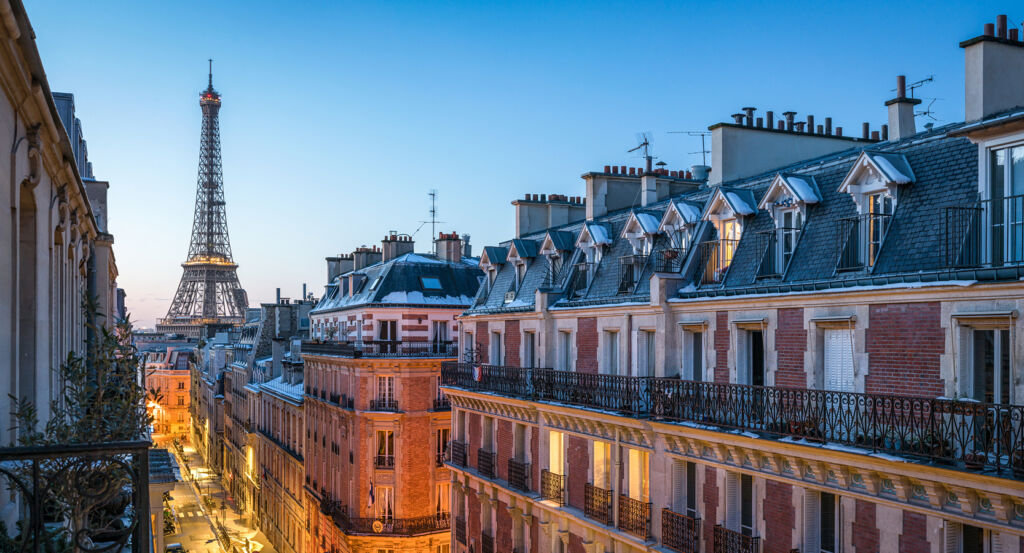
Set along Rue Émile Gilbert near Rue de Lyon and just steps from Avenue Daumesnil, the restaurant occupies a compact side street within the dense urban hinge between Gare de Lyon, Bastille and the twelfth Arrondissement's eastern neighborhoods. Tall nineteenth-century façades narrow the immediate streetscape before the surrounding blocks open toward the larger railway approaches and broad avenues created around the station district. The dining room concentrates attention on a restrained sequence of closely arranged tables and the work emerging from the kitchen. Warm wood, pale walls and understated decorative elements give the small room a deliberately composed character. The result is an intimate Paris table whose physical restraint places Maeda's cross-cultural cooking at the center of the encounter.
What defines Aux 2 Saveurs.
Aux 2 Saveurs is best known for Shin Maeda translating a childhood inside his family's Hokkaido restaurants and years cooking French cuisine into a highly personal form of Parisian bistronomy. Maeda grew up in Hokkaido under the influence of his restaurateur father, whose fresh-salmon kimchi became renowned in Japan and whose approach taught his son rigorous product selection and precise control of cooking. France became Maeda's second culinary formation, and a decade in the country immersed him in professional French kitchens before ownership gave him an independent platform. He took control of Aux 2 Saveurs in July 2020, placing a Japanese chef trained in French technique at the head of a restaurant that had previously operated as a Vietnamese table. The transition recast the address around French bistro foundations, disciplined cooking and selective Japanese accents rooted in Maeda's own biography. Pâté en croûte became one of the clearest demonstrations of that direction, joining Landes poultry, foie gras and hazelnuts inside one of French charcuterie's most technically demanding forms. Long braises created another recurring strand, with beef cheek and suckling pig giving Maeda a format for controlling tenderness, concentration and sauce. Game entered during its season, extending the kitchen into another classical French tradition that depends on exact handling of powerful meats. Raw fish revealed the other side of Maeda's training through preparations such as sea bream marinated with kombu, where Japanese curing knowledge entered a menu otherwise anchored in French bistronomy. Desserts retained recognizable French reference points through Paris-Brest, poire Belle Hélène and baba au rhum, carrying the same classical foundation through the final course. Maeda's restaurant emerged from two generations of culinary formation, beginning in his father's Hokkaido restaurants and reaching independent expression through a Paris dining room built around French technique.
A three-course structure gives the kitchen enough range to move from charcuterie and raw seafood into braises, roasting, pastry and frozen elements without breaking the meal into an extended tasting sequence. Gravlax begins with cured salmon accompanied by dill cream, grapefruit and blini, balancing fatty fish with citrus bitterness, herbal dairy and soft griddled dough. Bonito tataki shifts the fish treatment toward brief surface searing, with cherry, quinoa and fennel supplying fruit, grain and anise around the rare center. Braised beef cheek takes the opposite approach to heat, using red wine and prolonged cooking to soften connective tissue before carrot purée and mustard seeds bring sweetness and pungency against the concentrated meat. Rabbit and prawn enclosed in puff pastry joins land and sea inside a crisp laminated shell, with aubergine coulis and green beans carrying the composition into softer vegetal textures. Roasted milk-fed lamb from Lou Paillol pairs with artichoke and wild garlic, letting the meat's delicate fat meet the sharper green character of the allium. Skate wing meunière returns to a French pan technique in which browning and butter shape the fish, accompanied by wilted spinach. A vegetarian composition of sautéed mushrooms in cream, potato gnocchi and a slow-cooked egg builds richness through fungi, dairy, starch and fluid yolk. Paris-Brest closes the sequence through choux pastry and hazelnut praline, and a strawberry vacherin with parsley ice cream pushes the dessert course toward the same controlled French-Japanese tension that defines Maeda's savory cooking.
How Aux 2 Saveurs fits.
Aux 2 Saveurs works as the meal within a twelfth-Arrondissement outing connecting Belle Époque railway architecture, nineteenth-century transport infrastructure and Paris's pioneering conversion of an abandoned railway into a planted urban promenade.
Begin at Gare de Lyon, whose first permanent station rose in 1855 on an embankment six to eight meters above the surrounding ground to protect the railway from Seine flooding. The Paris Commune destroyed that building in 1871, and the approaching Exposition Universelle prompted another reconstruction under architect Marius Toudoire, who created the grand station associated with 1900. Its 67-meter campanile carries Paul Garnier's four clock faces, each 6.4 meters in diameter, and Jean-Baptiste Olive painted the immense interior panorama of destinations served by the railway. Continue to Viaduc des Arts, descended from the Bastille railway viaduct opened in 1859 for the line toward La Varenne and engineered by Émile Vuigner and Albert Bassompierre-Sewrin. Rail service ceased in 1969 after the arrival of the RER A, leaving the long masonry structure. Patrick Berger led the architectural rehabilitation of its arches during the 1990s, converting the railway substructure into workshops where specialist craftspeople work in fields extending from furniture and musical instruments to jewelry and textile arts. Conclude at Coulée verte René-Dumont, developed above and beyond the same abandoned railway corridor by architect Philippe Mathieux and landscape architect Jacques Vergely between 1988 and 1993. Its 4.5-kilometer course preserves the railway's changing engineering conditions, passing across elevated viaducts before dropping into cuttings and tunnels farther east. The Paris project subsequently became an important precedent for railway reuse abroad, with the designers of New York's High Line visiting the French promenade before their own elevated park opened in 2009. The progression moves from Toudoire's grand gateway for long-distance rail travel through a nineteenth-century viaduct converted for specialist craft and culminates in a disused railway transformed into one of the defining precedents for elevated urban landscapes.
Where your story begins.
Foresyte Travel reveals places that feel extraordinary long before you arrive.
Enjoy editorial crafted for luxury travelers.
Foresyte may earn a commission when you book.














































































































