Why Basilica of Maxentius matters.
Basilica of Maxentius is an expansive imperial Roman civic structure where the Roman Forum's political authority, late-antique architectural innovation, imperial propaganda systems, and engineering mastery converge within one of the most architecturally ambitious public buildings of ancient Rome.
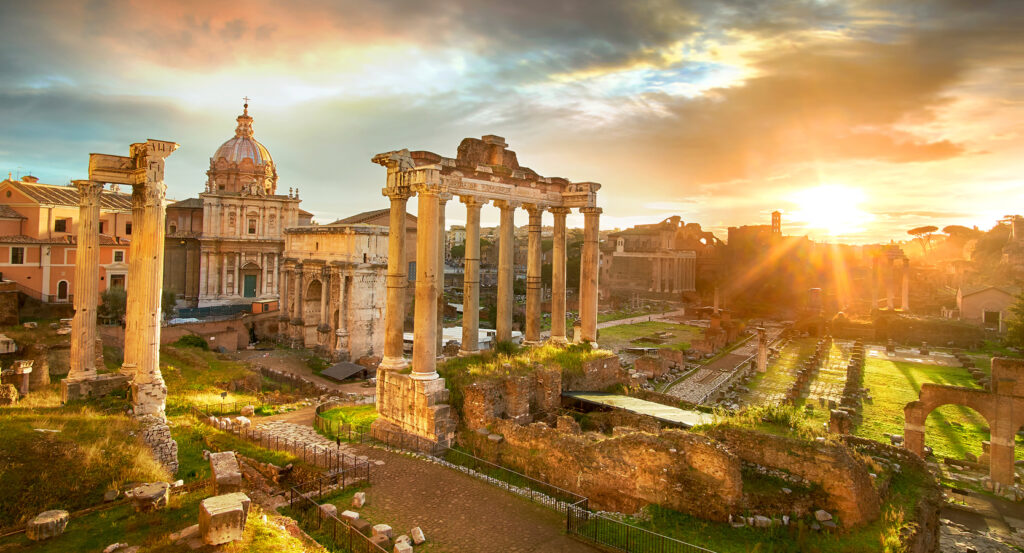
Set along Via dei Fori Imperiali within the western edge of the Roman Forum, this vast basilican complex reflects the final expansive building program of the Tetrarchic period under Emperor Maxentius and later completion under Constantine, originally conceived as a judicial and administrative hall that demonstrated imperial power through scale, structural daring, and spatial drama. Enormous concrete barrel vaults, coffered ceilings, and massive groin-vaulted bays represent a turning point in Roman engineering, where traditional columnar basilica layouts were reinterpreted through advanced use of Roman concrete and load-distribution systems that enabled unprecedented interior volume. The surviving north aisle, with its towering vault springing points and sculptural fragments of colossal statuary, reveals how architecture functioned as political theatre in the late empire. The result is a destination defined by structural innovation, imperial ambition, and one of the most influential architectural precedents in Western history.
What defines Basilica of Maxentius.
Basilica of Maxentius is best known for being initiated by Emperor Maxentius 308 CE and completed under Constantine after 312 CE following the Battle of the Milvian Bridge, forming one of the largest basilicas of the Roman Forum at an estimated footprint of 100 by 65 meters, and introducing revolutionary architectural engineering through its use of massive concrete barrel vaults supported by an internal system of eight colossal piers that redistributed structural loads without relying on dense column forests typical of earlier basilicas. The structure's central nave originally rose to 35 meters in height and was divided into three coffered barrel-vaulted bays, each decorated with ornate relief systems and marble revetments, while the building's interior also housed an enormous seated statue of Constantine, fragments of which survive in the Capitoline Museums, demonstrating the fusion of sculpture and architecture as instruments of imperial ideology in late Roman statecraft.
Beyond its constructional significance, the basilica represents a critical transition in Roman architectural history from classical post-and-lintel systems toward spatially dominant vaulted engineering that would later influence Byzantine churches, Renaissance engineering studies, and neoclassical civic design. Its surviving structural core continues to demonstrate the sophistication of Roman concrete technology, particularly pozzolanic binding techniques that enabled long-span vaulting and resistance to seismic and settlement stresses over centuries of partial collapse. Modern visitors experience the building as both archaeological ruin and architectural blueprint, where the scale of surviving vaults continues to communicate the Roman Empire's capacity for infrastructural and ideological monumentality.
How Basilica of Maxentius fits.
Basilica of Maxentius works as part of a focused exploration of the Roman Forum and imperial core of ancient Rome.
Begin at Arch of Constantine, where triumphal relief sculpture and imperial commemoration establish the political context of the Flavian and Constantinian eras before entering the Roman Forum toward the basilica complex. Continue through Temple of Venus and Roma, whose massive double-cell temple design reflects the same imperial ambition that shaped the basilica's architectural scale and symbolic intent. Conclude at Colosseum, where the engineering mastery of Roman concrete construction reaches its most recognizable public form, reinforcing the relationship between performance, infrastructure, and imperial identity. The progression moves naturally from triumphal monument to judicial basilica to amphitheater of mass entertainment, revealing why Basilica of Maxentius remains one of the most important architectural statements of late imperial Rome.
Where your story begins.
Foresyte Travel reveals places that feel extraordinary long before you arrive.
Enjoy editorial crafted for luxury travelers.
Foresyte may earn a commission when you book.