
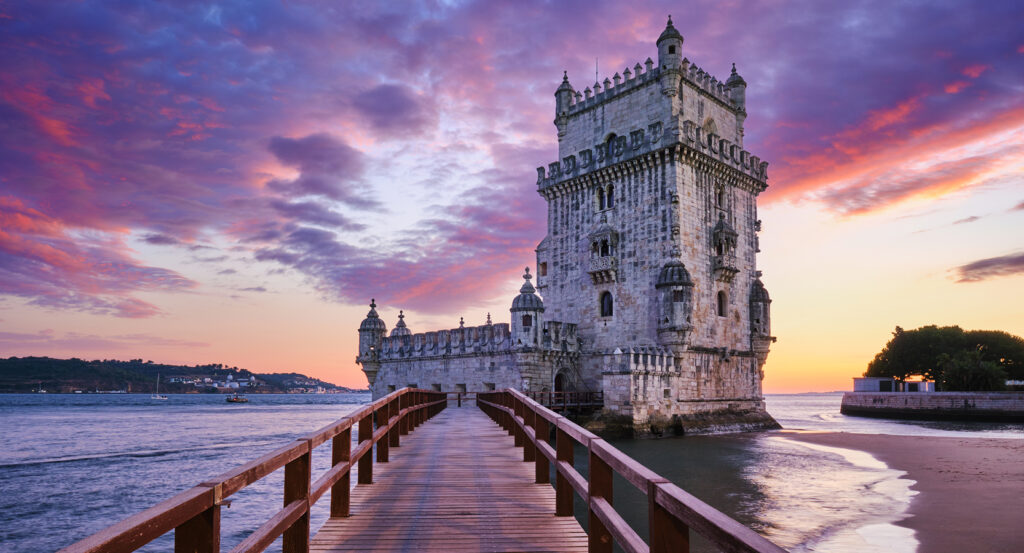
Why you should experience Belém Waterfront Promenade in Lisbon, Portugal.
Belém Waterfront Promenade is where Lisbon exhales, a luminous ribbon of stone and sea that carries the rhythm of the city toward the horizon.
Stretching along the Tagus River between the Jerónimos Monastery and Belém Tower, it's less a walkway than a state of mind. Here, the air hums with salt and sunlight; the sound of lapping water blends with the hum of cyclists and laughter of families. On one side, the Tagus glimmers like liquid glass; on the other, manicured lawns and palm-lined avenues lead toward Portugal's grandest monuments. The promenade captures everything Lisbon is, open, ocean-bound, eternally in conversation with the world. As you walk, the wind carries faint notes of fado from nearby cafés, and the city's golden light wraps everything it touches in warmth. At sunset, the water ignites in copper and rose, the bridge in the distance turning silhouette against a sky so wide it seems to belong to another century. Belém's promenade isn't just a view, it's the feeling of Lisbon in motion.
What you should know about Belém Waterfront Promenade.
The modern promenade follows the historical shoreline from which Portugal's great explorers once set sail.
Five hundred years ago, this was the embarkation point for voyages that redrew the world's map, Vasco da Gama, Ferdinand Magellan, and countless others who carried Lisbon's ambitions to the farthest seas. The riverbank itself has changed over time; land reclamation projects gradually extended it outward, transforming shipyards and fortifications into public parks and open plazas. Today's promenade overlays that history with design, wide, pale stone paths lined with benches, olive trees, and abstract maritime sculptures marking the city's relationship with the Tagus. Few realize that the pattern of paving stones was inspired by the wake of a ship, its undulating lines meant to evoke both motion and memory. The area around the Belém Tower forms the promenade's resonant core, the tower itself once a sentinel, now a companion to strollers and sunset watchers. To the east, the Monument to the Discoveries rises like a prow of stone, its carved figures forever gazing seaward. Beyond that, the 25 de Abril Bridge spans the skyline, its red arc echoing the rhythm of San Francisco's Golden Gate, a reminder that Lisbon, too, is a city of crossings.
How to fold Belém Waterfront Promenade into your trip.
To walk Belém Waterfront Promenade is to trace Lisbon's memory through light and wind.
Begin near the Jerónimos Monastery, where the marble pavements gleam under morning sun, and follow the path westward toward Belém Tower. The route takes about twenty minutes at a leisurely pace, though time feels irrelevant here, each step frames a new composition of river and sky. Pause midway at the Monument to the Discoveries to climb its viewing platform; from there, the promenade unfurls in both directions like a silver thread. Continue toward the tower, stopping to watch sailboats drift across the water or locals fishing from the quay. Visit in late afternoon when the tide begins to rise and the sunlight softens into gold, this is when Lisbon's light performs its quiet miracle. Sit along the low stone wall near the tower's base, and let the day dissolve around you. Bring a pastry from the nearby Pastéis de Belém bakery or a glass of Vinho Verde from a riverside kiosk, and watch the reflection of the tower stretch across the river. By the time night falls, the promenade transforms into a glowing corridor of lanterns and laughter. Belém's waterfront is not just where Lisbon meets the ocean, it's where the ocean still remembers Lisbon.
Where your story begins.
Foresyte Travel reveals places that feel extraordinary long before you arrive.
Experience premium editorial crafted for luxury travelers.














































































































