
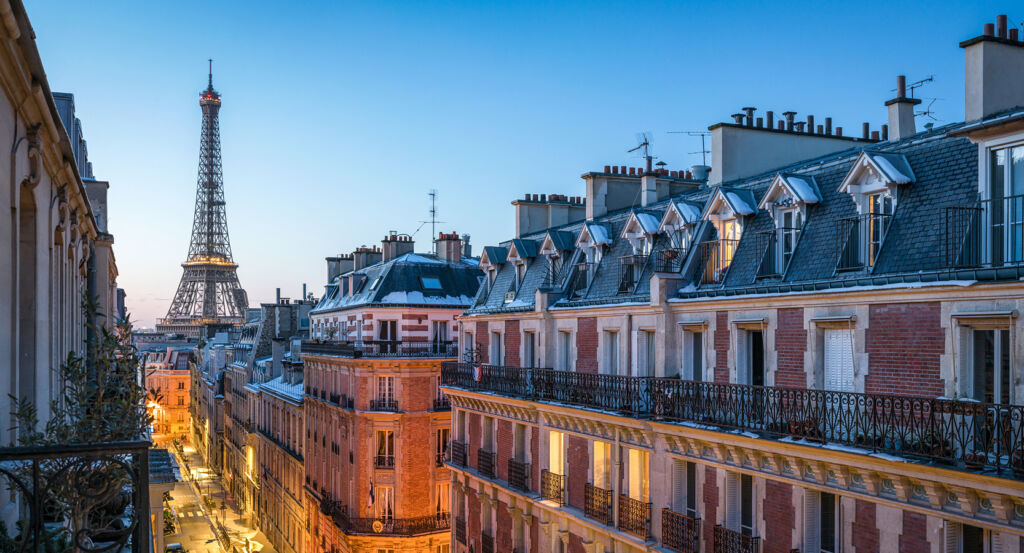
Why you should experience Boulevard de Sébastopol in Paris, France.
Boulevard de Sébastopol is a grand Bonne-Nouvelle corridor where Haussmannian urban planning, imperial ambition, architectural grandeur, and the energetic pulse of Central Paris converge along one of the capital's most important north-south avenues.
Running through Bonne-Nouvelle between Place du Châtelet and Boulevard de Strasbourg, this expansive boulevard unfolds through elegant Haussmann façades, historic theaters, thriving cafés, major commercial districts, broad sidewalks, and grand streetscapes that connect the historic heart of Paris with its northern neighborhoods. Wide avenues, orderly rows of limestone buildings, mature plane trees, and constant pedestrian activity create an atmosphere where nineteenth-century engineering and contemporary city life exist in remarkable harmony. Every stretch of the boulevard reflects another chapter in the transformation of medieval Paris into one of the world's great modern capitals. The result is a corridor defined by architectural distinction, civic importance, and one of Paris' most influential urban thoroughfares.
What you should know about Boulevard de Sébastopol.
Boulevard de Sébastopol is best known as one of Baron Haussmann's most ambitious urban projects, opened in 1858 under Emperor Napoleon III to carve a grand north-south axis through the densely populated medieval center of Paris while dramatically improving circulation, sanitation, public health, and military mobility. Named after the Siege of Sevastopol, the decisive Franco-British victory during the Crimean War of 1854-1855, the boulevard commemorates one of the defining military campaigns of the Second French Empire while symbolizing Napoleon III's vision of a modern imperial capital. Its construction required the demolition of hundreds of medieval buildings and the clearance of narrow streets dating back centuries, fundamentally reshaping the urban fabric between the Seine and the Grands Boulevards. The avenue also established direct connections between major civic landmarks including Place du Châtelet, the future Les Halles district, and Gare de l'Est through an unprecedented alignment of wide boulevards that became a model for urban planning throughout Europe and the Americas. Architecturally, Boulevard de Sébastopol preserves an exceptional succession of Second Empire residential and commercial buildings unified by Haussmann's strict design regulations governing façade proportions, limestone construction, cornice heights, balconies, and rooflines, creating one of the most coherent grand streetscapes in the capital. Together, these engineering, military, architectural, and urban achievements establish Boulevard de Sébastopol as one of the defining expressions of nineteenth-century city planning and modern Parisian identity.
Broad ceremonial vistas, harmoniously designed Haussmannian architecture, and enduring commercial vitality continue illustrating how the boulevard permanently transformed the experience of moving through Central Paris. The relationship between imperial engineering, coordinated architectural design, and revolutionary urban infrastructure demonstrates why Boulevard de Sébastopol remains one of the world's most influential examples of comprehensive nineteenth-century city planning. Few Parisian corridors combine military commemoration, urban innovation, architectural coherence, and metropolitan significance with such extraordinary historical impact.
How to fold Boulevard de Sébastopol into your trip.
Boulevard de Sébastopol works as an exploration through Bonne-Nouvelle's celebrated civic landmarks and historic commercial districts.
Begin at Place du Châtelet, where two grand theaters and one of Paris' great public squares introduce the boulevard's extraordinary civic importance before strolling north beneath its elegant Haussmannian façades. Continue through the revitalized Les Halles district, where centuries of commercial history meet contemporary architecture at the heart of the capital. Conclude at Porte Saint-Denis, whose triumphal arch commissioned by Louis XIV provides a memorable finale celebrating the remarkable relationship between royal ambition, imperial planning, and the evolution of modern Paris. The progression moves naturally from grand civic architecture to historic commerce before culminating in one of the city's great ceremonial monuments, revealing why Boulevard de Sébastopol remains one of Paris' most significant urban avenues.
Where your story begins.
Foresyte Travel reveals places that feel extraordinary long before you arrive.
Experience premium editorial crafted for luxury travelers.














































































































