
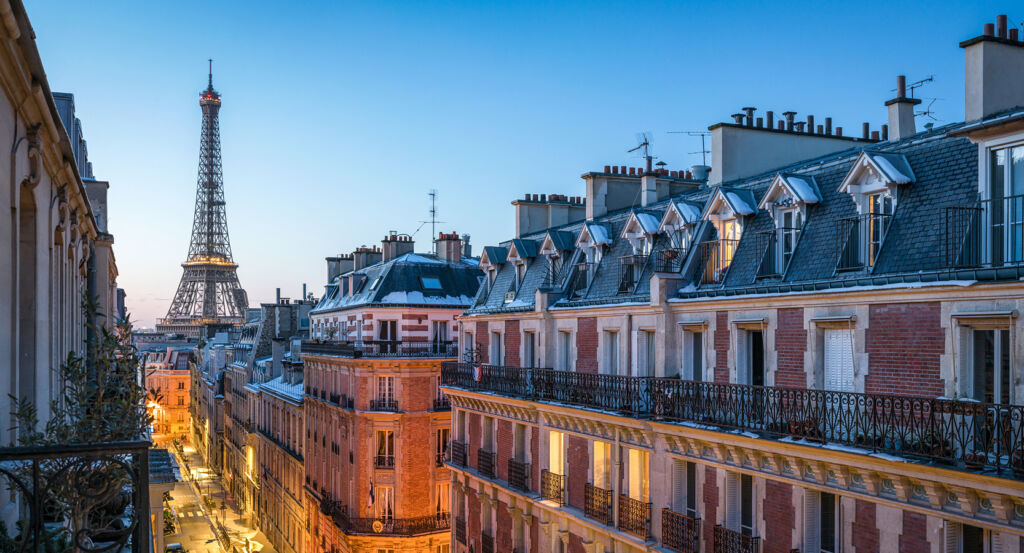
Why you should experience Butte-aux-Cailles in Paris, France.
Butte-aux-Cailles is a hillside village neighborhood where Butte-aux-Cailles' bohemian spirit, working-class heritage, artistic expression, and independent character preserve one of Paris' most distinctive communities.
Positioned between Maison-Blanche and Croulebarbe, this atmospheric neighborhood unfolds through cobbled streets, colorful street art, intimate cafés, low-rise houses, hidden gardens, and lively public squares that evoke the feel of a provincial village tucked within the French capital. Human-scale architecture, energetic creative energy, and a fiercely independent character create an atmosphere unlike anywhere else in Paris. The result is a destination defined by local authenticity, artistic vitality, and enduring neighborhood character.
What you should know about Butte-aux-Cailles.
Butte-aux-Cailles is best known for preserving the village character of the former commune that developed atop a limestone hill owned by Pierre Caille during the sixteenth century, later becoming a center of industry through the Bièvre River before playing a significant role during the Paris Commune of 1871, when some of the conflict's final barricades were erected throughout its winding streets. Annexed to Paris in 1860, the neighborhood escaped much of Baron Haussmann's large-scale redevelopment because of its uneven topography, allowing narrow lanes, detached houses, and intimate urban fabric to survive while natural artesian springs beneath the hill continue supplying the celebrated Art Nouveau public well at Place Paul-Verlaine and the historic Piscine de la Butte-aux-Cailles, among the city's oldest municipal swimming pools.
The district has evolved into one of Paris' foremost centers for contemporary street art, where internationally recognized muralists regularly transform building façades into an ever-changing open-air gallery that complements the neighborhood's historic architecture. Independent cafés, local markets, artisan businesses, and annual community festivals reinforce the area's village atmosphere while preserving a strong sense of neighborhood character rarely found within a major capital city. More than a century and a half after joining Paris, Butte-aux-Cailles continues standing as one of the capital's most authentic and culturally distinctive neighborhoods.
How to fold Butte-aux-Cailles into your trip.
Butte-aux-Cailles works as the cultural centerpiece of an exploration through the southern Left Bank's hidden landmarks.
Begin at Place Paul-Verlaine, where the neighborhood's celebrated artesian spring and historic square introduce its distinctive village atmosphere before wandering through Butte-aux-Cailles' colorful streets to discover its renowned murals, independent cafés, and preserved architecture. Continue to Piscine de la Butte-aux-Cailles, whose remarkable Art Nouveau design reflects the district's unique relationship with its natural spring. Conclude at Parc Montsouris, where one of Paris' most picturesque nineteenth century parks provides a memorable finale celebrating the neighborhood's blend of history, creativity, and green urban landscapes. The progression moves naturally from historic square to artistic streetscape before concluding through two defining neighborhood landmarks, revealing why Butte-aux-Cailles remains one of Paris' most rewarding places to explore.
Where your story begins.
Foresyte Travel reveals places that feel extraordinary long before you arrive.
Experience premium editorial crafted for luxury travelers.














































































































