Why you should experience Calavera Ladder in Mexico.
Calavera Ladder at Cenote Calavera in Tulum offers one of the most unforgettable ways to enter a cenote, a descent that feels like stepping through a portal to another world.
Unlike the dramatic cliff jump that draws thrill-seekers, the ladder drop is an act of quiet confidence, a slow and cinematic entry into the cenote's surreal blue depths. You grip the weathered wooden rungs, feeling the humid air shift as you descend through the circular opening that forms one of the “eyes” of the Calavera, or “skull.” Below, the water glows like liquid crystal, reflecting sunlight that filters through the limestone above. As your feet slip beneath the surface, the sounds of the outside world vanish, replaced by the echo of droplets, the faint hum of fish stirring the water, and the soft crackle of light meeting stone. The transition feels spiritual, like crossing from the realm of noise to one of stillness. For many, it's the preferred way to enter the cenote, graceful, deliberate, and deeply connected to the space's tranquil beauty.
What you should know about Calavera Ladder.
Calavera Ladder may seem simple, but it captures the cenote's fascinating blend of adventure and history.
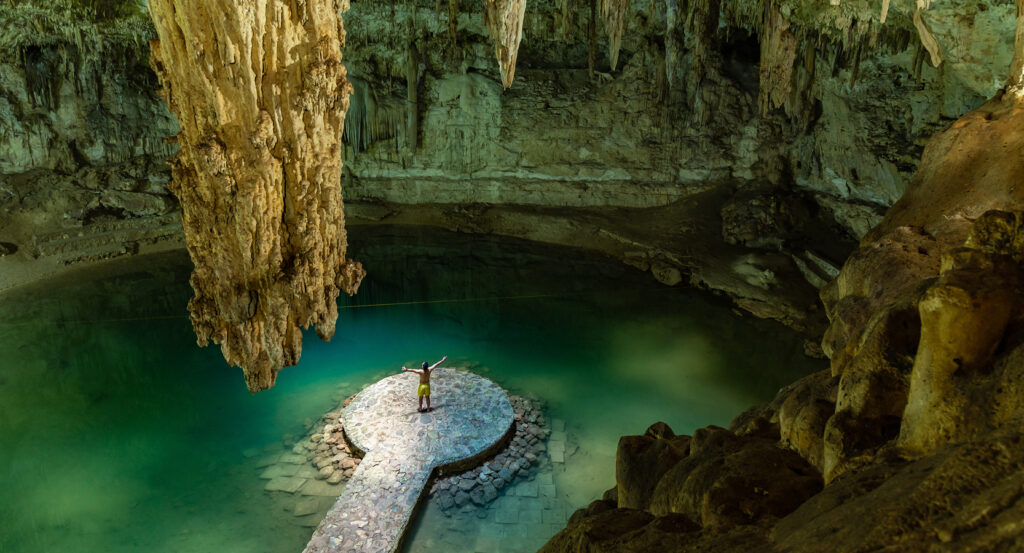
The wooden ladder leads directly into a naturally formed sinkhole that descends 50 feet, connecting to the Sistema Sac Actun, the world's longest underwater cave network. This system was carved over millennia by rainfall seeping through porous limestone, creating the vast subterranean chambers that define the Yucatán's unique landscape. The cenote's three openings were formed when the cave ceiling collapsed, leaving behind the distinctive “skull” shape that inspired its name. Beneath the surface, the water remains at a near-constant temperature year-round, and the visibility is astonishing, often exceeding 30 meters. Divers exploring from the base of the ladder can access ethereal underwater passages lined with fossils, roots, and limestone drapery. In pre-Columbian times, cenotes like Calavera were sacred to the Maya, representing entryways to Xibalba, the underworld of transformation and rebirth. The act of descending the ladder, slowly, reverently, mirrors those ancient rituals of entering sacred ground.
How to fold Calavera Ladder into your trip.
To make the most of Cenote Calavera in Tulum, arrive early in the morning when the sunlight first pierces the cenote's openings, filling the water with warm, golden light.
The ladder is located at the edge of the main opening, making it the safest and most serene entry point for swimmers and snorkelers. Bring a mask or goggles, from the first rung down, you'll see small fish darting around the submerged rocks and tree roots, and if you look closely, you can watch the halocline shimmer beneath the surface like a heatwave underwater. Once inside, float near the walls and watch the rays of light ripple across the limestone; it feels as if you've stepped into an ancient cathedral of water and air. For divers, the ladder also serves as the primary entry point for deeper exploration, leading into the calm, cavernous expanse below. Bring water shoes for grip and a dry bag for your belongings, the ledge can be slick. After the swim, climb out, sit by the rim, and watch others make the same descent, each person rediscovering a little piece of courage, wonder, and connection to this mystical place. Calavera Ladder isn't about adrenaline; it's about immersion, a gentle, human way to touch the sacred heart of the Earth.
Where your story begins.
Foresyte Travel reveals places that feel extraordinary long before you arrive.
Experience premium editorial crafted for luxury travelers.