Why Cetli matters.
Cetli is a celebrated traditional Mexican restaurant where Villas Tulum's gateway to the Yucatán interior meets Claudia Pérez Rivas' preservation of regional cooking, the intricate traditions of Mexican mole and a deeply personal interpretation of the country's culinary heritage.
Located along Carretera Tulum-Cobá at Kilometer 2.5, beyond the northern edge of Tulum's principal commercial district and near the road leading toward Gran Cenote, the restaurant occupies a hacienda-style property surrounded by tropical vegetation and the quieter residential landscape of the town's outskirts. Its understated exterior opens into a collection of intimate dining rooms whose whitewashed walls, rustic wooden furniture and colorful decorative objects evoke a traditional Mexican residence. Paintings, religious artifacts, embroidered textiles and antiques collected from different regions of Mexico fill the interior, establishing a richly layered domestic environment. An adjoining garden patio introduces native trees and flowering plants, extending the restaurant's intimate atmosphere into a sheltered outdoor setting. The result is a distinctive dining destination whose personal collection of Mexican folk art, residential architecture and unhurried hospitality creates an unusually intimate setting for traditional regional cooking.
What defines Cetli.
Cetli is best known for preserving the complexity of traditional Mexican gastronomy through a restaurant whose development predates Tulum's transformation into an internationally recognized luxury destination. Chef Claudia Pérez Rivas arrived from Mexico City during a period when Tulum was a small coastal settlement with a limited collection of restaurants, hotels and tourism businesses. Her culinary background drew heavily upon the traditions of Puebla, whose elaborate sauces, stuffed chiles and ceremonial preparations became central to the restaurant's identity. Pérez Rivas established Cetli in 2003, developing a modest independent restaurant dedicated to family recipes and the regional cooking traditions of Mexico. The name derives from a Nahuatl word meaning fresh corn, connecting the enterprise with the agricultural ingredient that has sustained Mexican food culture since antiquity. Its original premises occupied a residential property in Tulum, where Pérez Rivas developed a distinctive atmosphere through her collection of folk art, household objects and decorative pieces representing different Mexican states. The restaurant's early reputation developed through the chef's personal involvement in cooking and hospitality, attracting diners interested in traditional preparations at a time when the destination's culinary landscape was beginning to expand. As Tulum developed into a major international tourism center, Cetli retained its emphasis on Mexican domestic cooking and the preservation of recipes associated with family gatherings and regional celebrations. A subsequent relocation brought the restaurant to its present hacienda-style property along the highway toward Cobá, establishing a larger setting for the growing collection of decorative artifacts and the restaurant's intimate dining rooms. The move strengthened its association with the inland cultural landscape of the Yucatán Peninsula, connecting the restaurant geographically with the Maya communities and archaeological sites beyond the coast. Pérez Rivas continued developing the menu around regional Mexican preparations, incorporating ingredients associated with Puebla, Oaxaca and the Yucatán Peninsula into a repertoire shaped by traditional techniques. In December 2023, Gourmet de México celebrated Cetli's twentieth anniversary, recognizing the restaurant's longevity and its contribution to the preservation of Mexican culinary heritage in Tulum. The restaurant subsequently received a MICHELIN Bib Gourmand distinction, recognizing the quality and value of its traditional cooking within Mexico's expanding international restaurant guide. Its inclusion brought renewed attention to a culinary enterprise established long before the development of Tulum's contemporary beachfront dining culture. Cetli's significance emerges from this continuity, connecting the personal cooking traditions of its founder with the remarkable transformation of the surrounding destination.
Claudia Pérez Rivas' cooking develops around the preparation of traditional Mexican moles, whose complex combinations of dried chiles, seeds, nuts, spices and aromatic ingredients establish the foundation of the restaurant's culinary repertoire. Her approach emphasizes recipes developed through generations of domestic cooking, preserving the elaborate processes associated with ceremonial meals and regional celebrations. Chile en nogada occupies a central position on the menu, bringing one of Puebla's most recognizable preparations into a restaurant devoted to Mexican culinary heritage. The dish combines a roasted poblano pepper with a filling of minced beef, pork, dried fruit, pineapple and cinnamon, creating a savory mixture enriched by sweetness and aromatic spice. A walnut and cheese sauce incorporating sherry surrounds the stuffed pepper, with pomegranate seeds and parsley completing the composition traditionally associated with the colors of the Mexican flag. Its year-round availability establishes the dish as a defining specialty, extending a preparation historically associated with Mexico's late-summer patriotic season into the restaurant's permanent repertoire. Mole negro introduces a different expression of Mexican cooking through a concentrated sauce whose preparation depends upon the careful treatment of dried chiles, toasted ingredients and chocolate. Served with chicken, the sauce develops the characteristic depth associated with Oaxacan culinary traditions, connecting the restaurant's Puebla-inspired repertoire with another of Mexico's most consequential regional cuisines. Mole verde contributes a contrasting preparation through herbs, green ingredients and seeds, appearing in chicken enmoladas that emphasize the sauce's aromatic character. The kitchen's relationship with the Yucatán Peninsula becomes particularly apparent through chaya, the leafy plant traditionally incorporated into regional soups, tortillas and other preparations. Small empanadas filled with chaya and cheese introduce the ingredient through a familiar Mexican pastry, and chicken rolls stuffed with chaya extend its role into a substantial savory preparation. Huitlacoche, the edible fungus that develops on maize, accompanies shrimp in another dish connecting traditional Mexican ingredients with coastal seafood. The restaurant's istak provides a particularly distinctive expression of its cooking, featuring fish poached in seawater and finished with a white almond mole incorporating parsley, dark chocolate sauce and sesame seeds. Handmade tortillas carry the restaurant's name and ceremonial designs, connecting the service of everyday maize preparations with the symbolic importance of corn in Mexican culture. Desserts continue the domestic character of the menu through preparations such as nimbe, a vanilla and chocolate pancake filled with ice cream, and traditional bread pudding accompanied by a rich sauce. The restaurant's culinary distinction rests on this sustained commitment to regional recipes, the intricate construction of traditional sauces and the preservation of Mexican cooking as a living expression of family and cultural memory.
How Cetli fits.
Cetli works as the culinary culmination of an outing connecting Tulum's expansive Maya architecture with the limestone formations and subterranean freshwater systems that define the northern Yucatán Peninsula.
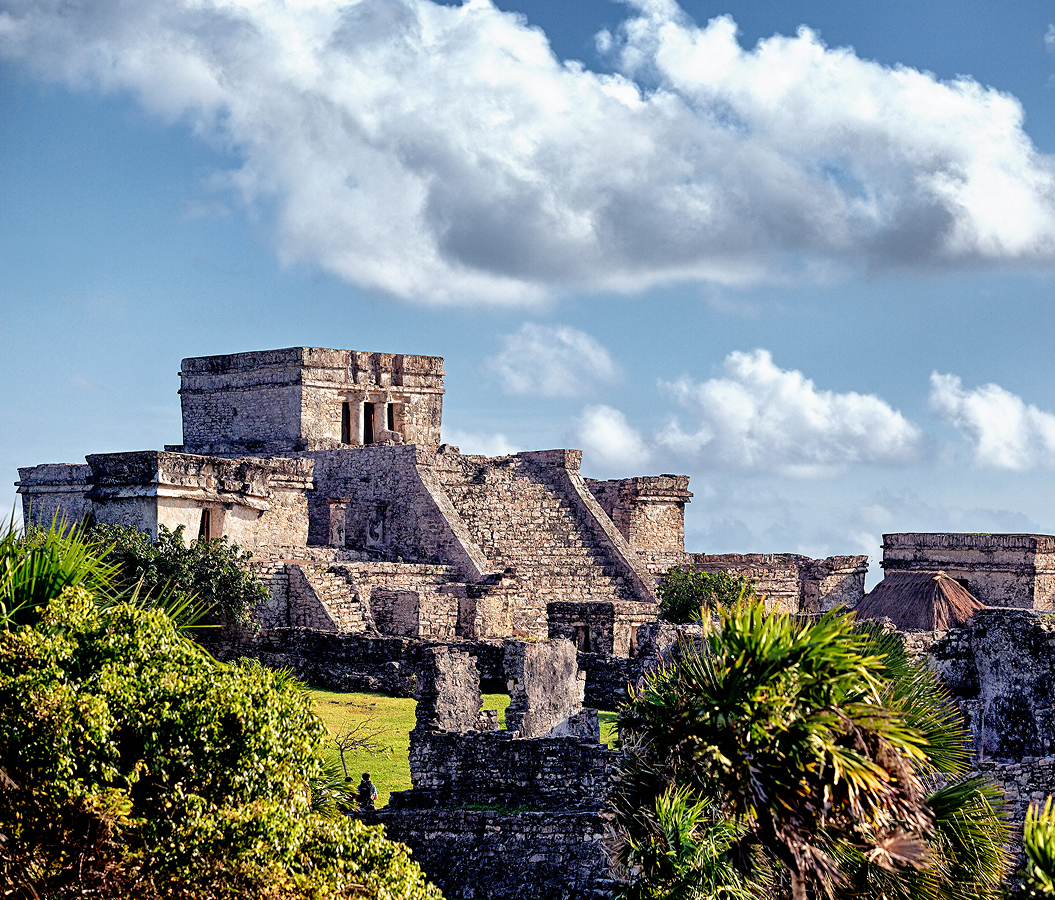
Begin at Tulum Archaeological Zone, the fortified Maya coastal settlement occupying a limestone promontory overlooking the Caribbean Sea. The city's principal period of development occurred during the Late Postclassic era, when its strategic position supported maritime trade connecting communities throughout the eastern Yucatán Peninsula. El Castillo rises above the coastal cliffs, establishing the site's most recognizable architectural landmark and reflecting the settlement's relationship with navigation along the Caribbean coast. The Temple of the Frescoes preserves elements of Maya religious iconography, including representations associated with the Descending God and the celestial symbolism of the region's religious traditions. Defensive walls enclose the settlement on three landward sides, illustrating the importance of controlling access to a coastal trading center whose fourth boundary was protected by the sea. Continue to Cenote Calavera, the distinctive limestone sinkhole situated along the highway leading from Tulum toward Cobá. Its name derives from three openings in the rock ceiling whose arrangement resembles the eyes and mouth of a skull when viewed from above. The principal opening provides access to a subterranean freshwater pool, with wooden stairs descending into the partially enclosed chamber. Smaller openings admit narrow shafts of daylight, creating dramatic contrasts between the illuminated water and the surrounding limestone. The cenote forms part of the peninsula's extensive karst landscape, where the dissolution of porous limestone has created interconnected caves, underground rivers and natural freshwater reservoirs. Conclude at Gran Cenote, the celebrated freshwater complex situated farther inland along the same highway. Its interconnected pools occupy a system of partially open limestone caverns, with wooden walkways and stairs providing access to the water. Clear freshwater reveals submerged rock formations and aquatic vegetation, creating favorable conditions for observing the geological structure of the cenote. Small freshwater turtles inhabit the pools, introducing an ecological dimension to the experience that distinguishes the site from the dramatic enclosed chamber of Cenote Calavera. Cave openings and limestone overhangs support roosting bats, illustrating the relationship between the region's subterranean environments and the wildlife dependent upon them. The progression connects the maritime achievements of the ancient Maya with the geological processes and freshwater ecosystems that have shaped human settlement throughout the Yucatán Peninsula.
Where your story begins.
Foresyte Travel reveals places that feel extraordinary long before you arrive.
Enjoy editorial crafted for luxury travelers.
Foresyte may earn a commission when you book.