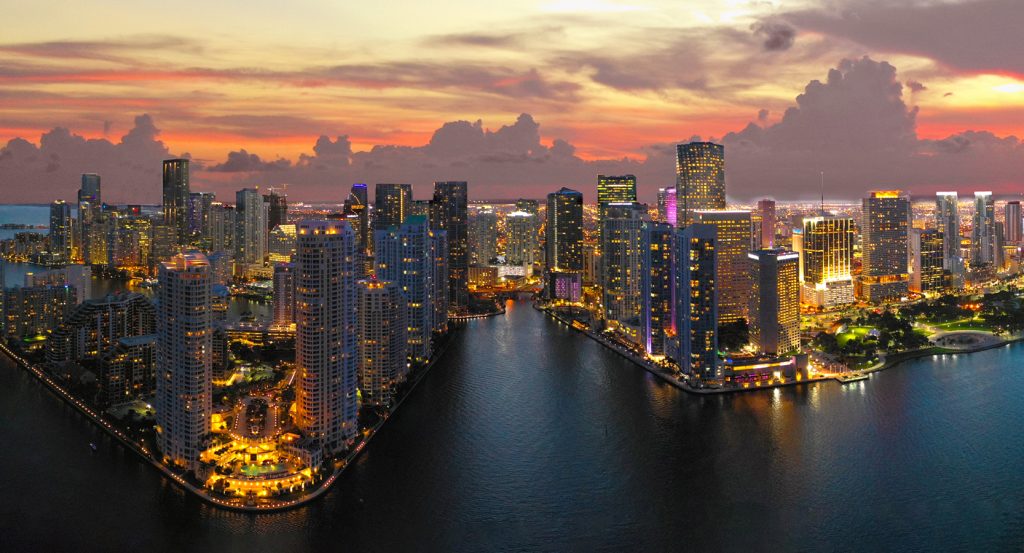
Why you should experience Chase Avenue in Miami, Florida.
Chase Avenue is a tranquil corridor where Mid-Beach's waterfront setting, architectural heritage, tropical landscape, and residential character create one of Miami Beach's most graceful inland experiences.
Running through Mid-Beach between Bayshore and La Gorce, the corridor connects architect-designed residences, waterfront apartment buildings, shaded sidewalks, neighborhood institutions, and mature royal palms overlooking Indian Creek. Mediterranean Revival homes, Miami Modern apartment buildings, landscaped setbacks, and uninterrupted water views create a streetscape where architectural continuity and the surrounding coastal environment remain closely connected. Throughout the corridor, preserved buildings, established public spaces, and carefully maintained greenery reinforce a setting shaped through thoughtful planning and long-term stewardship. The result is an experience defined by quiet sophistication, waterfront scenery, and one of Mid-Beach's most inviting residential corridors.
What you should know about Chase Avenue.
Chase Avenue is best known for extending alongside Indian Creek through one of Mid-Beach's most established residential areas, where waterfront development accelerated during the Florida Land Boom of the 1920s as Carl G. Fisher promoted Miami Beach's expanding barrier-island communities. Construction surrounding the corridor continued through the postwar decades, producing an architectural collection that includes Mediterranean Revival residences, Streamline Moderne apartment buildings, Miami Modern towers, and carefully planned waterfront housing reflecting successive eras of coastal development. Architects including L. Murray Dixon, Henry Hohauser, Morris Lapidus, Melvin Grossman, and Norman Giller influenced the surrounding built environment through ribbon windows, projecting balconies, terrazzo entrance courts, decorative breeze block, glass block, and horizontal massing that became defining elements of twentieth-century South Florida architecture. Indian Creek supports mangroves, seagrasses, mullet, tarpon, white ibis, great blue herons, snowy egrets, and osprey, contributing ecological diversity that remains visible from numerous points along the corridor. Royal palms, coconut palms, gumbo limbo, sea grape, green buttonwood, and native coastal vegetation strengthen the subtropical landscape that distinguishes Chase Avenue throughout the year.
The Collins Waterfront Architectural District preserves a remarkable concentration of twentieth-century buildings surrounding portions of the corridor, documenting the evolution of Miami Beach hospitality and residential design across multiple architectural periods. Tidal exchange between Indian Creek and Biscayne Bay continues supporting marine habitats, shoreline vegetation, and coastal ecological processes that have influenced settlement patterns along the western edge of Miami Beach for more than a century. Oolitic limestone, decorative cast stone, terrazzo paving, aluminum-framed glazing, clay roof tile, and hand-forged wrought iron incorporated throughout neighboring historic properties demonstrate the regional craftsmanship and durable materials that continue defining this section of Mid-Beach. Together, these environmental systems, preservation initiatives, and enduring construction traditions deepen the historical narrative established by Chase Avenue, demonstrating why the corridor remains an enduring expression of Miami Beach's waterfront heritage.
How to fold Chase Avenue into your trip.
Chase Avenue works as a leisurely exploration of Mid-Beach's waterfront scenery, architecture, and tropical landscapes.
Begin at Pinetree Park, where mature shade trees, open green space, and neighborhood gathering areas provide an inviting introduction before following Chase Avenue beside the calm waters of Indian Creek. Continue to Miami Beach Botanical Garden, whose native Florida plant collections, orchids, palms, and restored wetland landscapes broaden the appreciation for the subtropical environment that flourishes throughout the city. Conclude at The Bass, where contemporary art exhibitions and Russell Pancoast's beautifully preserved 1930 building provide the culminating reward by highlighting the creative vision that continues enriching Miami Beach's cultural landscape. The progression moves naturally from neighborhood green space through botanical diversity before concluding with architecture and visual arts, revealing how Chase Avenue weaves together waterfront scenery, ecology, and cultural expression.
Where your story begins.
Foresyte Travel reveals places that feel extraordinary long before you arrive.
Experience premium editorial crafted for luxury travelers.