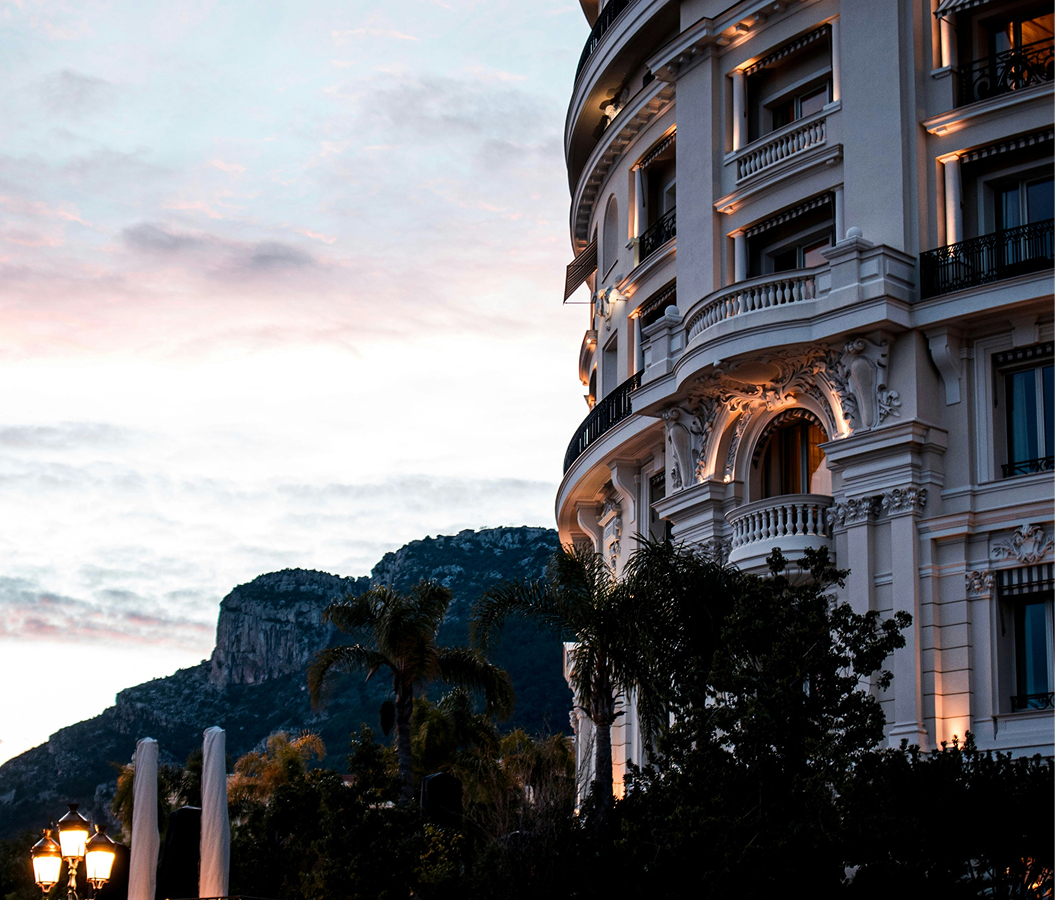
Why Cinque Giornate matters.
Cinque Giornate is a commanding enclave where Milan's eastern gateway meets Risorgimento memory, broad radial avenues and the dense residential city that expanded beyond the vanished Spanish bastions.
Positioned between Monforte, Guastalla, and Porta Vittoria, the neighborhood occupies an eastern pocket where Corso di Porta Vittoria, Corso XXII Marzo, Viale Premuda and Viale Regina Margherita converge around Piazza Cinque Giornate before residential streets extend toward the former bastion line. Nineteenth-century apartment blocks, later residential architecture, broad commercial fronts and surviving customs buildings create a dense metropolitan setting organized around one of Central Milan's most conspicuous radial junctions. Piazza Cinque Giornate establishes the primary encounter through its circular traffic pattern and Giuseppe Grandi's towering bronze memorial, whose sculptural mass occupies the site of the former Porta Tosa. Corso di Porta Vittoria deepens the atmosphere through a direct connection toward the historic center, turning the square into the hinge between older Milan and the eastern avenues developed beyond the walls. The result is a neighborhood where revolution, demolished fortifications and metropolitan expansion remain compressed around a single junction, preparing a history inseparable from the uprising that made Porta Tosa one of the decisive sites of the Italian Risorgimento.
What defines Cinque Giornate.
Cinque Giornate is best known for occupying the site of Porta Tosa, where the final assault of Milan's uprising against Austrian rule broke through the eastern defenses on March 22, 1848. The insurrection had begun on March 18 and developed through barricades, street fighting and competing political currents led by figures including Carlo Cattaneo as Austrian forces under Field Marshal Joseph Radetzky attempted to retain control of the city. Radetzky requested a truce on March 21, but Milan's War Council rejected it and fighting shifted toward the gates still controlled by Austrian troops. Porta Tosa became a principal objective on March 22, and Luciano Manara distinguished himself during the attack that captured the position through mobile barricades. Austrian forces withdrew during the night, ending five days in which more than 400 Milanese died and a provisional government displaced Habsburg authority. The gate subsequently became Porta Vittoria, attaching the memory of the victory directly to the eastern entrance. Commemoration initially centered on the Colonna del Verziere, renamed the Colonna della Vittoria in 1860, before a permanent memorial campaign led to approval of Giuseppe Grandi's project in 1881. Grandi developed a bronze obelisk surrounded by five female figures representing the five days, with the names of the dead incorporated into the work. The monument opened on March 18, 1895, and the remains of the audaciouss were transferred from the Ospedale Maggiore into the crypt beneath its base, permanently converting the former gate into Milan's principal physical memorial to the revolt.
Railway construction produced a separate transformation immediately beyond the gate during the same century, making this eastern edge one of Milan's earliest points of contact with the new transportation age. Milano Porta Tosa station opened in 1846 as the terminus of the railway toward Treviglio, following the 1840 opening of the Porta Nuova station on the Monza line. Its location outside the fortifications placed trains beside the road network converging on the eastern entrance and inserted a new regional transportation system into territory still physically divided from Central Milan by the bastions. The station became entangled with the uprising only two years after opening when retreating Austrian troops burned railway installations and the nearby Caffè Gnocchi on March 22, 1848. Passenger operations continued during the following decade, and the terminal received prominent arrivals including Maximilian II of Bavaria in 1857. Radetzky's body departed from Porta Tosa in January 1858 on its journey toward Vienna, a striking reversal for a place associated ten years earlier with his retreat from Milan. Reorganization of the city's railway network shifted passenger traffic to the new central station in 1864, leaving Porta Tosa with freight activity before final closure during the 1870s. Industrial uses subsequently occupied portions of the former railway property, including glass and sailcloth production, as the eastern city advanced across land once divided among tracks, fortifications and open ground.
How Cinque Giornate fits.
Cinque Giornate works as the anchor for an afternoon connecting a fifteenth-century Benedictine church, a Baroque aristocratic palace repeatedly redesigned by major Milanese architects and an intensely crafted Liberty residence from the opening years of the twentieth century.
Begin at Chiesa di San Pietro in Gessate, where an earlier community of Umiliati passed to the Benedictine Congregation of Santa Giustina in 1433 before construction of the present church advanced between 1460 and 1476 with Guiniforte Solari involved in its enlargement. Three naves, pointed arches on granite columns, ribbed vaults and five semi-octagonal chapels on either side establish a unified architectural scheme, and the monastery became an abbey in 1493 after Pope Alexander VI acted at the request of Gian Galeazzo Maria Sforza. Continue to Palazzo Sormani Andreani, whose seventeenth-century transformation under Cardinal Cesare Monti brought Francesco Maria Richini to the residence for the courtyard and grand staircase before Francesco Croce created the Barocchetto facade toward Porta Tosa. Benedetto Alfieri designed the garden facade in 1756, Agostino Gerli contributed eighteenth-century stucco decoration and Leopoldo Pollack later shaped the garden; wartime damage preceded Arrigo Arrighetti's postwar intervention and the opening of the Biblioteca Comunale Centrale there in 1956. Conclude at Casa Campanini, the residence Alfredo Campanini designed for himself between 1904 and 1905 at Via Vincenzo Bellini 11. Campanini controlled the architecture and decorative program, joining modeled cement ornament to floral stained glass and wrought iron executed by Alessandro Mazzucotelli's firm, with Giuseppe Sommaruga's Palazzo Castiglioni supplying an important precedent for the relationship between restrained structure and elaborate decoration. The progression moves from a Sforza-era Benedictine complex shaped by Guiniforte Solari through a palazzo successively developed by Richini, Croce, Alfieri, Pollack and Arrighetti into Campanini and Mazzucotelli's Liberty craftsmanship, concentrating five centuries of Milanese architectural change around Cinque Giornate.
Where your story begins.
Foresyte Travel reveals places that feel extraordinary long before you arrive.
Enjoy editorial crafted for luxury travelers.
Foresyte may earn a commission when you book.