Why Clark Street matters.
Clark Street is a spirited corridor where the Near North Side's commercial heritage, civic legacy, architectural diversity, and Chicago's urban evolution unfold along one of the city's oldest continuously traveled routes.
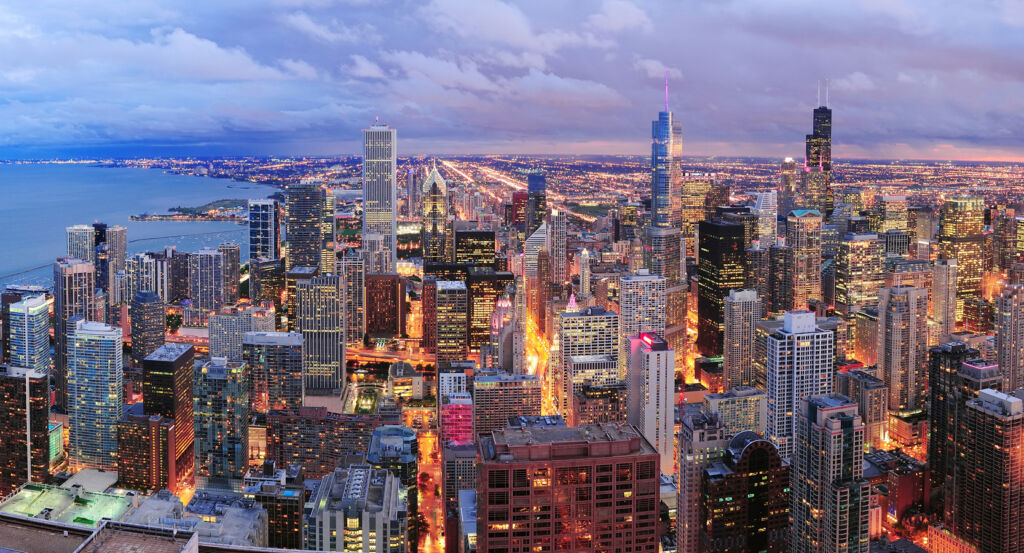
Running from the Loop through River North, Near North Side, Lincoln Park, Lakeview, and beyond, Clark Street connects historic business districts, residential neighborhoods, churches, theaters, educational institutions, and transportation corridors that collectively reflect nearly two centuries of metropolitan growth. The corridor reveals how early settlement, commerce, immigration, transportation, and sustained reinvestment shaped one of Chicago's defining thoroughfares. Historic masonry buildings, restored commercial blocks, modern office towers, neighborhood storefronts, and enduring civic institutions continue defining the street while reinforcing its remarkable continuity. The result is a corridor distinguished by commercial vitality, architectural richness, and enduring historical importance.
What defines Clark Street.
Clark Street is best known for tracing one of Chicago's earliest roads, following a route established during the 1830s that connected Fort Dearborn with settlements extending north toward Green Bay, making it among the city's oldest transportation corridors. Named for George Rogers Clark, the avenue expanded rapidly after Chicago's incorporation in 1837, serving successive generations of merchants, manufacturers, publishers, financial institutions, and wholesale businesses that established the city's early commercial economy. Construction of horsecar routes by the Chicago City Railway, expansion of the North Chicago Street Railroad, electrification of streetcar operations during the 1890s, and later development of the Chicago Transit Authority strengthened Clark Street's role as a principal urban transportation corridor linking downtown with rapidly growing North Side neighborhoods. Reconstruction following the Great Chicago Fire of 1871, continued commercial expansion during the late nineteenth century, and successive waves of architectural investment introduced Romanesque Revival, Chicago School, Classical Revival, Art Deco, and Modernist buildings that collectively document more than a century of architectural evolution. Continued preservation initiatives, transportation improvements, and commercial reinvestment have maintained Clark Street as one of Chicago's most historically significant urban corridors.
Organizations including the Chicago Loop Alliance, the Near North Unity Program, and neighborhood business associations have strengthened long-term economic development through streetscape enhancements, preservation advocacy, infrastructure planning, and support for locally established businesses along Clark Street. Engineers and planners working with the Chicago Department of Transportation, the Chicago Plan Commission, and the Chicago Metropolitan Agency for Planning coordinated roadway modernization, utility improvements, bicycle facilities, pedestrian accessibility, and traffic management that sustained the corridor's regional importance. Long-term investment in historic commercial buildings, adaptive rehabilitation of early twentieth-century office structures, coordinated planning initiatives, and continued private redevelopment collectively demonstrate how transportation, commerce, architecture, and civic leadership have preserved Clark Street's enduring identity. Together, Fort Dearborn, George Rogers Clark, the Chicago City Railway, the North Chicago Street Railroad, the Great Chicago Fire, the Chicago Loop Alliance, the Chicago Plan Commission, the Chicago Metropolitan Agency for Planning, and generations of commercial investment establish Clark Street among Chicago's most historically significant urban corridors.
How Clark Street fits.
Clark Street works as an exploration of Chicago's architectural heritage, commercial history, and civic character.
Begin at the Chicago Cultural Center, where celebrated interiors and civic history introduce the architectural richness surrounding Clark Street before naturally expanding into the broader downtown experience. Continue to the Richard H. Driehaus Museum, where exquisitely preserved Gilded Age interiors deepen appreciation for Chicago's architectural and cultural development before guiding the experience toward its conclusion. Conclude at the Chicago Riverwalk, where engineering achievement, skyline views, and the evolving relationship between the river and downtown provide the historical and visual payoff, illustrating how commerce, infrastructure, and thoughtful planning continue shaping Clark Street. The progression moves naturally from civic architecture to historic residential craftsmanship before concluding beside the waterway that fueled Chicago's rise.
Where your story begins.
Foresyte Travel reveals places that feel extraordinary long before you arrive.
Enjoy editorial crafted for luxury travelers.
Foresyte may earn a commission when you book.