Why Den Anker matters.
Den Anker is a historic Belgian restaurant where V&A Waterfront's maritime heritage meets the brewing traditions of Flanders, the entrepreneurial ambitions of Belgian founder Denis Bouckaert and Cape Town's transformation into an internationally recognized waterfront dining destination.
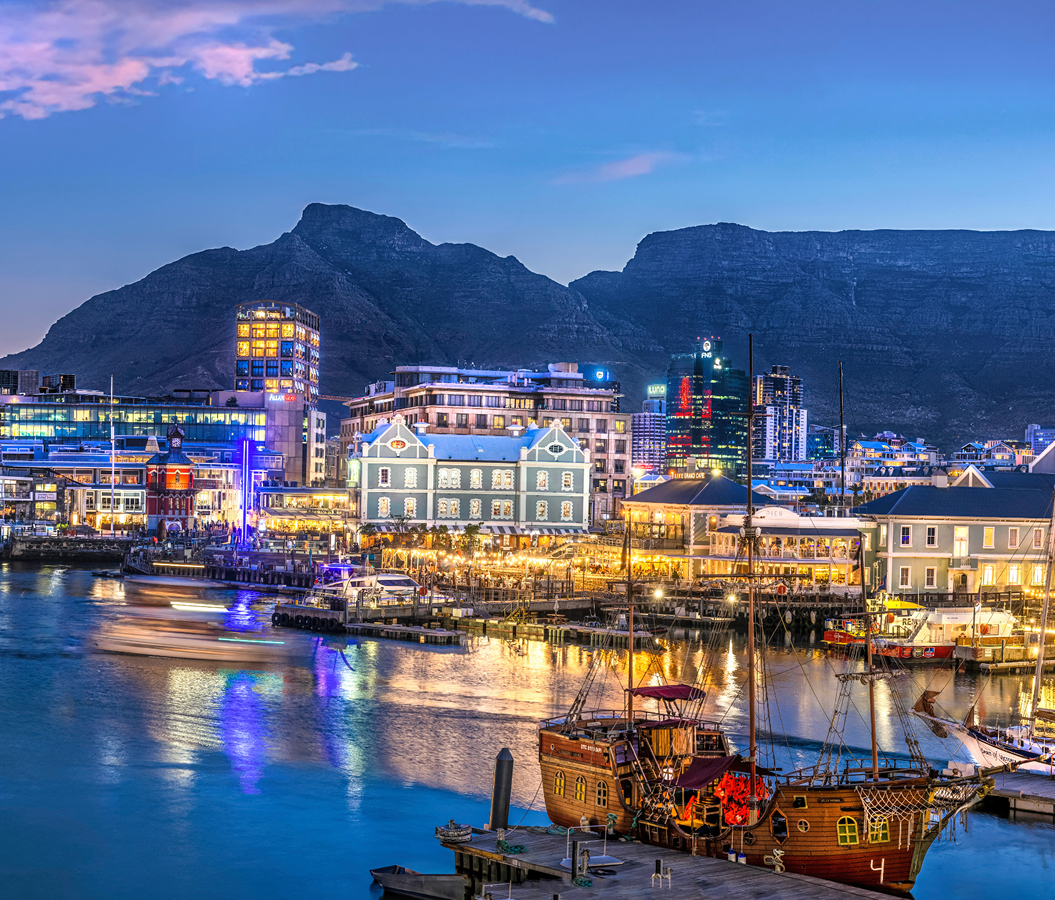
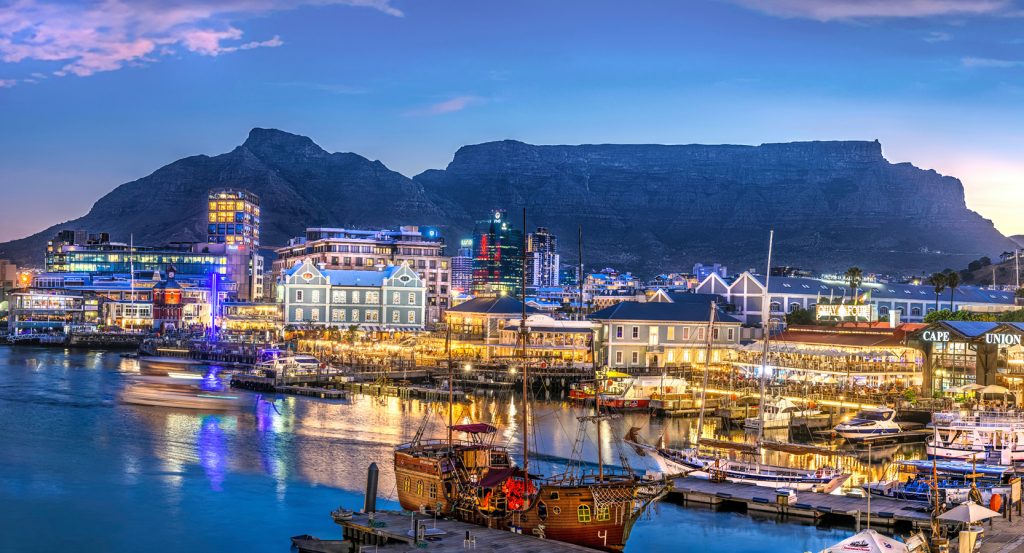
Standing on the Pierhead beside the Old Port Captain's Building, Den Anker occupies a quayside position overlooking the Alfred Basin, with the Victoria Basin extending farther into the working harbour and the commercial promenades of the surrounding waterfront connecting the restaurant to the district's historic maritime buildings. Its single-level dining space incorporates extensive floor-to-ceiling glazing, creating an uninterrupted visual relationship between the interior and the water immediately beyond its windows. A substantial outdoor terrace extends along the quay, with umbrella-shaded tables overlooking passing vessels and the mountain escarpment rising behind Cape Town's central business district. Inside, streamlined furnishings and the prominent African Queen bar establish the relaxed character of a European brasserie, complemented by an open arrangement of dining tables facing the harbour. The result is a distinctive waterfront restaurant whose transparent architecture, expansive terrace and close relationship with the working port preserve the atmosphere of Cape Town's maritime commercial district.
What defines Den Anker.
Den Anker is best known for originating in Belgian entrepreneur Denis Bouckaert's professional brewing career and his recognition of the commercial potential created by the redevelopment of Cape Town's historic harbour. Born in Belgium, Bouckaert developed his knowledge of brewing through employment with Heineken, working as a brewer and brewery engineer in the Belgian Congo and Angola during a period when European brewing companies were expanding their African operations. His professional experience established a detailed understanding of beer production, distribution and the commercial traditions associated with Belgian hospitality. Bouckaert also developed an independent interest in restaurants and public houses, opening several brasseries, pubs and dining establishments in his hometown of Ghent. These ventures connected his brewing expertise to the food culture of Flanders, where beer, seafood and substantial brasserie cooking occupy an important position in regional hospitality. The redevelopment of Cape Town's Victoria and Alfred Waterfront during the late twentieth century introduced an opportunity to establish a Belgian restaurant within a historic working harbour undergoing substantial commercial transformation. Bouckaert secured the lease of the former Trawlers restaurant following its liquidation in 1994, acquiring premises within one of the earliest phases of the waterfront's emergence as a public dining and entertainment district. He established Den Anker that year, introducing Belgian culinary traditions and imported specialty beers to a restaurant market increasingly influenced by Cape Town's international connections. The name references the Dutch word for anchor, establishing a linguistic association with the maritime environment and the nautical traditions of Belgium's commercial ports. Bouckaert developed the restaurant around the relationship between Belgian brasserie cooking and the fresh seafood available through the Cape's fishing industry. His knowledge of brewing also influenced the beverage program, establishing direct commercial relationships with Belgian producers and supporting the introduction of beers associated with regional brewing traditions. The restaurant developed a substantial following during the waterfront's early commercial expansion, contributing to the establishment of a dining district that subsequently attracted international restaurant operators and hospitality businesses. Its development coincided with South Africa's democratic transition, when Cape Town's tourism industry experienced substantial changes following the end of apartheid and the country's reintegration into international travel markets. Den Anker became associated with the waterfront's growing international clientele, attracting visiting performers, public figures and maritime travelers alongside Cape Town residents. By 2015, the restaurant had completed twenty-one years of operation, establishing itself among the longest-serving independent dining establishments within the precinct. Its continuing development incorporated a substantial Belgian beer selection, maintaining Bouckaert's founding association with the brewing traditions of his homeland. The house beer Anker Brew developed from his personal recipe, extending the founder's professional expertise into a proprietary product associated with the restaurant. A complementary Anker Blonde subsequently expanded the house range, establishing another connection between Belgian brewing techniques and the restaurant's independent commercial character. The business also developed a specialized beer distribution operation, extending its relationship with imported Belgian products beyond the principal restaurant. Elizabeth De Visscher assumed an important ownership role, contributing to the continuity of the establishment's Belgian commercial heritage. General manager Rejeanne Vlietman subsequently developed an extensive community food-distribution initiative through the restaurant's existing supplier relationships and logistical infrastructure. The program connected twelve community kitchens across Cape Town, using the restaurant's distribution network to redirect surplus food toward organizations supporting households experiencing food insecurity. By August 2025, the initiative had contributed more than 250,000 meals, establishing a substantial social program extending beyond the restaurant's commercial operations. The V&A Waterfront recognized this contribution through its 2024 Neighbourhood Awards Social Impact Award, acknowledging the establishment's sustained investment in community food security. Den Anker celebrated three decades of waterfront operations during the same period, marking its development from an early independent restaurant into an established institution within Cape Town's maritime hospitality economy. Its historical significance derives from Bouckaert's Belgian brewing background, the restaurant's participation in the redevelopment of the waterfront and the continuity of its culinary and commercial traditions across three decades of substantial urban change.
Denis Bouckaert's original culinary conception established the relationship between Belgian brasserie traditions and the seafood culture of the Cape, creating a dining program organized around substantial preparations, distinctive regional sauces and the complementary characteristics of specialty beer. The kitchen's approach draws particularly on the culinary heritage of Flanders, where mussels, potatoes, beef and seafood preparations have long formed central components of restaurant cooking. Moules marinières establishes the principal expression of this tradition, combining mussels with an aromatic cooking liquid that preserves their natural salinity and delicate texture. The preparation connects Belgian coastal cuisine to the seafood resources of southern Africa, introducing a recognizable European dish through ingredients associated with the surrounding marine environment. Pommes frites contribute an equally important element through carefully fried potatoes served with house-made mayonnaise, preserving the established relationship between Belgian brasserie cooking and its characteristic accompaniments. The kitchen's treatment of seafood extends to fresh tuna, prawns and seasonal fish, allowing the menu to incorporate ingredients associated with the Cape's fishing industry. These preparations establish a complementary South African dimension within the restaurant's Belgian culinary foundation, connecting the availability of regional seafood to the techniques and sauces associated with European coastal cooking. Steak au poivre contributes another established brasserie preparation, combining beef with crushed pepper and a rich cream-based sauce. Its execution reflects the culinary traditions shared across Belgian and French restaurant culture, where careful control of cooking temperature and sauce preparation establishes the character of substantial meat dishes. Bitterballen introduce a different aspect of Low Countries cooking through crisp, breaded croquettes containing a concentrated meat filling. Their preparation connects the restaurant's bar service to the informal dining traditions of Belgian and Dutch public houses, where small savory dishes accompany beer throughout the day. Cheese croquettes and other substantial bar preparations extend this approach, establishing a consistent relationship between the kitchen and the adjoining beverage program. Belgian waffles contribute a complementary dessert tradition, with fruit and sweet accompaniments introducing the familiar confectionery culture associated with the country's cafés and brasseries. Chocolate mousse further develops the restaurant's European culinary character through a preparation associated with the broader traditions of Belgian chocolate and French-influenced pastry. The beverage program establishes an equally important dimension through a carefully selected range of imported Belgian beers representing contrasting fermentation methods, grain compositions and regional brewing traditions. De Koninck introduces the amber ale tradition associated with Antwerp, combining malt character with a balanced bitterness suited to substantial savory preparations. Vedett Extra White contributes a Belgian wheat-beer style characterized by citrus and spice, creating a complementary pairing for delicate seafood. Liefmans Fruitesse introduces fruit-based Belgian brewing through a sweeter composition associated with the country's longstanding traditions of fruit-flavored beer. La Chouffe represents the Belgian strong blonde ale tradition, contributing a more substantial malt and yeast character. Duvel introduces another distinguished Belgian brewing lineage, with the restaurant's draught service establishing an important extension of the brewery's international distribution. Westmalle Tripel and St. Bernardus contribute further examples of Belgian monastic brewing traditions, expanding the beverage selection through complex ales associated with established regional producers. Kwak introduces a distinctive element of Belgian drinking culture through its elongated glass and wooden supporting frame, preserving a serving tradition associated with nineteenth-century coaching inns. The restaurant's selection of bottled beers extends across multiple styles, allowing the beverage program to develop through contrasting levels of bitterness, sweetness, carbonation and alcoholic strength. South African wines provide an additional relationship with the surrounding region, incorporating products from the Western Cape's established viticultural areas. The African Queen bar supports this substantial beverage program through a setting that connects informal drinking traditions to the surrounding restaurant. Den Anker's distinctive culinary character emerges from the sustained integration of Belgian brewing heritage, Flemish brasserie cooking and the seafood traditions of Cape Town, preserving a coherent relationship between its founding cultural influences and its coastal location.
How Den Anker fits.
Den Anker works as the culinary centerpiece of a waterfront exploration connecting Cape Town's historic maritime timekeeping, the defensive infrastructure of the Dutch colonial settlement and the transformation of industrial harbour architecture into an internationally significant contemporary art institution.
Begin at Time Ball Tower, the historic maritime signaling structure overlooking the former harbour administration precinct. Erected during the nineteenth century, the tower developed as part of Cape Town's system for communicating accurate time to vessels navigating Table Bay. Its elevated mechanism incorporated a large ball that descended at a predetermined hour, allowing ships' officers to synchronize marine chronometers used in calculating longitude. The installation became an important component of port operations during the expansion of international maritime commerce around the Cape of Good Hope. The structure received National Monument recognition in 1982, preserving its significance within the history of nautical navigation. A substantial restoration completed in November 2025 returned the mechanism to operation, with public demonstrations scheduled twice weekly. Continue to Chavonnes Battery Museum, the surviving coastal fortification established by the Dutch East India Company to protect the western approaches to the colonial settlement. Construction began in 1714 under Governor Maurits Pasques de Chavonnes, establishing a substantial defensive position along the original shoreline. The installation incorporated a curved stone defensive arrangement capable of accommodating sixteen cannon, creating an extensive field of fire across the adjoining waters. The battery was inaugurated in 1726 and subsequently received its enduring name in 1744, preserving the association with the governor responsible for its development. Harbour expansion during the nineteenth century resulted in substantial alterations to the original fortification, and archaeological excavations subsequently exposed surviving sections of its masonry. Conclude at Zeitz Museum of Contemporary Art Africa, the major cultural institution occupying the converted grain silo complex constructed during the early twentieth century. The original industrial structure was developed for the storage and processing of agricultural products, incorporating forty-two cylindrical concrete silos and a substantial grading tower. Architect Thomas Heatherwick directed its transformation into a museum, carving an immense central atrium through the existing concrete structure and adapting the surrounding spaces into exhibition galleries. The institution opened on September 22, 2017, introducing 9,500 square meters of cultural facilities distributed across nine floors. Its exhibitions concentrate on contemporary artistic production from Africa and its diaspora, establishing an important institutional contribution to the international presentation of African art. The progression moves from Time Ball Tower's maritime navigation heritage through Chavonnes Battery Museum's colonial fortifications and culminates in Zeitz Museum of Contemporary Art Africa's transformation of industrial infrastructure, connecting three distinct periods in the development of Cape Town's working harbour.
Where your story begins.
Foresyte Travel reveals places that feel extraordinary long before you arrive.
Enjoy editorial crafted for luxury travelers.
Foresyte may earn a commission when you book.