
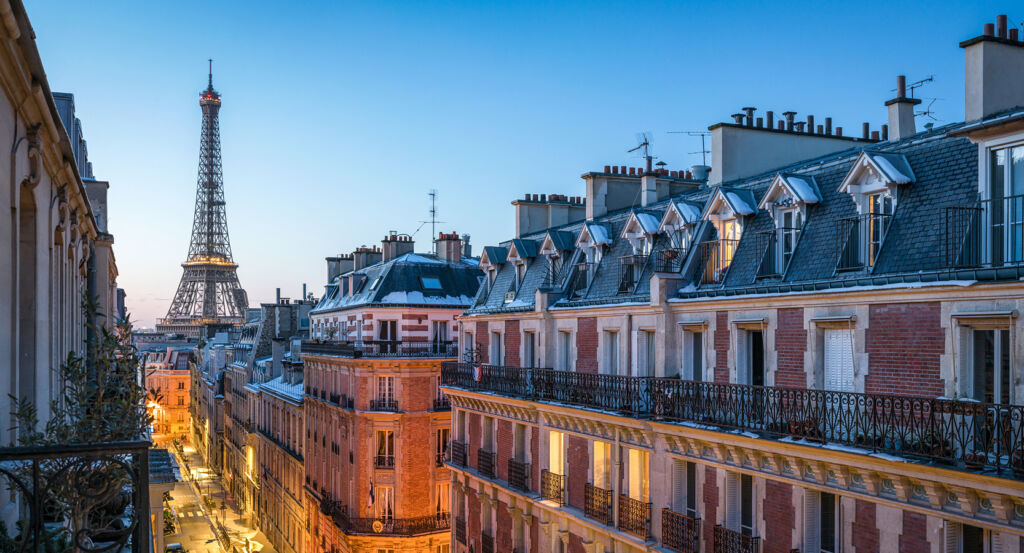
Why you should experience Drawing House in Paris, France.
Drawing House is an expressive four-star hotel where Montparnasse's artistic inheritance, studio culture, avant-garde imagination and enduring appetite for creative experimentation are reactivated through a hotel conceived entirely around contemporary drawing.
Set along Rue Vercingétorix near Avenue du Maine and just steps from Gare Montparnasse, the 143-room property gives artists structural control over the guest experience, with Mathieu Dufois occupying the first three accommodation floors, Karine Rougier the next three and Alexandre and Florentine Lamarche-Ovize the final three. NIDO Architecture developed the interiors with founder Carine Tissot around that artistic program, integrating natural materials while allowing commissioned work to migrate from guestrooms into circulation spaces, reception and the bar. Daniel Otero Torres created the work suspended above the bar, the Lamarche-Ovize duo contributed a permanent reception piece and the Drawing Hall extends the concept into temporary exhibitions connected with collectors, galleries and cultural institutions. The result is a hotel where Montparnasse's history of artists inhabiting, working and exchanging ideas within the same buildings is revived through contemporary drawing as an active architectural medium.
What you should know about Drawing House.
Drawing House is best known for creating a 143-room, nine-floor hotel dedicated entirely to contemporary drawing, with founder Carine Tissot and NIDO Architecture assigning three consecutive floors each to Mathieu Dufois, Karine Rougier and Alexandre and Florentine Lamarche-Ovize rather than treating commissioned art as decoration applied after the interiors were completed. Dufois develops the first three floors through a practice rooted in drawing, cinema and reconstructed imagery, Rougier carries the artistic sequence through floors four to six, and the Lamarche-Ovize duo occupies floors seven to nine while also contributing a permanent work at reception. Daniel Otero Torres extends the commissioned program above the bar, while Lucie Picandet has occupied the Dependence speakeasy through temporary work, allowing permanent commissions and changing interventions to coexist throughout the hospitality program. Drawing Hall adds a dedicated exhibition space conceived around collaborations with collectors, galleries and cultural institutions connected to Paris through Montparnasse, making curatorial programming part of the property's continuing operation. Drawing House belongs to the Drawing Hotels Collection organized by Drawing Society, connecting the hotel directly with the wider contemporary-drawing ecosystem developed around Drawing Lab rather than borrowing an art character solely for hospitality branding.
Carine Tissot provides the intellectual continuity behind that ecosystem, extending the Drawing Society's commitment to contemporary drawing from exhibition-making into a hotel where artists intervene at architectural scale. NIDO Architecture translated that premise into spaces where materials and furnishings remain deliberately subordinate to the commissioned works, allowing the three-floor artist sequences to function almost as vertically organized exhibitions encountered through repeated stays and movement through the building. Drawing Hall then keeps the collection from becoming static by introducing temporary collaborations, while the Studios connect artistic creation with meetings and professional activity inside the same property. Chef Aurélien and pastry chef Perrine extend the authored program into the restaurant through seasonal house-made cooking and pastry, adding named culinary direction to a property already structured around individual artistic voices. Together, Carine Tissot, NIDO Architecture, Mathieu Dufois, Karine Rougier, Alexandre and Florentine Lamarche-Ovize, Daniel Otero Torres, Lucie Picandet, Aurélien and Perrine make Drawing House unusually literal in its premise: contemporary creators do not embellish the hotel, they collectively constitute it.
How to fold Drawing House into your trip.
Drawing House works as the anchor for an afternoon tracing how Montparnasse turned private studios, rebellious sculpture and artist communities into one of the defining creative environments of twentieth-century Paris.
Begin at Musée Bourdelle, where Antoine Bourdelle rented his first Impasse du Maine studio in January 1885, gradually occupied additional workshops for increasingly ambitious commissions and left a graphic legacy now numbering 6,350 sheets, including more than 4,000 drawings bequeathed by his daughter Rhodia Dufet-Bourdelle in 2002. Continue to Musée de La Poste, whose collections grew from the postal museum inaugurated in 1946 and now connect communication with graphic culture through postage stamps, postal art, mail-related objects and works by artists who repeatedly turned the small printed surface of the stamp into a vehicle for illustration and design. Conclude at Fondation Cartier pour l'art contemporain, whose Montparnasse chapter began with Jean Nouvel's 1994 Boulevard Raspail glass architecture before the institution moved in 2025 to his radically reconfigured former Grands Magasins du Louvre building, carrying the foundation's experimental curatorial character from one Nouvel structure into another. The progression moves from Bourdelle turning drawing into the foundation of grand sculpture through graphic communication becoming collectible culture and finally into Fondation Cartier repeatedly commissioning architecture around contemporary creation, revealing the artistic ecosystem that Drawing House translates into hospitality.
Where your story begins.
Foresyte Travel reveals places that feel extraordinary long before you arrive.
Experience premium editorial crafted for luxury travelers.














































































































