Why Ellerman House matters.
Ellerman House is where Cape Town stops being a city you visit and becomes a truth you are entrusted with, where elevation, silence, and cultural gravity conspire to make you feel both im small and exquisitely chosen.
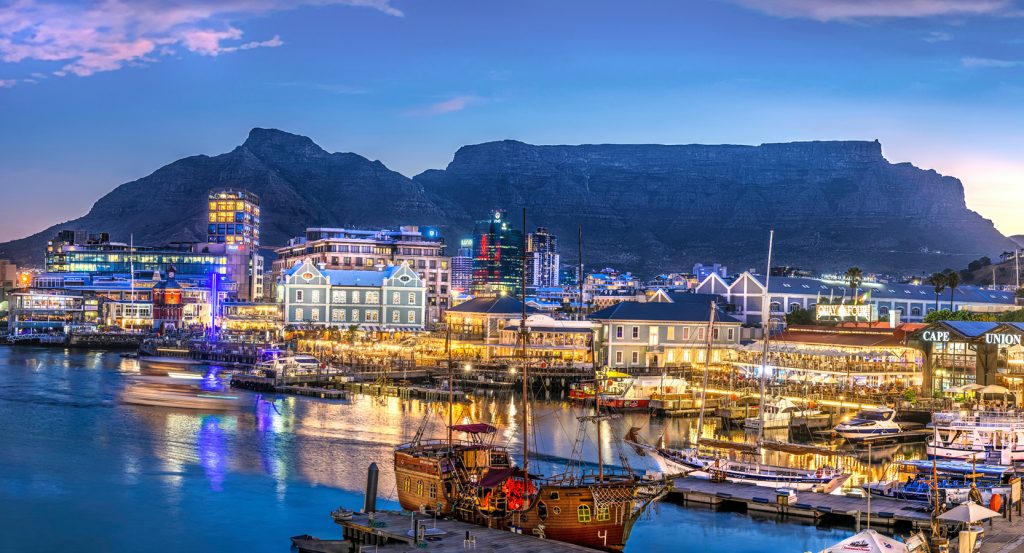
You don't stumble upon Ellerman House. You are delivered to it, lifted above the city's appetite and set down in a place that feels almost confidential. Perched high above the Atlantic in Bantry Bay, the property occupies a psychological altitude as much as a physical one. The ascent alone does something to you. The city recedes. The noise thins. The horizon widens until it begins to rearrange your sense of scale. By the time you arrive, your internal volume has already lowered. Ellerman House doesn't announce itself with performance. It doesn't need to. It sits with the calm authority of something that knows exactly where it belongs. The building feels less like a hotel and more like a private estate that has decided, selectively, to let you in. The transition inside is immediate and almost disarming. Spaces unfold with grace. Light moves deliberately across polished floors, curated art, and expansive windows that frame ocean and sky with reverence. Nothing here is rushed. Nothing is trying to persuade you. The house assumes you will notice. And you do. Your room feels like a personal observatory, designed not to distract you from the view but to hold you steady while you absorb it. The Atlantic stretches endlessly below, cliffs falling away into water that feels both violent and serene. Table Mountain anchors the periphery, reminding you that this place exists at the intersection of forces older than language. Mornings at Ellerman House arrive with ceremony disguised as ease. Light pours in slowly, changing color as it crosses water and stone. Coffee tastes richer when taken in silence, when the only agenda is watching the day reveal itself honestly. Afternoons dissolve into something almost sacred. You move between terraces, gardens, and interior spaces without urgency, each transition reinforcing the sense that time here is not a resource to be managed but an experience to be inhabited. The pool seems to hover at the edge of the world, offering a mesmerizing communion with ocean and sky that quiets thought. As evening approaches, Ellerman House deepens. The light softens. The air cools. The house gathers itself around you, intimate. Dinner feels less like an event and more like a continuation of presence, food, wine, and conversation unfolding with intention. Night settles gently, the ocean darkening below, the city lights distant and irrelevant. Ellerman House does not offer escape. It offers perspective. Somewhere between the vastness of the Atlantic, the quiet authority of the house, and the realization that nothing here is asking for your attention, you understand the truth of the place. This is not where you come to feel indulged. This is where you come to feel aware.
What defines Ellerman House.
Ellerman House is as much a cultural institution as it is a place to stay, an unapologetic custodian of South African art, history, and identity.
Originally built in 1906 as the private residence of Sir John Ellerman, the house was never intended for public consumption. It was designed as a statement of permanence, proportion, and restraint, overlooking the Atlantic with the quiet confidence of someone who understands legacy. That private lineage still defines the experience today. Unlike hotels designed to absorb volume, Ellerman House was built to hold meaning. When the property was later transformed into a hotel, the decision was not to dilute its identity, but to sharpen it. One of the most remarkable, and lesser-known, aspects of Ellerman House is its art collection. Housing one of the most significant private collections of South African art in the world, the property functions as a living gallery. Works by some of the country's most important artists are not displayed behind ropes or labels; they live alongside you, shaping corridors, rooms, and shared spaces with quiet authority. This is not art as decoration. It is art as context. Staying at Ellerman House places you inside a narrative of South Africa that is complex, layered, and unapologetically present. Service culture mirrors this depth. Hospitality here is deeply personal, intuitive, and unforced, operating under the assumption that guests value discretion and understanding over performance. Staff read the room. Attention is precise, almost invisible, and profoundly reassuring. Another lesser-known strength of Ellerman House is its scale. With a limited number of rooms and suites, the atmosphere remains intimate. You are known here, not through tracking, but through presence. The house remembers you. This intimacy allows for a level of customization and resonant attunement that larger properties simply cannot achieve. Ellerman House attracts a specific kind of traveler, people who are not impressed by excess, who seek depth over declaration, and who understand that the rarest luxury is not indulgence but clarity. Collectors, thinkers, creatives, and repeat visitors gravitate here instinctively, drawn by the promise of perspective. Over time, many guests realize that staying at Ellerman House subtly recalibrates their understanding of luxury itself. It stops being about distance from reality and starts being about deeper engagement with it. Ellerman House does not explain South Africa to you. It allows you to feel it, quietly, powerfully, and without simplification.
How Ellerman House fits.
Ellerman House works best when you allow it to become the view through which you experience Cape Town.
Begin mornings in stillness, letting light, ocean, and silence orient you before the city reenters your awareness. Breakfast should be unhurried, ideally taken where the Atlantic dominates your field of vision and the day feels unclaimed. Spend early hours exploring the house itself, walking its corridors, noticing art, sitting with the view long enough for thought to slow and deepen. When you venture into the city, do so deliberately. Visit galleries, neighborhoods, or vineyards knowing that you have a place of return that will not compete for your attention but restore it. The ease of retreat matters here; it changes how fully you engage everything else. Midday is ideal for recalibration. Swim at the edge of the world. Sit in silence. Allow the house to hold you. Afternoons stretch naturally when nothing is being extracted from them. As evening approaches, let Ellerman House frame the transition. Dine thoughtfully. Let conversation linger. Watch the ocean darken. Night here feels grounded, intimate, and deeply composed. Over multiple days, something profound occurs. Your internal pace resets. Your sense of scale adjusts. You stop trying to accumulate experiences and start recognizing significance when it presents itself quietly. Cape Town reveals itself not as a list of highlights, but as a place of depth, contradiction, and beauty that rewards attention.
Where your story begins.
Foresyte Travel reveals places that feel extraordinary long before you arrive.
Enjoy editorial crafted for luxury travelers.
Foresyte may earn a commission when you book.