
Why Enrico Bartolini matters.
Enrico Bartolini is a three-MICHELIN-starred gastronomic institution where Zona Tortona's industrial reinvention meets the culinary achievements of a Tuscan chef who restored MICHELIN's highest distinction to Milan after twenty-five years and established one of Italy's most influential contemporary restaurant enterprises.
Set along Via Tortona near Via Bergognone and a short walk from Piazza del Rosario, the restaurant occupies the third floor of Mudec within the former Ansaldo industrial complex, surrounded by converted factories, fashion showrooms and cultural institutions extending toward Porta Genova. The museum's contemporary architecture introduces a striking contrast with the surrounding manufacturing buildings, establishing a distinct cultural landmark within Milan's design district. Inside, dark walls, timber flooring and natural materials create an understated dining room, with upholstered seating and carefully spaced tables providing an intimate setting. Contemporary artworks complement the restrained interior, and a dedicated bar extends the restaurant's hospitality into an adjoining space. The result is a sophisticated gastronomic environment whose architectural setting, controlled lighting and integration with the museum establish a distinctive relationship between contemporary culture and Italian fine dining.
What defines Enrico Bartolini.
Enrico Bartolini is best known for transforming a career rooted in Tuscany and northern Italy into a MICHELIN-starred restaurant enterprise whose Milan flagship returned the city to the highest level of international gastronomy. Born in 1979 in Castelmartini, near Pistoia, Bartolini developed his earliest culinary experience through his family's restaurant business before pursuing professional training in distinguished European kitchens. His formative career included work with Paolo Petrini in Paris and Mark Page in London, followed by an influential period alongside Massimiliano Alajmo at the three-MICHELIN-starred Le Calandre in Rubano. Bartolini subsequently assumed leadership of Le Robinie in Montescano, establishing an independent culinary reputation that earned Gambero Rosso and L'Espresso's Young Talent of the Year recognition in 2008. MICHELIN awarded Le Robinie its first star in 2009, making him one of Italy's youngest chefs to achieve the distinction. His appointment at Devero Ristorante in Cavenago di Brianza followed in 2010, bringing his cooking into the luxury hospitality market near Milan. Devero received two MICHELIN stars in 2012, confirming Bartolini's position among Italy's leading contemporary chefs. His participation as a culinary ambassador for Expo Milano 2015 strengthened his relationship with the city during a period of international attention to Italian gastronomy. The following year brought the opportunity to establish an independent flagship within the Museum of Cultures, whose international exhibition program provided a cultural setting for his expanding ambitions. Enrico Bartolini al Mudec opened in April 2016, accompanied by the development of restaurants in Bergamo, Tuscany and Venice. The 2017 MICHELIN Guide awarded four stars across three establishments, including two for the Milan flagship, marking an unprecedented achievement for an individual chef within a single edition of the Italian guide. Further expansion brought MICHELIN recognition to GLAM in Venice and Locanda Sant'Uffizio in Monferrato, establishing a network of restaurants under the chef's creative direction. The decisive milestone arrived on November 6, 2019, when MICHELIN awarded the Milan restaurant its third star for the 2020 guide, restoring the distinction to the city for the first time since Gualtiero Marchesi's departure in 1994. Bartolini became the eleventh chef in Italy to achieve three MICHELIN stars, confirming his flagship's position among the country's foremost gastronomic institutions. MICHELIN subsequently awarded him its Mentor Chef Award in 2023, recognizing his contribution to the professional development of younger chefs. Resident chef Davide Boglioli supports the contemporary kitchen, extending a collaborative model through which Bartolini develops culinary leadership across his restaurants. Gambero Rosso awarded the Milan flagship 91 points out of 100 in its 2025 assessment, recognizing the sustained quality of its cooking and hospitality. Bartolini's achievement rests on this progression from regional apprenticeship through independent MICHELIN recognition to the creation of an influential Italian restaurant enterprise, with the Milan flagship serving as its principal creative institution.
Bartolini's contemporary classicism begins with familiar Italian flavors and develops their intensity through precise control of texture, acidity and aromatic concentration. His celebrated beetroot risotto demonstrates this approach by preserving the comforting structure of northern Italian rice cookery while introducing concentrated vegetable sweetness and the savory complexity of Gorgonzola Evoluzione. The rice releases starch gradually during cooking, establishing a creamy foundation capable of carrying the beetroot's earthy character across the palate. A carefully balanced cheese sauce adds richness and fermentation notes, creating a contrast that deepens the vegetable's flavor as the dish develops. The same attention to familiar ingredients governs the kitchen's treatment of pasta, where delicate dough becomes a vehicle for concentrated fillings and carefully constructed sauces. Olive oil and lime bottoni demonstrate this principle through small parcels that release their contents into a cacciucco preparation accompanied by grilled octopus, connecting Tuscan seafood traditions with citrus acidity and the aromatic character of olive oil. The contrast between yielding pasta, liquid filling and the deeper marine flavors of the sauce gives the preparation its distinctive experience. Bartolini extends these relationships throughout the repertoire, using reductions, emulsions and carefully controlled cooking temperatures to preserve the recognizable character of individual ingredients. Seasonal vegetables and seafood provide opportunities to develop the same balance between natural flavor and technical refinement, with each preparation shaped around the ingredient's particular texture and aromatic intensity. The Best Of tasting menu brings established signatures into a single progression, allowing diners to experience the development of Bartolini's culinary language through preparations refined across successive stages of his career. Mudec Experience provides a complementary structure for contemporary creations, extending the kitchen's exploration of Italian ingredients through changing seasonal compositions. The resulting experience preserves the resonant familiarity of traditional Italian cooking while revealing greater precision in the relationships between texture, acidity, richness and flavor.
How Enrico Bartolini fits.
Enrico Bartolini works as the culinary culmination of an exploration of Zona Tortona's transformation from an industrial manufacturing district into an internationally influential center of fashion, design and contemporary cultural production.
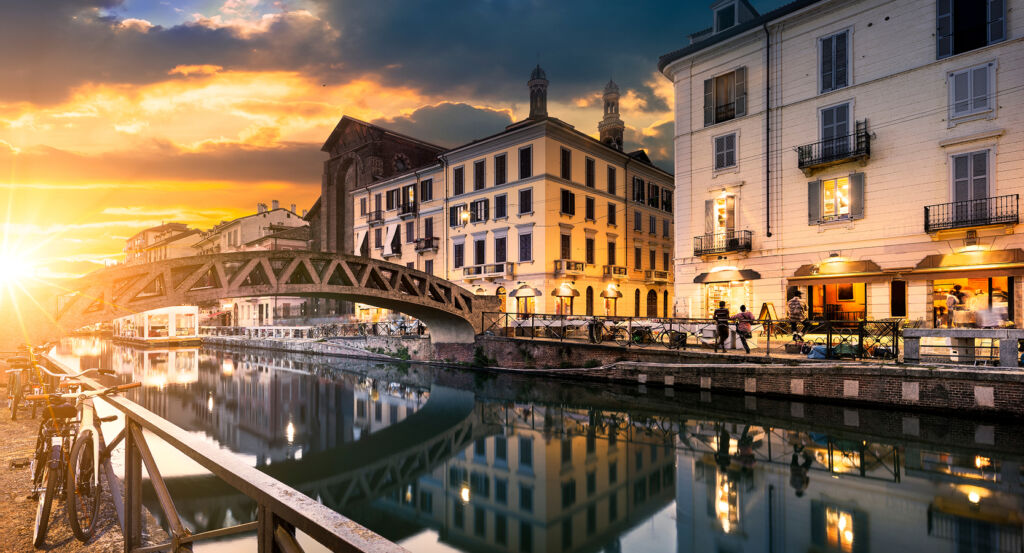
Begin at Armani/Silos, the fashion exhibition institution occupying a former industrial granary on Via Bergognone. Giorgio Armani inaugurated the museum on April 30, 2015, commemorating the fortieth anniversary of his professional career through a permanent collection devoted to the development of his design language. The original building dates to 1950 and occupies 4,500 square meters across four floors, preserving the substantial proportions of a structure originally developed for industrial storage. Its exhibitions organize important garments and accessories around themes including androgyny, international cultural influences and the relationship between fashion and cinema. A digital archive extends the institution's purpose into the preservation and study of Armani's creative development. Continue to BASE Milano, the multidisciplinary cultural center occupying part of the former Ansaldo industrial complex on Via Bergognone. The manufacturing property developed during the early twentieth century and became associated with railway equipment production, establishing an important industrial presence within Milan's expanding western districts. Its transformation followed a municipal redevelopment initiative intended to preserve historic industrial buildings and introduce new opportunities for creative production. BASE opened on March 30, 2016, establishing 6,000 square meters of initial cultural facilities devoted to exhibitions, performance, design and professional collaboration. The continuing program connects Milan's manufacturing heritage with contemporary artistic practice and independent cultural organizations. Conclude at Naviglio Grande, the historic canal extending southwest from Milan's former commercial waterfront toward the agricultural landscape of Lombardy. Its medieval development created an important transportation route connecting the city with the Ticino River and the wider canal network. The waterway supported the movement of agricultural products, building materials and commercial goods, contributing directly to Milan's economic expansion. Marble destined for the construction of Duomo di Milano traveled through the canal system, establishing an enduring relationship between the waterways and one of Italy's most ambitious medieval architectural projects. Surviving canal-side buildings, historic bridges and former working spaces preserve the character of a transportation corridor that subsequently developed into an important center of neighborhood dining and cultural activity. The progression connects the preservation of Italian fashion heritage with the adaptive reuse of Milan's industrial architecture and concludes along the historic waterway that supported the city's commercial and architectural development.
Where your story begins.
Foresyte Travel reveals places that feel extraordinary long before you arrive.
Enjoy editorial crafted for luxury travelers.
Foresyte may earn a commission when you book.




















































































































