Why Exotic Garden of Monaco matters.
Exotic Garden of Monaco is a historic cliffside botanical garden where Jardin Exotique's elevated Mediterranean landscape meets Prince Albert I's botanical ambitions, among the world's most significant collections of succulent plants and the geological history concealed beneath the principality's limestone cliffs.
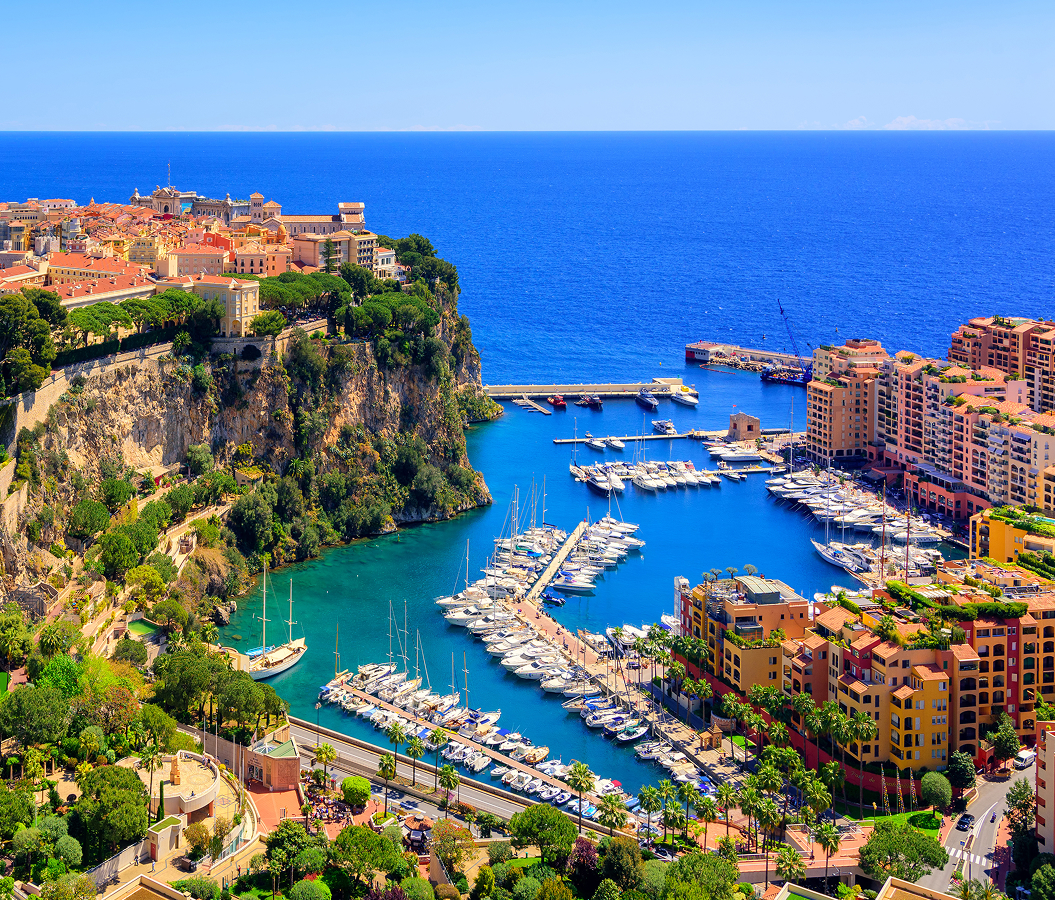
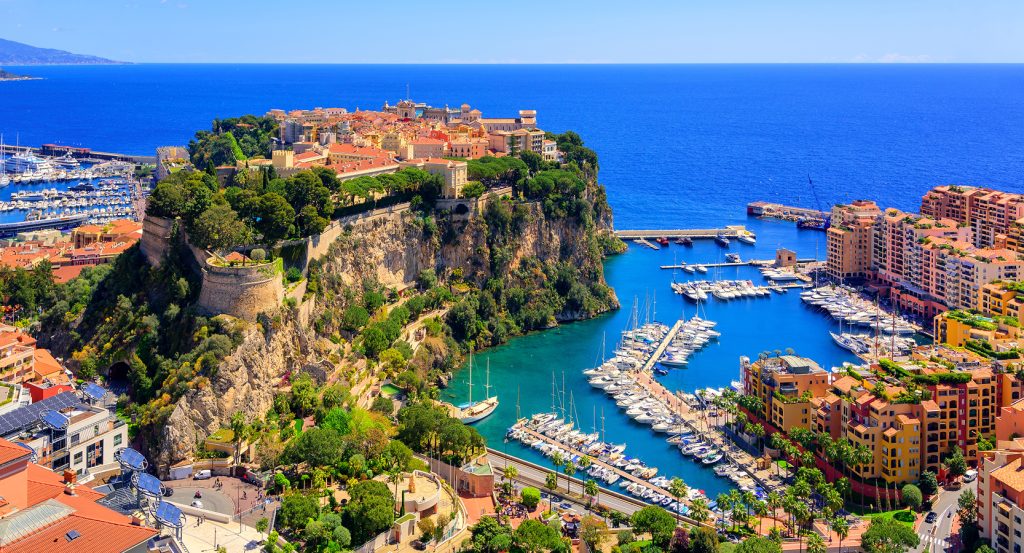
Occupying a steep, sun-exposed hillside above Fontvieille and the western approaches to Monaco, the garden overlooks the Rock of Monaco, Port Hercule and the Mediterranean coastline extending toward Cap-d'Ail. Its terraced landscape incorporates winding stone pathways, narrow staircases, arched passages and small bridges that descend through densely planted rockeries following the natural contours of the slope. Expansive columnar cacti rise above sprawling agaves, branching euphorbias and sculptural aloes, creating dramatic contrasts between upright stems, fleshy leaves and the pale limestone supporting their roots. Stone parapets and projecting belvederes interrupt the descending pathways, opening expansive views across the principality's densely developed urban districts and the French and Italian Rivieras. The result is a remarkable botanical landscape whose steep topography, mature succulent collections and elevated Mediterranean panoramas establish a distinctive relationship between horticultural conservation and Monaco's coastal geography.
What defines Exotic Garden of Monaco.
Exotic Garden of Monaco is best known for transforming an exceptional private collection of succulent plants into an expansive public garden, establishing a botanical institution whose development connects the scientific interests of Monaco's sovereigns to the cultivation of plants from the world's arid and semiarid regions. Its origins belong to Augustin Gastaud, the head gardener of the Saint-Martin Gardens, who began assembling an important collection of cacti and other succulent plants during the late nineteenth century. Gastaud cultivated specimens on the Rock of Monaco, taking advantage of the principality's mild winters and favorable Mediterranean climate to establish plants originating in considerably warmer and drier environments. His collection attracted the attention of Prince Albert I, whose scientific interests extended across oceanography, natural history and the systematic study of the natural world. The prince recognized the potential for developing a substantial botanical garden on the rocky western slopes of the principality, where strong sunlight, excellent drainage and protection from severe frost created favorable conditions for cultivating succulent species outdoors. The project also formed part of Monaco's expanding investment in public institutions, scientific education and landscape development during the early twentieth century. The municipality acquired land on the hillside overlooking Fontvieille, establishing the foundation for a garden that could accommodate the increasing size and diversity of Gastaud's collection. Construction began in 1913, introducing a substantial engineering and horticultural undertaking on terrain characterized by exposed limestone, steep gradients and limited natural soil. The project required the construction of retaining walls, pathways, terraces and planting areas capable of supporting large specimens on the precipitous slope. Successive stages of development continued through the First World War and the following decades, establishing a progressively more extensive network of rockeries and circulation routes. Prince Albert I died in 1922 before the completion of the project, leaving its continuation to the administration of his successor, Prince Louis II. The garden opened to the public in February 1933, establishing a new botanical attraction that complemented Monaco's established scientific and cultural institutions. Approximately 25,000 people visited during its inaugural year, beginning a period of growing international recognition for the collection. The garden developed into an important destination for horticultural specialists because its mature specimens demonstrated the capacity of succulent plants to adapt to the microclimatic conditions of the Mediterranean coast. Its collection incorporated cacti from the Americas alongside succulent plants from Africa, introducing visitors to botanical groups that evolved comparable adaptations to limited water availability across geographically separated regions. The institution's significance also developed through its relationship with the geological formations beneath the hillside. A natural limestone cavity discovered in 1916 became known as the Grotte de l'Observatoire, preserving a subterranean environment formed through the prolonged action of water on the surrounding rock. The cave opened to the public in 1950, extending the garden's educational program into geology and the study of underground formations. Its discovery also contributed to the investigation of prehistoric human activity in the region, connecting the site to Monaco's established tradition of archaeological research. The expansion of the garden's scientific functions accelerated during the 1950s, when the municipality began developing dedicated greenhouse facilities for the propagation and preservation of its collections. Marcel Kroenlein played an important role in this development, beginning work on specialized cultivation facilities in 1955 and subsequently serving as director from 1969 to 1993. His leadership strengthened the institution's international botanical relationships and expanded its cultivation of rare and threatened succulent plants. The greenhouse program developed into a substantial collection maintained separately from the exposed outdoor terraces, allowing the cultivation of species requiring more carefully controlled environmental conditions. Its facilities eventually occupied 5,000 square meters, establishing an important resource for botanical conservation, horticultural research and the propagation of replacement specimens. The garden's public popularity increased substantially during the second half of the twentieth century, reaching 600,000 annual visitors during the early 1980s. This growth strengthened its position among Monaco's principal visitor attractions and contributed to the international recognition of its specialist botanical collections. The institution subsequently expanded its educational activities through exhibitions, guided visits and programs introducing the ecological characteristics of plants adapted to arid environments. A major transformation of its scientific infrastructure culminated in October 2017, when the Botanical Center relocated to purpose-built facilities opposite the garden. Architects Fabrice Notari and Rudy Ricciotti developed the new glass-and-metal complex, introducing contemporary greenhouse architecture designed to support the cultivation and conservation of specialized botanical collections. The center became an important component of the municipality's efforts to preserve rare succulent species, maintain genetic diversity and develop horticultural expertise. The outdoor garden subsequently entered a prolonged period of reconstruction following its closure in 2020, initiating the most substantial intervention in its visitor infrastructure for several decades. The project concentrated on stabilizing the hillside circulation network, improving safety and restoring the architectural elements that support movement through the steep terrain. Construction included the restructuring of walkways and protective railings, the resurfacing of public pathways, the renovation of pergolas and belvederes, and improvements to the garden's lighting. Additional facilities introduced dedicated children's areas, picnic spaces and visitor services, extending the institution's public functions beyond its original horticultural program. The municipality preserved the historic botanical collection throughout the reconstruction, maintaining specimens whose cultivation histories extend across generations. Prince Albert II and Princess Charlène attended the official reopening ceremony on March 25, 2026, alongside Princess Caroline of Hanover and Mayor Georges Marsan. A special preview for Monegasque residents followed on March 29, and the garden reopened to the general public on March 30, 2026. The completed project restored access to one of Monaco's most distinctive historic landscapes after six years of closure. Its continuing significance emerges from the relationship between Gastaud's original collection, the scientific patronage of Prince Albert I, successive generations of botanical conservation and the preservation of a remarkable horticultural environment within the principality's densely developed coastal territory.
How Exotic Garden of Monaco fits.
Exotic Garden of Monaco works as the central destination for an exploration connecting the principality's prehistoric archaeology, twentieth-century artistic patronage and the public landscapes developed along its elevated western neighborhoods.
Begin at Museum of Prehistoric Anthropology of Monaco, the scientific institution established by Prince Albert I in 1902 to preserve and investigate archaeological discoveries from Monaco and the surrounding Mediterranean region. Its collections developed through excavations associated with the prehistoric occupation of coastal caves, including important sites in the nearby Grimaldi cave complex. The museum subsequently relocated to a purpose-built facility near the botanical garden in 1960, strengthening the relationship between the principality's archaeological research and its scientific institutions. Its exhibitions incorporate prehistoric stone tools, skeletal remains, archaeological specimens and interpretive material concerning the development of human settlement along the Mediterranean coast. The collection introduces a substantial chronological dimension to the surrounding landscape, connecting Monaco's modern urban development to evidence of human activity extending deep into prehistory. Continue to New National Museum of Monaco - Villa Paloma, the contemporary art institution occupying a restored early-twentieth-century residence overlooking the western slopes of the principality. The villa forms one of the two principal exhibition venues of the Nouveau Musée National de Monaco, whose program concentrates on contemporary art, decorative arts and the conservation of Monaco's artistic heritage. Its restoration preserved the architectural character of the historic residence and established exhibition galleries capable of accommodating changing installations. The surrounding gardens contribute to the property's cultural character through landscaped terraces and outdoor artworks, creating a relationship between contemporary artistic production and the architectural heritage of the neighborhood. The museum's exhibitions introduce an additional perspective on Monaco's cultural development through the work of international artists and the preservation of significant collections. Conclude at Parc Princesse Antoinette, the municipal public park occupying an elevated hillside site above the western approaches to the principality. Its landscape preserves mature olive trees associated with the area's agricultural past, establishing a direct connection to the cultivation traditions that preceded Monaco's extensive urban development. The park incorporates shaded pathways, landscaped lawns, recreational facilities and children's play areas, providing a substantial public green space within the surrounding residential district. Its horticultural character differs from the specialized succulent collections of the nearby botanical institution, introducing Mediterranean trees and ornamental planting associated with the principality's municipal landscape traditions. The progression moves from Museum of Prehistoric Anthropology of Monaco's archaeological collections through New National Museum of Monaco - Villa Paloma's contemporary exhibitions and concludes at Parc Princesse Antoinette's historic olive groves, connecting scientific investigation, artistic patronage and public landscape development across Monaco's western hillside.
Where your story begins.
Foresyte Travel reveals places that feel extraordinary long before you arrive.
Enjoy editorial crafted for luxury travelers.