Why the French Quarter matters.
French Quarter is a historic enclave where New Orleans' Creole heritage meets the colonial ambitions of France and Spain, the architectural legacy of the Mississippi River port and the musical and culinary traditions that shaped one of America's most culturally consequential neighborhoods.
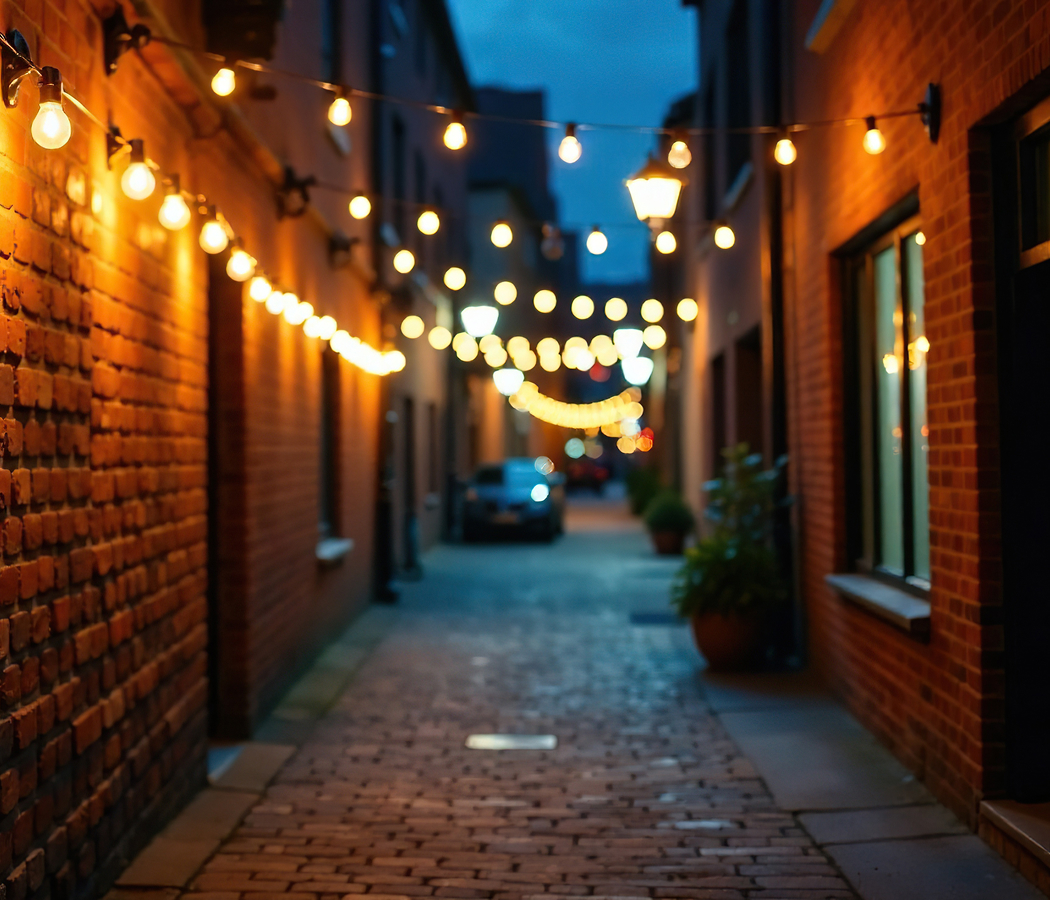
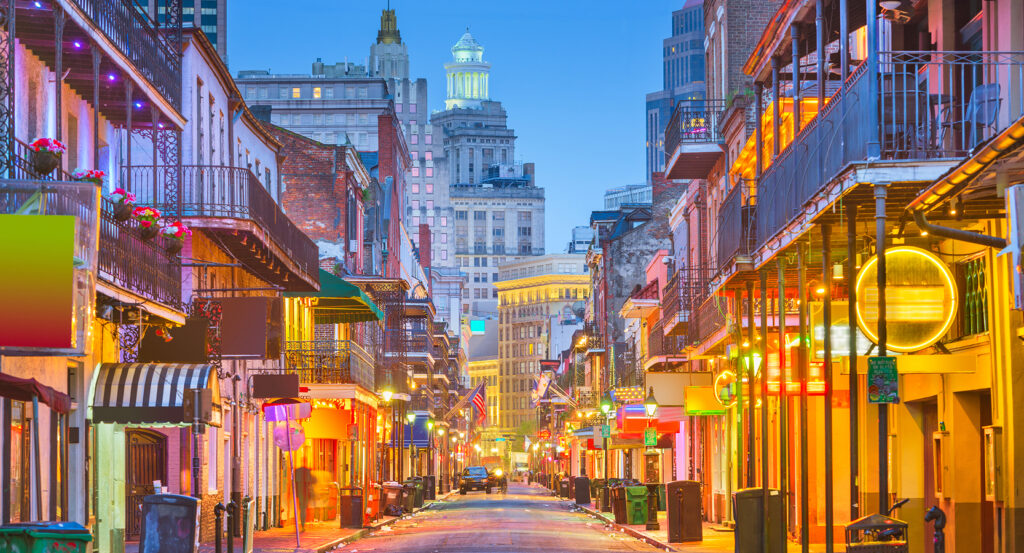
Positioned between Faubourg Marigny, the Central Business District and Tremé, the neighborhood occupies the original settlement grid beside the Mississippi River, extending from Canal Street to Esplanade Avenue and from North Rampart Street toward Decatur Street and the riverfront. Narrow streets preserve a dense arrangement of eighteenth- and nineteenth-century buildings, with plastered masonry facades, shuttered windows and ornate cast-iron galleries overlooking the sidewalks. Interior courtyards introduce secluded gardens, fountains and shaded passages within blocks of closely spaced townhouses. Royal Street's antique galleries and historic storefronts establish a distinctive commercial setting, and Bourbon Street's music venues and illuminated balconies animate the neighborhood after dark. The result is an exceptionally preserved urban district whose architecture, public spaces and cultural institutions sustain the historic character of New Orleans' original city center.
What defines the French Quarter.
French Quarter is best known for its Creole architecture and extraordinary concentration of historic buildings developed during more than three centuries of French, Spanish and American rule. Jean-Baptiste Le Moyne de Bienville founded New Orleans in 1718 on a natural levee beside the Mississippi River, establishing a strategic settlement near the river's connection with the Gulf of Mexico. French military engineer Adrien de Pauger subsequently developed the rectangular street plan that established the neighborhood's enduring urban organization. The settlement became the capital of French Louisiana in 1722, strengthening its administrative and commercial importance within the colonial territory. Enslaved Africans contributed essential labor and specialized knowledge to the construction and economic development of the expanding port. Spain assumed administration of Louisiana in 1766, introducing new political institutions and architectural influences during a period of substantial commercial growth. Devastating fires in 1788 and 1794 destroyed extensive portions of the colonial settlement, creating opportunities for reconstruction under Spanish building regulations. Brick construction, stucco finishes, enclosed courtyards and tiled roofs became prominent features of the rebuilt district. The Louisiana Purchase transferred the territory to the United States in 1803, initiating major demographic and economic changes as American migration accelerated. French-speaking Creole residents maintained influential social and commercial institutions amid the growing American population. The neighborhood became known as the Vieux Carré, or Old Square, distinguishing the original settlement from newer districts expanding upriver. The Vieux Carré Commission was established in 1936 to regulate alterations to historic buildings and protect the neighborhood's architectural character. Its preservation structure helped sustain one of the largest concentrations of historic urban architecture in the United States.
Jackson Square occupies the ceremonial center of the original settlement, preserving the relationship between colonial government, religious authority and public life. Originally called the Place d'Armes, the square served as a military parade ground and gathering place during the colonial period. The present landscaped arrangement developed during the nineteenth century, incorporating formal pathways, ornamental plantings and a central equestrian statue of Andrew Jackson. St. Louis Cathedral rises along the square's northern edge, its three prominent spires establishing one of the city's most recognizable architectural compositions. The present church was completed in 1851 following substantial reconstruction of an earlier colonial building. The Cabildo occupies the adjoining civic structure, originally completed in 1799 as the seat of Spanish colonial government. Its chambers hosted the ceremonial transfer associated with the Louisiana Purchase, connecting the building with a pivotal event in American territorial expansion. The Presbytère stands opposite the Cabildo, completing the formal architectural composition surrounding the cathedral. Its museum exhibitions explore the cultural history of Louisiana, including the traditions of Mardi Gras and the consequences of Hurricane Katrina. The Pontalba Buildings frame the square's eastern and western sides, introducing substantial rows of nineteenth-century commercial and residential architecture. Baroness Micaela Almonester de Pontalba commissioned their construction during the 1840s, creating an ambitious development distinguished by continuous iron balconies and carefully proportioned facades. Their combination of shops and upper-floor residences contributed to the square's enduring commercial character. The surrounding public spaces accommodate street musicians, portrait artists and local performers, continuing the district's longstanding association with public cultural expression.
How the French Quarter fits.
French Quarter works as the historical anchor for a New Orleans outing connecting the city's jazz heritage, its distinctive aboveground burial traditions and the preservation of nineteenth-century Creole domestic architecture.
Begin at New Orleans Jazz Museum, housed in the historic Old U.S. Mint at the edge of the neighborhood near Esplanade Avenue. The Greek Revival building was completed in 1838 and subsequently served as an important federal coin-production facility. Its substantial masonry structure and formal colonnade preserve the architectural ambitions of the early American republic. The museum's collections examine the development of jazz through instruments, recordings, photographs and artifacts associated with influential New Orleans musicians. Louis Armstrong's first cornet occupies an important place within the institution's interpretation of the city's musical heritage. Exhibitions connect the development of jazz with brass-band traditions, African American cultural institutions and the performance environments of early twentieth-century New Orleans. Continue to St. Louis Cemetery No. 1, the historic burial ground established in 1789 outside the boundaries of the original colonial settlement. Its compact arrangement of aboveground tombs reflects the funerary practices developed within the region's distinctive environmental and cultural conditions. Elaborate family vaults, masonry monuments and narrow pedestrian passages create an exceptionally concentrated landscape of historic burial architecture. The cemetery contains the tomb of Marie Laveau, the celebrated nineteenth-century religious practitioner associated with New Orleans Voodoo. Its preservation introduces important connections between the city's Catholic traditions, African diasporic religious practices and the social history of its diverse communities. Conclude at Hermann-Grima House, the distinguished Creole townhouse completed in 1831 for Samuel Hermann, a prosperous merchant. Its Federal-style architecture incorporates a substantial courtyard and carefully organized domestic interiors, preserving the spatial arrangement of an affluent nineteenth-century urban residence. The property includes a historic stable and functional open-hearth kitchen, providing insight into household operations and the specialized labor required to sustain them. Its interpretation addresses the lives of enslaved people who worked within the residence, examining the relationship between domestic wealth and coerced labor. Period furnishings, architectural finishes and preserved service spaces establish a detailed account of Creole domestic life during the antebellum period. The progression moves from New Orleans Jazz Museum's musical history through St. Louis Cemetery No. 1's distinctive funerary traditions and culminates at Hermann-Grima House's preserved domestic architecture, connecting three consequential dimensions of the city's cultural development.
Where your story begins.
Foresyte Travel reveals places that feel extraordinary long before you arrive.
Enjoy editorial crafted for luxury travelers.
Foresyte may earn a commission when you book.