
Why Ghibli Museum matters.
Ghibli Museum is an imaginative animation museum where Mitaka's wooded character meets Hayao Miyazaki's philosophy of discovery, handcrafted architectural detail and a physical world designed to be explored.
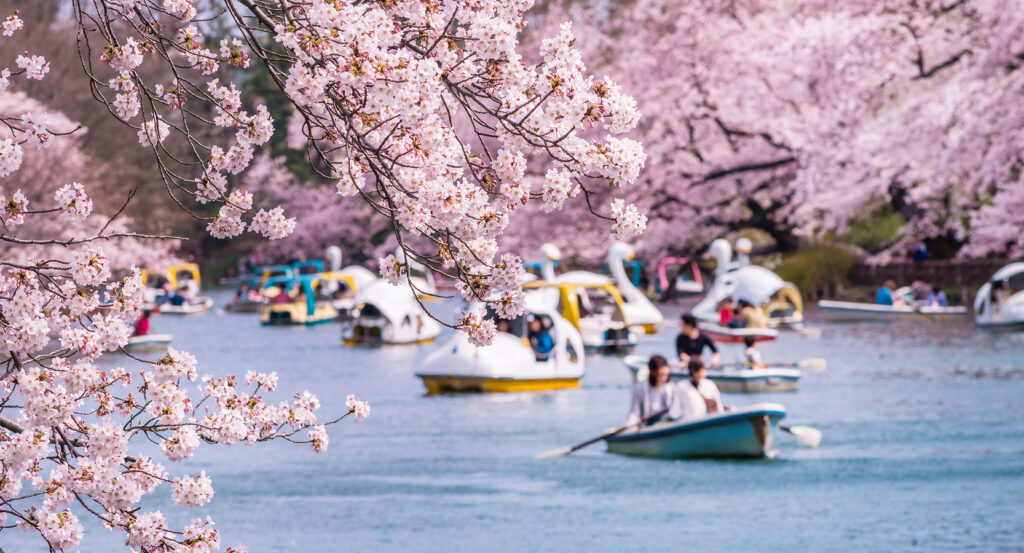
Set along the edge of Inokashira Park near Kichijoji-dori and just steps from the park's tree-lined paths, the museum occupies a low, irregular composition that appears embedded within the surrounding greenery. Rounded walls, bridges, terraces, spiral stairs and unexpected openings interrupt conventional museum circulation, allowing rooms to reveal themselves through wandering. Stained-glass windows depicting Ghibli characters, plants and forest animals scatter colored light across stone floors, and a ceiling fresco fills the entrance hall with a smiling sun, fruit, flowers and branching vegetation. A rooftop garden extends the building into the treetops, where a five-meter Robot Soldier from Castle in the Sky rises among dense planting overlooking Inokashira Park. The result is a museum whose changing levels, handcrafted surfaces, daylight and concealed passages make physical exploration inseparable from the encounter with animation.
What defines Ghibli Museum.
Ghibli Museum is best known for translating Hayao Miyazaki's ideas about animation, childhood and architecture into a purpose-built museum that opened in Mitaka on October 1, 2001. Planning brought Studio Ghibli into partnership with Mitaka City, Tokuma Shoten and Nippon Television as the project moved toward the creation of the Tokuma Memorial Cultural Foundation for Animation. Mitaka's municipal assembly approved the ordinance establishing the animation museum on March 29, 2001, and its implementing rules formally established the Ghibli Museum, Mitaka name the following day. The building reached completion on June 30 and was donated to Mitaka City, giving the municipality ownership of a project created through the Ghibli organization. The Tokuma Memorial Cultural Foundation for Animation received authorization from the Tokyo Metropolitan Board of Education on September 10 and assumed responsibility for operating an institution dedicated to exhibitions, preservation, research and the wider development of animation culture. Nihon Sekkei handled architectural design, Anzai Design Studio developed the landscape, Nittobo Acoustic Engineering designed and constructed the film-exhibition room, Mitsui Fudosan handled construction management and Kajima Corporation executed the building work. The project required close to ¥5 billion across construction, design, exhibition planning, collection work and organizational preparation. Miyazaki remained deeply involved in the museum's conception, producing imageboards for its spaces and making handwritten changes to architectural drawings as construction advanced. A later exhibition devoted to the museum's creation placed those imageboards beside a three-dimensional model and Miyazaki's amended blueprint, exposing how his approach to animated worlds extended directly into the building. The completed institution joined municipal ownership, a dedicated cultural foundation, Studio Ghibli's creative participation and Miyazaki's direct spatial authorship in a museum conceived as an original work rather than a repository assembled after the films.
Animation itself becomes the second mechanism through which the museum operates, with permanent displays and changing exhibitions concentrating on how moving images are constructed. The Saturn Theater occupies the basement as an eighty-seat cinema dedicated to Studio Ghibli shorts unavailable through ordinary theatrical distribution, creating a body of work specifically connected with the institution. Its film catalogue includes The Whale Hunt, Koro's Big Day Out, Mei and the Baby Cat Bus, House Hunting, The Day I Bought a Star, Mon Mon the Water Spider, A Sumo Wrestler's Tail, Mr. Dough and the Egg Princess, Treasure Hunting and Boro the Caterpillar. Hayao Miyazaki wrote and directed several of these works, with collaborators including Joe Hisaishi, Yuji Nomi, Naohisa Inoue and Akihiko Yamashita extending the museum cinema across original stories, literary adaptations and established Ghibli worlds. Special exhibitions pursue production from another direction: Painting the Colors of Our Films centered the work of color designer Michiyo Yasuda and the hand-painted cel process that supported Miyazaki and Isao Takahata, and the later three-part The Boy and the Heron exhibition separated imageboards, layouts and background art into successive studies of the film's creation. The exhibition, The Studio of Yuriko Yamawaki: Treasure from an Artist's Clutter, turns toward the illustrator whose books with Rieko Nakagawa inspired Ghibli adaptations including The Whale Hunt and Treasure Hunting, and it remains scheduled through May 2027. Original cinema, production artifacts and changing studies of individual artists give Ghibli Museum an active role in examining animation as a handmade creative process, extending its purpose well past the display of familiar characters.
How Ghibli Museum fits.
Ghibli Museum works as the anchor for a Mitaka and Kichijoji route through three nearby institutions that move from wartime natural-science education through the preserved home of a major twentieth-century writer and into a municipal collection shaped around artists connected with Musashino.
Begin at Inokashira Park Zoo, opened on May 17, 1942 under a philosophy that joined scientific understanding of nature with public education. Its early program combined animals with a museum, botanical garden and freshwater aquarium, and the institution later developed a major sculptural dimension after Seibo Kitamura established an atelier there in 1953 to create the full-scale plaster model for the Nagasaki Peace Memorial Statue. Kitamura donated that model, more than 350 additional works and his studio facilities in 1958, and more than 200 of his sculptures remain displayed across the grounds. Continue to Mitaka City Yuzo Yamamoto Memorial Museum, a Western-style residence first registered in 1926 and occupied by novelist and playwright Yuzo Yamamoto with his family between 1936 and 1946. Yamamoto wrote Roadside Stone and Kome Hyappyo there and opened the Mitaka Shokokumin Bunko using his own books; after his departure, the property passed through occupation by GHQ and use as a Mitaka branch of the National Institute for Japanese Language before opening as his memorial museum in 1996. Conclude at Kichijoji Art Museum, which opened in February 2002 and has developed holdings of 2,600 works across Nihonga, oil painting, printmaking and photography. Kyuho Noda forms one important concentration, and permanent rooms devoted to printmakers Yozo Hamaguchi and Hideo Hagiwara place two highly individual graphic practices inside a municipal collection deliberately connected with cultural production in Musashino. The progression moves from Inokashira Park Zoo's union of natural science and sculpture through Mitaka City Yuzo Yamamoto Memorial Museum's preservation of a writer's home and working life into Kichijoji Art Museum's concentration of modern visual art, carrying Ghibli Museum through the wider cultural landscape surrounding Inokashira Park.
Where your story begins.
Foresyte Travel reveals places that feel extraordinary long before you arrive.
Enjoy editorial crafted for luxury travelers.
Foresyte may earn a commission when you book.

















































































































