
Why Hotel Alpechiara matters.
Hotel Alpechiara is a Valdostan mountain hotel where Palleusieux's rural character meets the travel traditions connecting the Upper Aosta Valley with its Alpine passes.
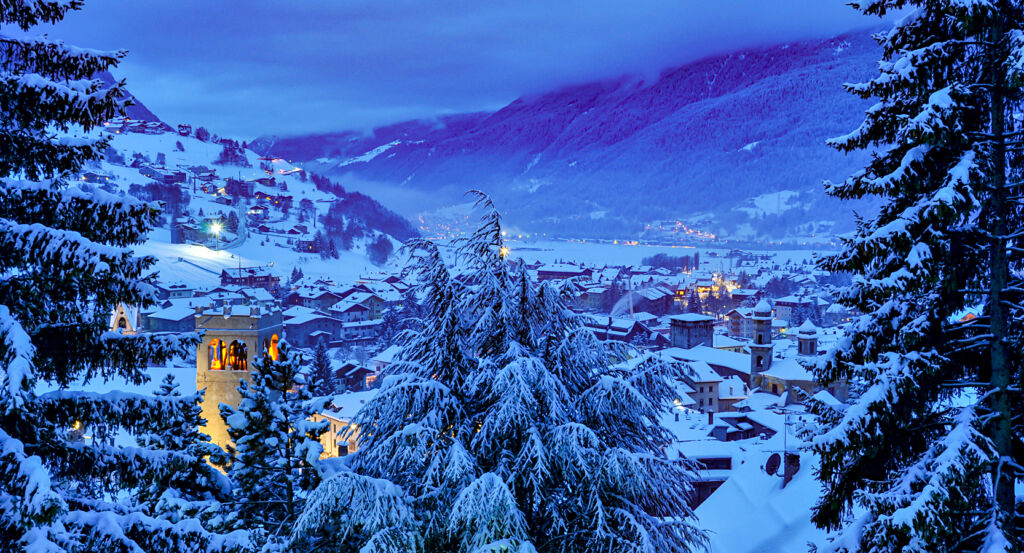
Along Route de Palleusieux near Strada Statale 26, the hotel stands among Palleusieux, Morgex, the wooded slopes of Valdigne, the hamlet of Verrand, and high terrain above the valley. Its hillside position links a small settlement with one of the region's main north-south routes. Pale wood and exposed stone give the building a regional architectural character. The approach along the valley road brings the hotel into view against wooded slopes and open mountain terrain. The result is a roadside hotel shaped by local building traditions and travel between communities in Valdigne.
What defines Hotel Alpechiara.
Hotel Alpechiara is best known for its return to Palleusieux after years of closure and a thorough refurbishment, restoring a hotel whose history links organized group travel with the changing tourism economy of the Aosta Valley. The property once formed part of a school and college travel program, giving it a defined role in the development of group holidays in the Alps. When its lease expired, the hotel closed for a long period. That interruption separated the building from the travel program that had brought successive groups to the hamlet. A thorough refurbishment preceded its return as a four-star hotel. The reopening restored a lodging business along a route connecting the upper valley's communities. The hotel's building follows regional conventions, using pale timber and exposed stone that relate it to the architecture of the Aosta Valley. Those choices carry meaning in a mountain climate where stone foundations and timber construction have long shaped homes and inns. Its position by a major valley route connected the hotel with road travel through Valdigne, and its return to operation placed it back within the region's tourism network. This sequence of group travel, closure, renovation, and reopening gives Alpechiara a distinct history among the valley's hotels. The building's name recalls the alpine landscape surrounding Palleusieux, while its place in the hamlet ties it to local settlement.
Cooperativa 13 Maggio manages Hotel Alpechiara as part of a wider portfolio of hotels in mountain and coastal destinations. The cooperative's group-travel model gives the property a link to organized holidays that predates its refurbishment. School and college groups formed part of Alpechiara's earlier business, making it a waypoint in structured travel programs through the Alps. The lease's end interrupted that role and left the hotel closed for years. Refurbishment returned the building to use and prepared it for a broader mix of travelers. A 2014 group travel agreement placed Alpechiara among the hotels serving winter stays in Palleusieux and the upper valley. This renewed connection with group travel carried the property's earlier purpose forward after the closure. The hotel's position on the regional road network tied it to the movement of travelers across the valley. Its regional architectural style anchors that role in Palleusieux, with exposed stone, pale wood, and an alpine roofline relating the building to local construction traditions. The property's history extends beyond its refurbishment: its closure and return trace changes in group travel, local lodging, and destination tourism in the Aosta Valley. Cooperativa 13 Maggio connected that return to an established model of organized holidays, while the hotel's roadside position continued to link Palleusieux with neighboring communities. Hotel Alpechiara's significance lies in this combination of a locally grounded building and a history shaped by changing travel patterns. Its renewed place in the region followed a clear sequence: a hotel served organized groups, a lease interruption brought a long closure, and refurbishment restored its role in the alpine lodging network. The hotel's course gives Palleusieux a specific place in the changing history of Alpine tourism, where local architecture, group travel, and regional access have shaped the fortunes of small settlements.
How Hotel Alpechiara fits.
Hotel Alpechiara works as the starting point for an outing through the Aosta Valley's thermal history, glacial geology, and high-mountain engineering.
Begin at Pré-Saint-Didier Thermal Baths, where mineral springs have shaped the town's history for centuries. The springs were known in Roman times, and people began using the waters systematically in the mid-seventeenth century. A thermal establishment opened in 1834, followed by a casino building in 1888, turning the springs into a resort destination that drew members of the Italian royal family. The spa's restored nineteenth-century architecture preserves a visible record of that era of thermal travel. Continue to Orrido di Pré-Saint-Didier, the gorge carved by the Dora di Verney below the spa's thermal source. The river's erosion formed a deep cleft through the rock, with a waterfall descending into the narrow ravine. A footpath climbs from the valley floor, while a panoramic walkway crosses high above the gorge at 160 metres. From the suspended platform, the view links the waterfall, the thermal spring, and the villages of the Pré-Saint-Didier basin. Conclude at Skyway Monte Bianco, the cableway that rises from Courmayeur to Punta Helbronner at 3,466 metres. Its predecessor began operating in 1947, and the 1957 Funivia dei Ghiacciai extended the route across the glacier toward France's Aiguille du Midi. A new cableway project began in 2011, rebuilding the high-altitude link and opening to the public on 30 May 2015. The progression moves from the valley's thermal springs through the river-carved gorge and culminates in the engineered ascent to Punta Helbronner, connecting water, geological time, and human passage into the high Alps.
Where your story begins.
Foresyte Travel reveals places that feel extraordinary long before you arrive.
Enjoy editorial crafted for luxury travelers.
Foresyte may earn a commission when you book.




















































































































