
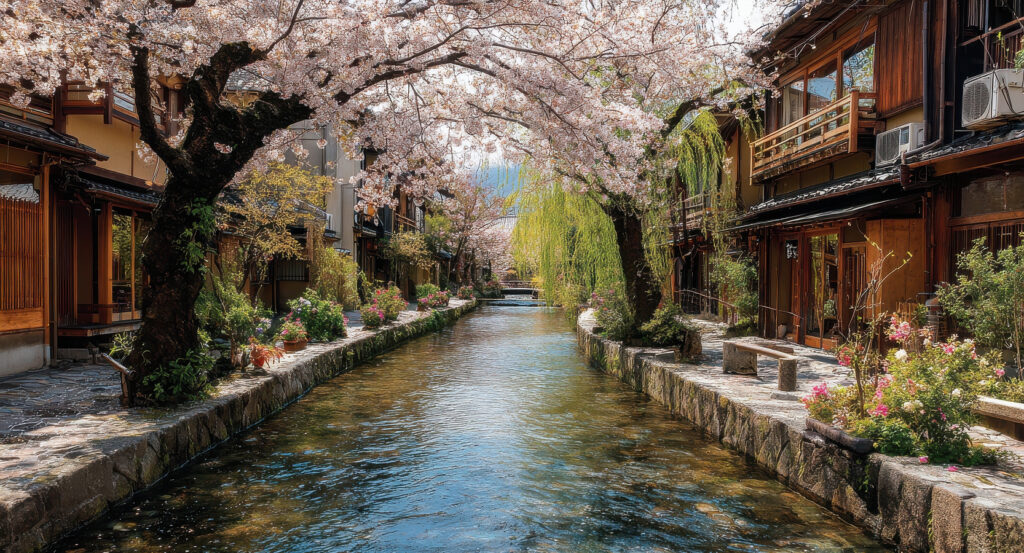
Why you should experience Hotel Kanra Kyoto in Kyoto, Japan.
Hotel Kanra Kyoto is Kyoto lived through texture, material presence, and mindful restraint, a hotel that does not compete with the city's heritage but instead becomes a view through which Kyoto's calm, rhythm, and quiet poetry register fully.
Located within walking distance of Kyoto Station yet feeling removed from transit noise, Kanra sits in a neighborhood where everyday Kyoto unfolds naturally: residential streets lined with temples, local cafés, and artisan ateliers. Arrival here is immediate and grounding. You move from the city's rhythm into an interior shaped by proportion, tactility, and material warmth. Public spaces do not dramatize or mimic tradition; they translate it into a quiet architectural logic. Floor surfaces and wall planes carry texture in ways that absorb sound rather than reflect it; light is calibrated to feel natural and unforced. The atmosphere signals rest, presence, and intention. Guest rooms reflect this philosophy with remarkable consistency. They are generous by Kyoto standards and arranged to support rest, work, and reflection. Beds are deeply comfortable, designed for restorative sleep after long days walking Kyoto's temple precincts, gardens, and narrow lanes. Windows frame quiet street views, courtyards, or distant treelines, reminders of context. Furniture is both refined and purposeful: desks that support real productivity, seating that invites lingering, and storage that allows you to unpack and settle. Lighting is layered and warm, adapting naturally from morning through evening. Bathrooms emphasize ritual and comfort. Deep soaking tubs, strong showers, and materials chosen for tactile ease turn daily routines into moments of calm. Nothing distracts; everything supports presence. Dining at Hotel Kanra Kyoto reflects a deep understanding of Kyoto's culinary language. Rather than theatrical presentation, meals are composed with seasonality, local sourcing, and quiet precision. The hotel's restaurant spaces feel like extensions of the architectural whole: calm, ordered, and aligned with rhythm. The hotel's communal areas, lounges, garden views, transitional spaces, are designed less as destinations and more as rest points in your day, places where you can pause, reflect, plan, or absorb atmosphere. Service is attentive, warm, and grounded. Interactions feel genuinely helpful rather than scripted, guided by local knowledge and cultural fluency. Staff anticipate needs quietly and respond with discreet efficiency, allowing autonomy. The hotel attracts travelers who value coherence over flash: cultural explorers, repeat visitors to Kyoto, couples seeking calm agency rather than performative luxury, and anyone who wants the city to feel present rather than distilled into clichés. Hotel Kanra Kyoto does not soften Kyoto's complexity or isolate you from it; it frames it, offering a stay that feels composed, humane, and deeply connected to place.
What you should know about Hotel Kanra Kyoto.
Hotel Kanra Kyoto was conceived not as a boutique hotel in the conventional sense, but as a spatial translation of Kyoto's traditional architecture and urban logic into a contemporary context, one that respects memory, movement, and material presence.
The property's architecture and design draw deeply from Kyoto's heritage: proportions calibrated to human scale, natural materials selected for how they age and patinate over time, and spatial sequences that transition gently from public to private. Rather than imitating historical style, designers engaged with the essence of Kyoto's spatial logic, the blend of light and shadow, enclosure and release, stillness and movement. Public spaces were arranged as sequences of transition. Materials such as stone, plaster, timber, and metal were chosen for their tactile qualities and ability to absorb sound and light, creating spaces that feel calm under repeated use. Guest room layouts were developed with behavioral insight: how people rest, work, unpack, and recalibrate during extended stays. This resulted in interiors that feel intuitive. Storage, desk placement, and lighting adaptability were integrated early in the design process, enabling rooms to feel complete. Bathrooms were conceived as personal retreats, with finishes and circulation emphasizing comfort and ritual. Dining spaces were envisioned as social infrastructure rather than performance venues, supporting nourishment and quiet conversation without physical competition. Operational culture at Hotel Kanra Kyoto reflects this architectural intent. Staff training emphasizes cultural literacy, situational awareness, and adaptive responsiveness. Interactions feel aligned with context and guest intent, reinforcing autonomy. Over time, Kanra has built a loyal following among travelers who return not because it is flashy or novel, but because the experience remains coherent under real use, spaces that function reliably over extended stays, service that supports presence rather than intrudes upon it, and a character rooted in place rather than veneer.
How to fold Hotel Kanra Kyoto into your trip.
Hotel Kanra Kyoto works best when you treat it as a temporal anchor of calm and place rather than a backdrop you move through between activities.
Begin mornings with intention: enjoy breakfast in an environment that feels composed and steady, letting the hotel's spatial rhythm orient your sense of time before stepping into Kyoto's layered streets. Walk toward the nearby Nijo Castle or local gardens while the city is still soft, allowing quiet presence to register differently than in busier districts. Because the hotel sits slightly removed from peak tourist corridors near Kyoto Station and the river paths, returning midday feels restorative. Come back to relax, read, or simply inhabit the space before heading out again. Afternoons lend themselves to deeper exploration: craft workshops, shrine precincts, small museums, and traditional neighborhoods reward unhurried attention. Evenings unfold with gentle coherence. Dine thoughtfully on local cuisine or hotel-inspired seasonal menus, attend cultural performances, or wander temple-lit streets at dusk before returning to a space that absorbs energy. The hotel's calm becomes an active part of the experience, not an escape from it. Hotel Kanra Kyoto pairs especially well with extended stays, repeat visits, cultural immersion, and itineraries that value presence over pace. By the time you leave, Kyoto will feel less like a series of highlights and more like a lived environment, and the hotel will feel like the vantage point that made that feeling possible, not softened, not diluted, but deeply present. In a city defined by nuance, ritual, and seasonal shift, Kanra's rare advantage is this: it does not make Kyoto easier to consume, it makes Kyoto easier to be.
Where your story begins.
Foresyte Travel reveals places that feel extraordinary long before you arrive.
Experience premium editorial crafted for luxury travelers.

















































































































