
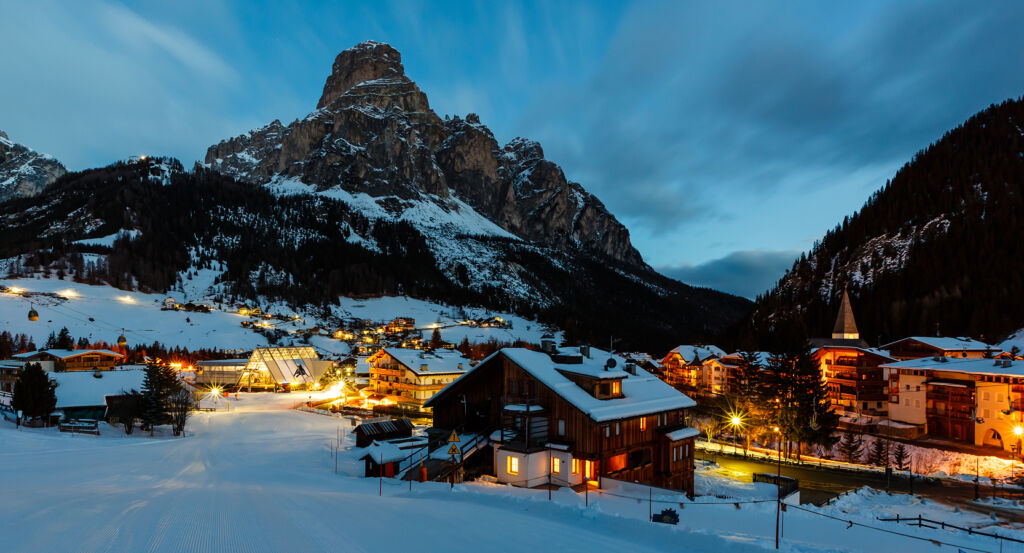
Why you should experience Hotel La Tambra in Italy.
Hotel La Tambra is where alpine tradition, warm South Tyrolean hospitality, and the easy rhythm of village life merge into a stay that feels cozy, familiar, and deeply tied to the heart of Corvara.
Set just steps from the village center, near cafés, ski lifts, local shops, and the everyday movement of both locals and travelers, the hotel rises as a classic Tyrolean lodge with wooden balconies, flower boxes in bloom during summer, snow-draped eaves in winter, and an inviting façade that immediately signals comfort and authenticity. There's a down-to-earth charm to its presence, the kind that makes you feel as though the building itself has witnessed decades of mountain stories and carries them in its walls. Step inside, and that sense of comfort deepens. The interior radiates softness and warmth: wood-paneled walls, traditional alpine textiles, glowing lamps, decorative Tyrolean motifs, and common spaces that feel more like beloved living rooms than hotel lounges. Guests linger here naturally, reading, talking, planning their next adventure, because the environment invites it. The atmosphere is relaxed, lived-in, and genuine, a refreshing counterpoint to more polished but impersonal hotels. Rooms at Hotel La Tambra continue this cozy, grounding theme. Expect wooden furnishings, crisp duvets, soothing colors, and windows or balconies that open onto village rooftops, meadows, or the dramatic limestone silhouettes of the Dolomites. Rooms range from simple and charming to lightly refreshed and modernized, but all share the same sense of welcoming ease, spaces designed for rest, warmth, and the pleasant exhale that follows a day in the mountains. Bathrooms are bright and functional, offering warm tiles, glass showers or tubs, and amenities ideally suited for post-ski or post-hike recovery. Dining is one of La Tambra's defining experiences. The hotel's restaurant is loved not only by guests but by locals, a sign of authenticity in any alpine village. Meals honor Ladin, Tyrolean, and Italian culinary traditions: canederli dumplings, Schlutzkrapfen, barley soups, creamy polenta, roasted meats, fresh pastas, seasonal vegetables, and comforting desserts shaped by apples, berries, nuts, and chocolate. The atmosphere is warm and intimate, with wood-lined walls, soft lighting, and the familiar hum of diners enjoying the kind of food that feels both nourishing and rooted in place. Breakfast is generous and comforting, breads, pastries, crostate, jams, honey, yogurt, cereals, cheeses, cured meats, eggs, fruit, and strong Italian coffee that marks the start of another day in the Dolomites. In winter, Hotel La Tambra becomes an ideal base for skiing the Dolomiti Superski region. The lifts leading onto the Sellaronda are just a short walk away, granting seamless access to panoramic slopes, gentle meadows, forest runs, and the vast interconnected network of Alta Badia. After a day of skiing, the hotel's warmth offers the perfect landing: cozy rooms, hot showers, hearty meals, and quiet corners for unwinding as snow continues falling outside. In summer, the hotel turns into a peaceful home for hikers, cyclists, and slow travelers.
What you did not know about Hotel La Tambra.
Hotel La Tambra stands on land shaped by centuries of Ladin culture, pastoral tradition, and the gradual evolution of Corvara from an agricultural hamlet into one of the Dolomites' most beloved alpine destinations.
Before the hotel existed, this central stretch of land formed part of Corvara's essential meadow system, flat, sunny ground where families harvested hay for livestock. Wooden barns once lined the area, constructed with classic Ladin craftsmanship: stone foundations, thick larch beams, slatted façades for ventilation, and steep roofs made to withstand the weight of heavy winter snow. These barns were not simply storage buildings; they were cultural anchors, vital to survival in a region where winters were long and harsh. The land also formed a central artery in the network of footpaths that connected Corvara with neighboring Ladin communities. For generations, villagers walked across these meadows carrying wool, milk, cheese, herbs, lumber, and grain. These routes were more than economic, they were cultural lifelines, linking families, traditions, and stories across the valleys. In winter, long before skiing became recreational, villagers relied on handmade wooden skis to cross these snow-covered fields. These early skis were functional tools, allowing people to deliver hay, check livestock, visit neighbors, and maintain social ties during months of isolation. The terrain around present-day Hotel La Tambra formed part of this winter network, where simple wooden tracks connected farms and homes across the valley. The transformation began in the early 20th century, when international mountaineers and explorers discovered the dramatic limestone faces surrounding Corvara. The first wave of tourism arrived, bringing with it a new economic path for the village. In 1938, Corvara built one of the first chairlifts in the Dolomites, a major turning point that set the stage for Alta Badia becoming a renowned ski destination. Over time, barns were replaced by guesthouses, homes expanded into lodges, and pastoral land transitioned into the foundations of modern hospitality. When Hotel La Tambra emerged, it reflected both the region's heritage and its new role in the world of alpine tourism. Its architecture echoes the familiar forms of Ladin barns, natural wood, stone accents, and traditional lines. Its restaurant celebrates the valley's culinary identity, which evolved from centuries of agricultural resourcefulness. Its atmosphere honors the warmth, cooperation, and communal spirit that defined mountain life before tourism. Even its central location carries symbolic meaning: this area was historically a place of gathering, work, social exchange, and connection, now transformed into a space where travelers gather to experience the same landscape through a different lens. Beneath its inviting, traditional exterior, Hotel La Tambra rests on land shaped by agricultural endurance, cultural continuity, winter survival, and the profound transformation of Corvara from isolated mountain village to internationally cherished alpine refuge.
How to fold Hotel La Tambra into your trip.
Hotel La Tambra becomes the warm, easygoing, village-centered heart of your Dolomites journey, where mornings begin with generous breakfast and soft mountain light, days unfold into exploration, and evenings settle into comfort, tradition, and the familiar glow of alpine hospitality.
Start the winter morning with pastries, crostate, breads, cheeses, cured meats, eggs, yogurt, fruit, cereals, and strong Italian coffee before walking to the nearby lifts that connect to the Sellaronda. Spend your day skiing forest trails, panoramic meadows, ridge lines, and dramatic Dolomite circuits framed by towering cliffs. Return to the hotel for a warm drink, a hearty Ladin dinner, or a restful moment of stillness as snow settles across the village. In summer, begin your day with crisp mountain air drifting through your window before hiking into the Puez-Odle mountains, cycling renowned passes, wandering through wildflower meadows, or exploring Corvara's calm, pedestrian-friendly lanes. Spend afternoons unwinding on balconies, savoring a spritz outdoors, reading in peaceful corners, or simply watching the Dolomites shift colors as the light evolves across the peaks. Evenings unfold with comforting meals, soft conversation, and the grounding presence of a hotel shaped by family, tradition, and the enduring soul of Alta Badia. Wake restored, nourished, and deeply at ease, ready for another day shaped by nature, movement, culture, and the quietly powerful alpine spirit of Hotel La Tambra. It becomes not just where you stay, but the cozy, memory-rich center of your entire Corvara experience.
Where your story begins.
Foresyte Travel reveals places that feel extraordinary long before you arrive.
Experience premium editorial crafted for luxury travelers.




















































































































