
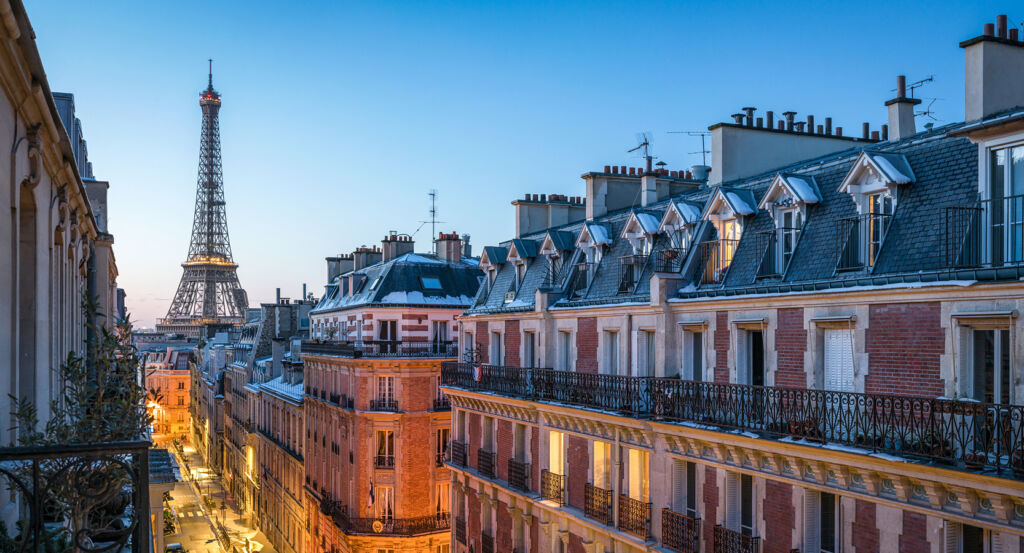
Why you should experience Hôtel les Jardins du Luxembourg in Paris, France.
Hôtel les Jardins du Luxembourg is a contemplative four-star hotel where Val-de-Grâce's intellectual tradition, Left Bank scholarship, scientific history and centuries of private Parisian memory converge within the former Hôtel de la Paix where Sigmund Freud lived during his first stay in Paris.
Set along Impasse Royer-Collard near Rue Gay-Lussac and just steps from Jardin du Luxembourg, the 19-room hotel occupies a quiet cul-de-sac documented before 1590 and renamed in 1867 for philosopher, politician and Académie française member Pierre-Paul Royer-Collard. Freud arrived in Paris on October 13, 1885 and took a ground-floor room in the building, then known as Hôtel de la Paix, while undertaking the formative period of study with neurologist Jean-Martin Charcot at Salpêtrière that helped redirect his intellectual trajectory toward psychopathology. Poet Paul Valéry later lived at the same No. 5 address during his youth, while Paul Verlaine stayed elsewhere within Impasse Royer-Collard in 1889, concentrating several distinct chapters of French and European intellectual history along a passage only 75 meters long. The result is a hotel where Freud's formative Paris residence, Valéry's early life and the centuries-old fabric of Impasse Royer-Collard give an intimate Left Bank property a cultural lineage reaching far beyond its scale.
What you should know about Hôtel les Jardins du Luxembourg.
Hôtel les Jardins du Luxembourg is best known as the former Hôtel de la Paix where Sigmund Freud resided during his first Paris stay in 1885, when a University of Vienna travel grant brought the 29-year-old physician to study under Jean-Martin Charcot, holder of the world's first professorial chair devoted to diseases of the nervous system, at Salpêtrière. Freud arrived on October 13 and described his ground-floor accommodation at the small Royer-Collard hotel in correspondence from Paris, while the months spent observing Charcot's investigations of hysteria and hypnosis became an important stage in his movement beyond conventional neuropathology toward the psychological questions that would dominate his later career. A commemorative plaque at 5 Impasse Royer-Collard preserves that residence on the building itself, identifying its former Hôtel de la Paix name, while the address accumulated another major literary association through Paul Valéry, who lived on its first floor during his youth. Impasse Royer-Collard adds further historical depth through Paul Verlaine's documented 1889 residence in a furnished hotel along the passage and through the seventeenth-century hôtel particulier opposite at No. 8, traditionally associated with Madame de Maintenon and the children of Madame de Montespan and Louis XIV, whose façade, roof and interior staircase with wrought-iron railing were entered on France's register of protected historic structures in 1975. Freud, Valéry, Verlaine, Madame de Maintenon and the surviving seventeenth-century residence give the hotel's immediate address an unusually concentrated record spanning Bourbon court history, nineteenth-century literature and the origins of modern psychological thought.
The building at No. 5 contributes its own architectural chapter, with Paris property records dating its construction between 1851 and 1914 and documenting a substantial 2020 rehabilitation program encompassing the six upper floors and basement. The approved work included alterations to the street frontage, creation of planted balconies, changes to courtyard openings and the staircase, reconstruction of the ground-floor veranda, restoration of the courtyard façades and rooftop mechanical interventions, establishing a documented contemporary renewal of the same building associated with Freud and Valéry. Hôtel les Jardins du Luxembourg currently contains 19 rooms, including family suites and an apartment, within this compact structure, while its secluded setting preserves the unusual morphology of a passage known successively as Cul-de-sac de la Madeleine, Cul-de-sac Sainte-Catherine and Cul-de-sac Saint-Dominique before receiving its present name. Sigmund Freud's 1885 residence, Paul Valéry's association, the documented 2020 building campaign and more than four centuries of Impasse Royer-Collard history turn the property into a small hotel embedded within a remarkably continuous record of Parisian intellectual and architectural life.
How to fold Hôtel les Jardins du Luxembourg into your trip.
Hôtel les Jardins du Luxembourg works as the anchor for an afternoon tracing scientific collecting, republican memory and cultivated landscape across the intellectual institutions surrounding the Latin Quarter.
Begin at Musée de Minéralogie de Mines Paris, where the Cabinet de minéralogie created in 1794 was charged with assembling the mineral productions of the globe and today preserves 100,000 specimens representing about 2,900 mineral species, with 4,000 displayed inside Hôtel de Vendôme. Continue to Panthéon, where Jacques-Germain Soufflot's eighteenth-century architectural experiment was completed by collaborators Maximilien Brébion and Jean-Baptiste Rondelet in 1790 before the Revolution converted the former church into a national necropolis, beginning a political history that ultimately brought figures including Voltaire, Rousseau, Victor Hugo and Marie Curie beneath its dome. Conclude at Jardin du Luxembourg, where Marie de Médicis acquired the Petit Luxembourg in 1612 and assembled the surrounding domain between 1614 and 1631, creating a landscape repeatedly altered over subsequent centuries before public opposition, including a petition gathering 12,000 signatures, challenged further reductions during Haussmann's nineteenth-century reconstruction of Paris. The progression moves from a Revolutionary-era scientific collection through France's evolving national temple into Marie de Médicis's centuries-old garden, revealing the culture of inquiry, commemoration and intellectual life surrounding the address where Freud began one of the most consequential periods of his early career.
Where your story begins.
Foresyte Travel reveals places that feel extraordinary long before you arrive.
Experience premium editorial crafted for luxury travelers.














































































































