
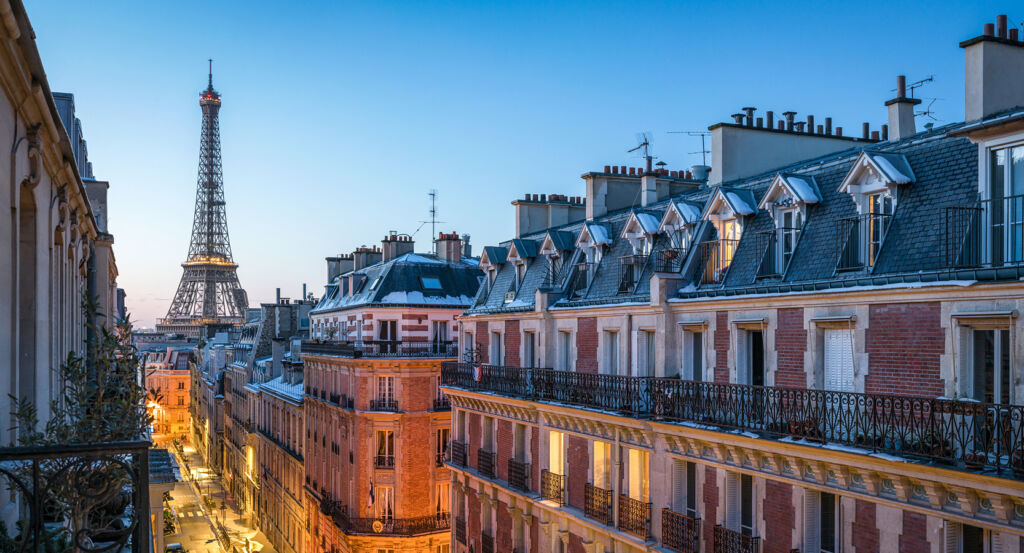
Why you should experience Hôtel Mercure Paris Bercy Bibliothèque in Paris, France.
Hôtel Mercure Paris Bercy Bibliothèque is a literary four-star hotel where Salpêtrière's Seine-side creativity, industrial memory, architectural reinvention and contemporary culture converge within a property conceived around the written word.
Set along Boulevard Vincent Auriol near Quai d'Austerlitz and just steps from the Seine, the hotel translates its proximity to Bibliothèque nationale de France into literature-inspired interiors completely renovated in 2024, extending the character of Paris's modern library district into the guestrooms and social spaces. La Page develops the concept through a restaurant and bar whose name turns reading into the property's central hospitality motif, while bright coworking areas and naturally lit meeting rooms reinforce the connection between books, ideas and contemporary working culture. Accommodation ranges from 13-square-meter single rooms and 17-square-meter Classic doubles to 20-square-meter Privilege rooms, 22-square-meter triples and a 35-square-meter top-floor suite with a private terrace and city views. The result is a hotel where literary design, intimate accommodation, Seine-side geography and the intellectual architecture of southeastern Paris give a compact Mercure property a distinctly bookish identity.
What you should know about Hôtel Mercure Paris Bercy Bibliothèque.
Hôtel Mercure Paris Bercy Bibliothèque is best known for completing a comprehensive guestroom renovation in 2024 that established literature as the defining theme across an 88-room property positioned between the Seine and the Bibliothèque nationale de France's François-Mitterrand complex. Accor organizes the renovated inventory across seven room categories plus a suite, including 13-square-meter singles, 17-square-meter Classic doubles and twins, 20-square-meter Privilege rooms, 22-square-meter triples, four-person family accommodations and Privilege rooms incorporating private terraces. The accommodation program culminates in a 35-square-meter top-floor suite combining a double bed and double sofa bed with a private terrace and city views, giving the otherwise compact hotel a substantially larger residential configuration for as many as four occupants. La Page carries the literary concept into food and drink through a restaurant, bar and round-the-clock room-service program, while luminous coworking areas extend the same style into the property's communal spaces. The 2024 renovation, seven-category room program, 35-square-meter terrace suite, La Page and literature-centered interiors collectively give Hôtel Mercure Paris Bercy Bibliothèque an unusually coherent character anchored in the cultural institutions reshaping this stretch of the Seine.
Johan Alessandra currently directs a property whose business program includes three naturally lit meeting rooms, with Accor documenting a largest space of 94 square meters, maximum seated capacity of 40 and banquet capacity of 40. Accor extends the accommodation program through three breakfast formats beginning at 6:30, combining a buffet, in-room service and Express & Co coffee and tartines served at La Page. La Page remains available around the clock alongside room service, while the hotel's coworking environment integrates high-speed connectivity and workspaces into the same literature-led social program established by the renovated guestrooms. Johan Alessandra, La Page, Express & Co and the 94-square-meter meeting program give the 2024 interiors a functional narrative centered on reading, working, gathering and dining within a property designed for the rhythms of contemporary Paris.
How to fold Hôtel Mercure Paris Bercy Bibliothèque into your trip.
Hôtel Mercure Paris Bercy Bibliothèque works as the anchor for an afternoon tracing the architecture of knowledge, structural experimentation and cinematic preservation that transformed both banks of the Seine around Bercy.
Begin at Bibliothèque nationale de France, where Dominique Perrault won an international architectural competition in 1989 and organized the François-Mitterrand site around four glass towers symbolizing open books, an ipé esplanade and a central garden, before François Mitterrand inaugurated the complex on March 30, 1995 after six years of construction. Continue across Passerelle Simone-de-Beauvoir, where Dietmar Feichtinger's 304-meter structure spans the Seine through a 190-meter unsupported crossing and a 106-meter central steel view weighing 650 tons, fabricated at Lauterbourg and transported to Paris by barge before the bridge's July 2006 inauguration. Conclude at Cinémathèque française, founded in 1936 by Henri Langlois, Georges Franju, Jean Mitry and Paul Auguste Harlé and installed in September 2005 within Frank Gehry's former American Center, a 15,700-square-meter building adapted to contain four screening rooms with capacities of 415, 188, 95 and 83 seats alongside film collections, exhibitions and a library. The progression moves from Dominique Perrault's architecture for the preservation of written culture through Dietmar Feichtinger's engineering across the Seine into Frank Gehry's architecture for cinematic memory, revealing the concentration of knowledge, design and cultural preservation surrounding Hôtel Mercure Paris Bercy Bibliothèque.
Where your story begins.
Foresyte Travel reveals places that feel extraordinary long before you arrive.
Experience premium editorial crafted for luxury travelers.














































































































