
Why you should experience Hôtel Mercure Paris Gare de Lyon TGV in Paris, France.
Hôtel Mercure Paris Gare de Lyon TGV is a kinetic four-star hotel where Quinze-Vingts's railway heritage, Belle Époque grandeur, creative reinvention and enduring culture of metropolitan movement converge beside one of Paris's defining gateways to southeastern France.
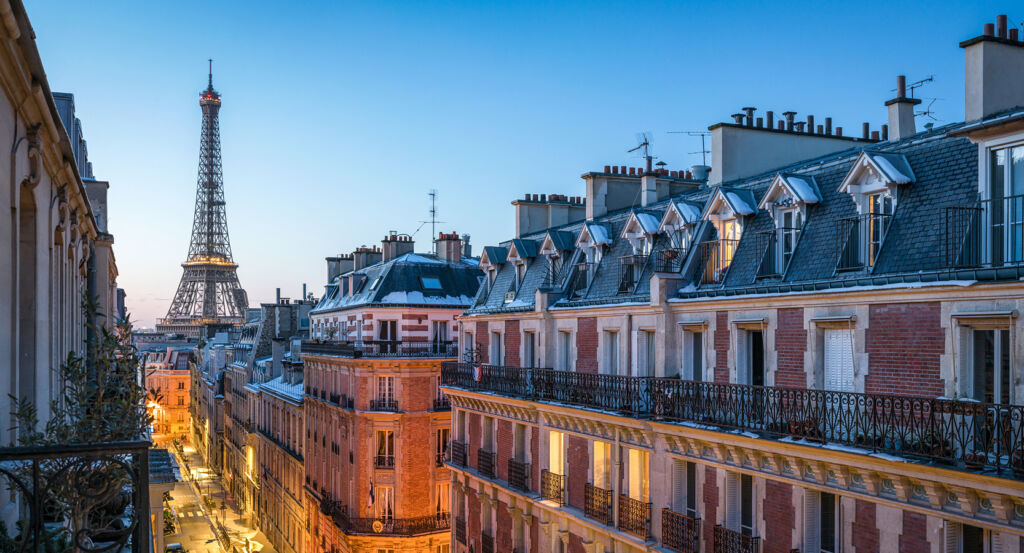
Set along Place Louis-Armand near Boulevard Diderot and just steps from Gare de Lyon, the hotel places its 315 guestrooms directly beside a station rebuilt by architect Marius Toudoire for the 1900 Exposition Universelle, embedding the property within an urban landscape shaped by more than a century of rail travel. Contemporary interiors translate that setting through graphic references to movement and Parisian life, while Privilege accommodations and upper-floor rooms extend the experience toward views across the surrounding cityscape. Station 24, the hotel's coworking and social environment, shifts the traditional lobby toward flexible work, conversation and dining, connecting a high-volume railway hotel with the changing rhythms of contemporary travel. The result is a hotel where immediate station access, flexible social space and the architectural inheritance of Gare de Lyon give a large Mercure property a character inseparable from the movement that has shaped this corner of Paris.
What you should know about Hôtel Mercure Paris Gare de Lyon TGV.
Hôtel Mercure Paris Gare de Lyon TGV is best known for operating as a 315-room hotel immediately beside Gare de Lyon, connecting a contemporary Mercure property with a railway complex reconstructed by architect Marius Toudoire for the 1900 Exposition Universelle and distinguished by its grand clock tower, elaborate façade and celebrated station restaurant. Toudoire's reconstruction replaced an earlier Gare de Lyon as the Compagnie Paris-Lyon-Méditerranée prepared for the exposition, creating a station whose organization proved sufficiently functional that its principal layout remained substantially unchanged until 1960. The station buffet was created as part of the same architectural campaign, opened in 1901 in the presence of French president Émile Loubet and developed through richly decorated rooms whose paintings evoke destinations served by the railway, before receiving the name Le Train Bleu in 1963 in reference to the celebrated Paris-Vintimille service toward the Mediterranean. Several interiors of Le Train Bleu, including the restaurant, gold lounge, Tunisian and Algerian lounges and their associated decorative passages, received historic-monument protection in 1972, preserving an unusually elaborate surviving expression of railway-era hospitality immediately beside the hotel. The 315-room Mercure, Toudoire's 1900 station, the 1901 buffet, the 1963 Train Bleu character and the protected Belle Époque interiors collectively place the property within a transportation complex where architecture, gastronomy and long-distance travel have developed together for more than a century.
Station 24 develops the hotel's contemporary response to that culture of movement through a flexible ground-floor environment combining coworking, informal meetings, dining and social space within a property designed around the continuous turnover of railway travelers. Mercure extends the accommodation program across Classic and Privilege categories while connecting its larger inventory to fitness facilities, meeting spaces and food service conceived for a hotel operating directly beside one of France's busiest transportation hubs. Gare de Lyon deepens the property's character through a railway network historically oriented toward Lyon, Provence, the Mediterranean and the Alps, allowing the hotel's contemporary hospitality program to inherit the geographic imagination established by the Compagnie Paris-Lyon-Méditerranée. Station 24, Mercure's 315-room scale, Toudoire's surviving railway architecture and the Mediterranean associations preserved through Le Train Bleu give the property a coherent character centered on departure, connection and the continuing reinvention of station hospitality.
How to fold Hôtel Mercure Paris Gare de Lyon TGV into your trip.
Hôtel Mercure Paris Gare de Lyon TGV works as the anchor for an afternoon tracing the railway infrastructure, craftsmanship and landscape design that transformed former transportation corridors around eastern Paris into new forms of urban culture.
Begin at Viaduc des Arts, where infrastructure created for the railway line linking Bastille with eastern suburbs was rehabilitated during the early 1990s, with architect Patrick Berger helping transform its masonry vaults into workshops whose artisans continue traditions spanning furniture, fashion, musical instruments, restoration and decorative crafts. Continue to Coulée verte René-Dumont, created from 1988 by Philippe Mathieux and Jacques Vergely along the former railway alignment, where a 4.5-kilometer planted corridor rises above the Viaduc des Arts before continuing through gardens, tunnels and surviving railway structures toward eastern Paris. Conclude at Port de l'Arsenal, where a basin linking the Canal Saint-Martin system with the Seine evolved from commercial infrastructure into a pleasure-boat harbor, with Paris documenting the Arsenal and Villette facilities together as accommodating 200 moorings and more than 1,500 visiting boats annually. The progression moves from nineteenth-century railway infrastructure reborn as workshops through one of Paris's pioneering elevated planted corridors into a former working basin reshaped around recreational navigation, revealing how transportation architecture around Hôtel Mercure Paris Gare de Lyon TGV has repeatedly acquired new cultural lives.
Where your story begins.
Foresyte Travel reveals places that feel extraordinary long before you arrive.
Experience premium editorial crafted for luxury travelers.














































































































