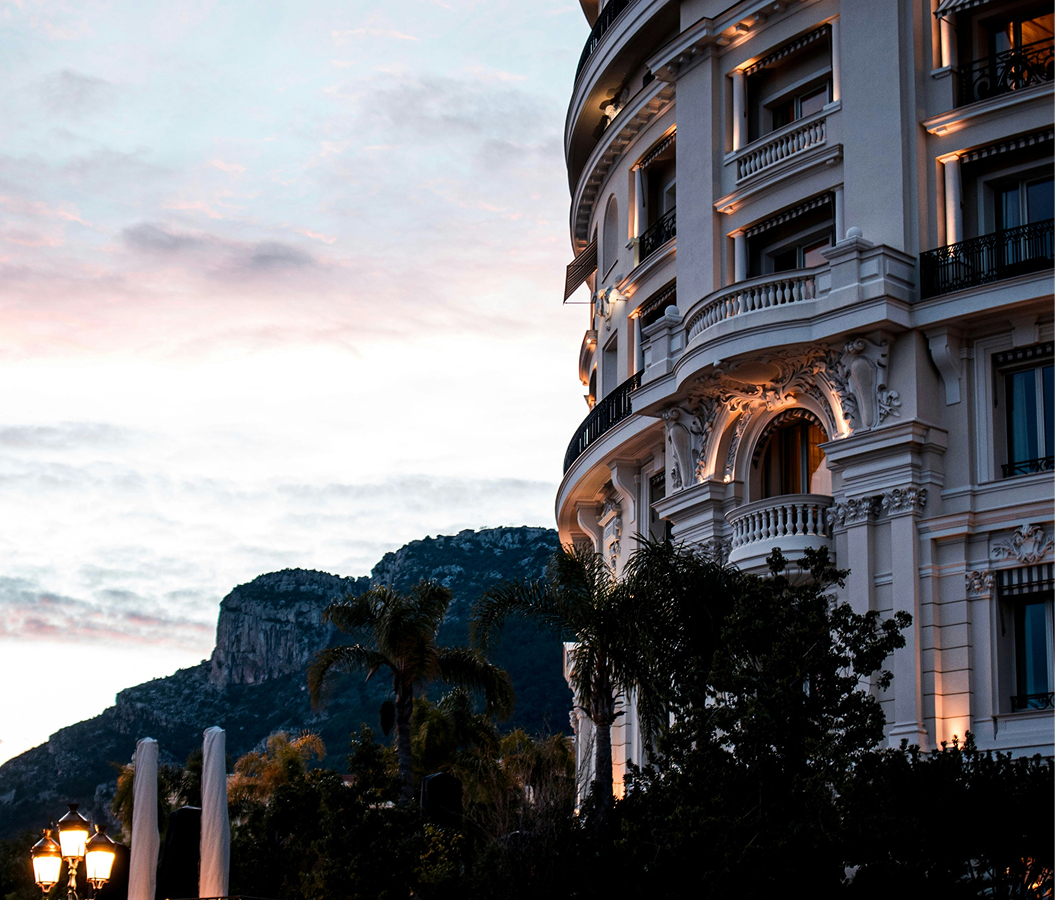
Why Hotel Regina matters.
Hotel Regina is a cultivated heritage retreat where Carrobbio's Roman origins, medieval religious fabric, historic artisan streets and restrained Milanese design culture converge between the Duomo and Sant'Ambrogio.
Set along Via Cesare Correnti near Via Caminadella and just steps from Largo Carrobbio, the hotel occupies an eighteenth-century palazzo within the ancient western approach to Roman Mediolanum, where the surviving Torre dei Malsani and surrounding street pattern preserve the memory of the Porta Ticinensis route toward Ticinum. A skylit lobby designed by Luigi Caccia Dominioni opens toward an internal garden, creating a sequence of enclosed spaces that shifts the experience from the dense historic streets into a quieter domestic setting. Recently renewed guestrooms extend that composure through parquet, brass detailing, warm surfaces and a contemporary concept drawing on Milanese architectural forms and the city's historic tram. The result is a hotel where Roman geography, an eighteenth-century palazzo and Caccia Dominioni's Milanese design authorship establish a remarkably concentrated sense of place near the western edge of the ancient center.
What defines Hotel Regina.
Hotel Regina is best known for occupying a building whose history reaches through religious, archaeological and hospitality chapters before the present hotel emerged in 1993. The eighteenth-century palazzo was constructed above Roman foundations and initially housed a small convent, placing its earliest known use within a religious landscape that extended across this section of Central Milan. Beside it stands Teatro Arsenale, occupying a former church whose history reaches 1270 and whose ecclesiastical use ended with its deconsecration in 1810. The palazzo passed through further transformations before becoming Hotel del Paris during the 1950s, establishing hospitality at the address decades before the Regina name arrived. A comprehensive reconstruction began in 1988 and continued for five years, with Roman and medieval masonry uncovered during construction adding complexity to the project. The building finally reopened as Hotel Regina in April 1993 after the long intervention had converted the earlier hotel into the present four-star property. Architects Vittorio Pedrotti and Ferdinando Anichini subsequently became associated with architectural work at Hotel Regina, with Pedrotti's professional portfolio preserving both the new entrance and entrance hall among his Milan hotel projects. The progression through convent, Hotel del Paris, archaeological discoveries, five years of reconstruction and the 1993 reopening gives the property an unusually deep architectural chronology for an independent Milan hotel.
Francesco Barberi established the family hospitality enterprise behind the Regina in 1978, beginning a separate commercial history that eventually expanded across three highly distinct Italian properties. Barberi remained president of Hotelinvest through its growth, and by 1999 he represented both Hotelinvest and Hotelmanagement when the latter was absorbed into the former. His daughter Michela Barberi subsequently carried the family business into its next generation, maintaining the Milan property alongside Hotel Regina Olga in Cernobbio and Hotel Al Sole in Venice's Palazzo Marcello. The three hotels connected the family's operation with an urban palazzo in Milan, Lake Como hospitality and a fifteenth-century Venetian residence, giving Hotelinvest a collection built around historically distinctive settings. Michela Barberi later led Hotel Regina directly as general manager, preserving the family's presence inside the Milan property decades after her father's entry into hospitality. The business committed €2.7 million in investment during 2022 and €3.2 million during 2023, the latter year also bringing revenue to €2.2 million and the annual guest count to 8,991. A further renewal culminated in 2025, bringing the contemporary room concept into a hotel whose family stewardship now extends across nearly five decades. Francesco and Michela Barberi connect the Regina's independent character to a multigenerational hotel enterprise whose sustained investment has repeatedly renewed the property without severing its relationship with historic Milan.
How Hotel Regina fits.
Hotel Regina works as the anchor for a day tracing western Central Milan through early Christian architecture, Renaissance illusionism and the transformation of a Dominican convent into one of the city's richest cultural institutions.
Begin at Sant'Ambrogio, founded by Bishop Ambrose between 379 and 386 as the Basilica Martyrum and rebuilt substantially between the eleventh and twelfth centuries into one of the essential monuments of Lombard Romanesque architecture. Its atrium, twin bell towers and celebrated golden altar by Volvinio compress early Christian Milan, Carolingian metalwork and medieval architecture within the complex where Ambrose himself was buried. Continue to San Maurizio al Monastero Maggiore, whose sixteenth-century interior brought Bernardino Luini and his workshop into the Benedictine convent that once occupied one of Milan's largest female monastic complexes. Luini's frescoes spread across the partition separating the public church from the nuns' hall, joined by work associated with Simone Peterzano, Antonio Campi and other Lombard painters to create an exceptional concentration of Renaissance decoration. Conclude at Museo Nazionale Scienza e Tecnologia Leonardo da Vinci, established in the former Olivetan monastery of San Vittore and inaugurated in 1953 after industrialist Guido Ucelli di Nemi spent decades pursuing a national museum devoted to science and technology. The institution expanded beyond the sixteenth-century monastery into railway, aeronautical and naval collections, including the Toti submarine, the Vega space launcher and a gallery devoted to Leonardo da Vinci that underwent a major renewal for the artist's 500th anniversary in 2019. The progression moves through Ambrose's fourth-century basilica, Luini's Renaissance fresco cycle and Ucelli di Nemi's transformation of San Vittore into a national museum, revealing how religious foundations repeatedly became vessels for Milanese art, knowledge and cultural ambition.
Where your story begins.
Foresyte Travel reveals places that feel extraordinary long before you arrive.
Enjoy editorial crafted for luxury travelers.
Foresyte may earn a commission when you book.